 English
 French
Hydraulic Breaker Works: Unveiling Its Core Operating Principles
Understanding how a hydraulic breaker functions pays off in real-world performance and longer service life. Here is the nuts-and-bolts view of how hydraulic energy becomes hard-hitting impact, from core components to the operating cycle and the engineering choices that drive efficiency and durability. Beilite Machinery Co., Ltd. keeps pushing design forward, developing high-end hydraulic breakers for demanding global applications. A steady focus on advanced research and development supports reliable, high-performing demolition equipment.
Understanding the Foundation of Hydraulic Breaker Technology
Hydraulic breaker technology supports heavy machinery operation, enabling efficient demolition across industries. These attachments convert hydraulic fluid pressure into percussive energy, breaking down concrete, rock, and other hard materials. The core principle remains a precisely controlled piston striking a tool, transferring kinetic energy to the work surface. Beilite’s expertise in this field guides solutions that maximize impact force while maintaining structural integrity. Advanced designs help raise operational efficiency and reduce downtime on critical projects. Innovation stays at the center to deliver reliable, high-performance demolition equipment.
The Anatomy of a Hydraulic Breaker Key Internal Components
A hydraulic breaker’s effectiveness comes from its meticulously engineered internal components. These parts work together to generate and deliver powerful impact forces. Understanding their individual roles helps make sense of the overall hydraulic power system. Key components include the hydraulic piston, cylinder, valve block, nitrogen accumulator, and the chisel impact mechanism. Each element is critical to the breaker’s operational integrity and performance. 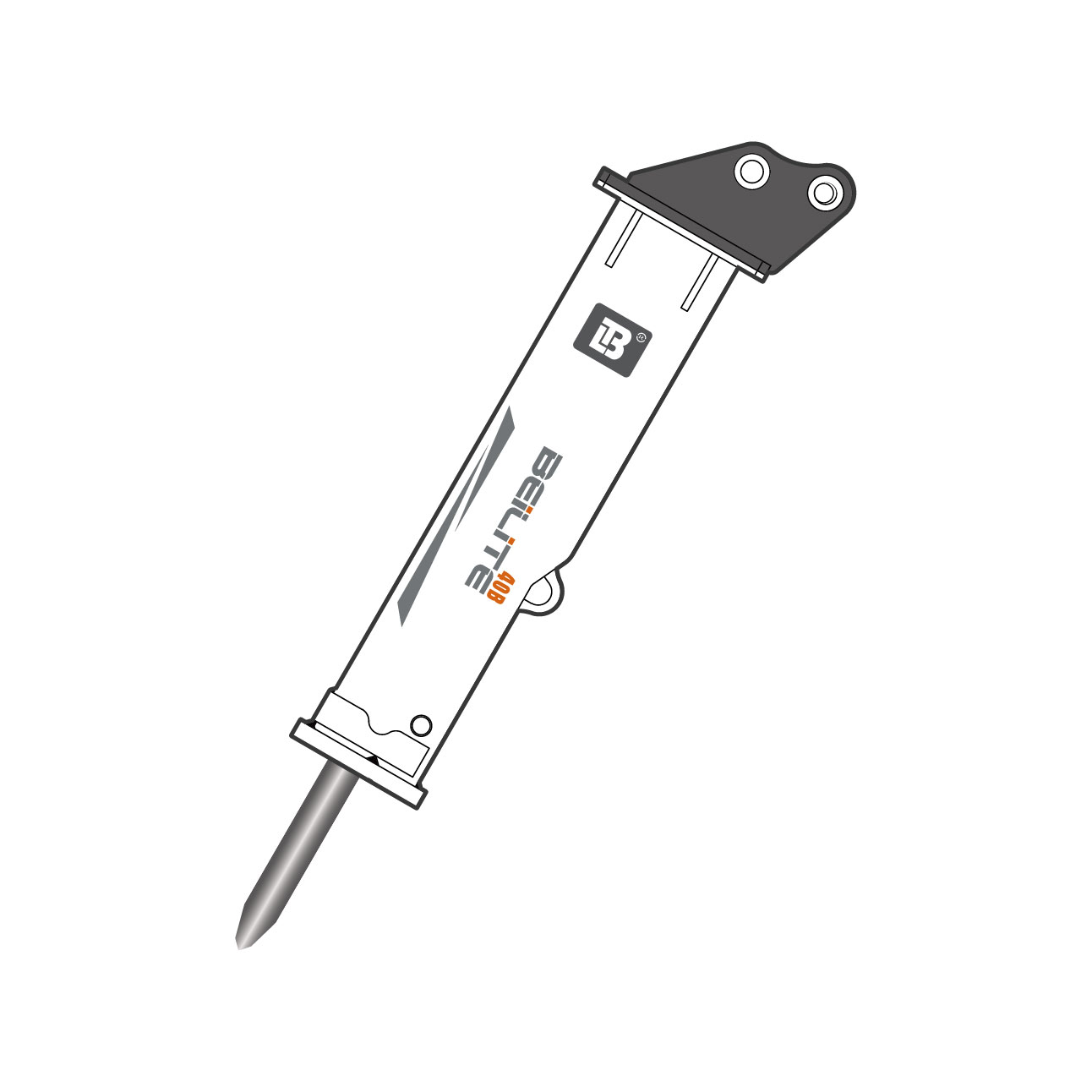
Power Generation The Hydraulic Piston and Cylinder
The hydraulic piston and cylinder form the core mechanism for impact force generation. High-pressure hydraulic oil drives the piston within the cylinder. This controlled movement creates the energy necessary for breaking material. The piston’s precise engineering ensures efficient transfer of force. This design directly influences the breaker’s power output and impact frequency.
Energy Storage The Role of the Nitrogen Accumulator
The nitrogen accumulator provides energy storage and shock absorption. It stores hydraulic energy during the piston’s retraction phase. This stored energy then assists in accelerating the piston during its downward stroke, enhancing impact efficiency. The accumulator also dampens hydraulic shocks, protecting the excavator’s hydraulic system from excessive pressure fluctuations. This component significantly contributes to the breaker’s overall performance and durability.
The Operating Cycle How Hydraulic Energy Becomes Impact Force
The transformation of hydraulic energy into impact force runs through a precise and rapid operating cycle. This dynamic process starts with hydraulic fluid input and ends with mechanical output. The sequential steps highlight the complexity and precision built into the system. Optimizing this energy transfer efficiency matters for effective breaking.
Initiation and Retraction The Hydraulic Control System
The hydraulic control system initiates and manages the breaker’s operating cycle. The valve block directs high-pressure hydraulic oil to the piston’s upper chamber. This pressure causes the piston to retract, compressing nitrogen gas in the accumulator and storing potential energy. Precise valve operation dictates the timing and speed of this retraction. This controlled movement sets up the breaker for its powerful strike.
Acceleration and Impact The Force Generation Phase
After retraction, the valve block redirects hydraulic pressure, allowing the stored energy to propel the piston downward. The piston accelerates rapidly, striking the chisel with immense force. This impact transfers kinetic energy directly to the target material, causing it to fracture. The engineering principles concentrate impact energy for efficient material breakdown. This phase represents the culmination of the hydraulic breaker’s working principle.
Advanced Engineering Features for Enhanced Performance
Modern hydraulic breakers incorporate advanced engineering features to improve efficiency and durability. These innovations directly enhance performance and extend service life. Beilite consistently integrates patented technologies into our designs. This commitment ensures our products deliver superior operational capabilities. We focus on continuous improvement to meet evolving industry demands.
| Feature Category | Beilite Innovation | Benefit |
|---|---|---|
| Energy Efficiency | Energy Recovery Systems | Maximizes impact force with less hydraulic input |
| Noise Reduction | Advanced Dampening | Reduces operational noise levels for urban sites |
| Vibration Control | Integrated Dampers | Minimizes stress on excavator and operator fatigue |
| Durability | Reinforced Housing | Extends lifespan in harsh working conditions |
| Maintenance | Modular Design | Simplifies servicing and reduces downtime |
Material Science and Manufacturing Precision
The performance and longevity of a hydraulic breaker are closely tied to material science and manufacturing precision. Beilite emphasizes high-tech manufacturing processes and stringent quality control standards. We utilize high strength steel alloys, specifically selected for their resilience and wear resistance. Precision machining ensures that all components fit perfectly, minimizing friction and maximizing energy transfer. Advanced heat treatment processes further enhance the durability and hardness of critical parts, such as the piston and chisel. This attention to detail at every stage of production supports the reliability and robustness of our products.
Optimizing Hydraulic Breaker Performance and Longevity
Maximizing hydraulic breaker performance and extending its service life calls for solid operating practices and consistent maintenance. Understanding how a hydraulic breaker works informs effective usage. Regular inspections help catch potential issues before they escalate. Proper lubrication of the chisel and bushings reduces wear and friction. Monitoring hydraulic oil levels and quality prevents system contamination and overheating. Selecting the correct breaker for the application, such as a Hydraulic Breaker Hammer for Demolition&Rock Breaking or a Hydraulic Hammer Breaker For Mini Excavator,Mini Excavator Breaker, also matters. Operators should avoid blank firing, which can cause internal damage. Timely replacement of worn parts maintains optimal impact force and efficiency. Following these preventive measures supports consistent performance and lowers costly downtime.
Mastering the Mechanics of Hydraulic Breaker Excellence
Understanding the mechanics of hydraulic breaker operation is fundamental to achieving demolition efficiency. We have covered the critical components and the precise cycle that turns hydraulic power into forceful impacts. Beilite’s dedication to hydraulic breaker expertise supports the development of reliable construction equipment. Our commitment to innovation and quality delivers strong performance in challenging environments. We equip our customers with robust and efficient solutions.
Experience Unrivaled Performance and Reliability with Beilite Hydraulic Breakers
For over two decades, BEILITE Machinery Co., Ltd. has been at the forefront of hydraulic breaker innovation, delivering high-end solutions engineered for demanding conditions worldwide. Discover how our commitment to advanced R&D, patented technologies, and stringent quality control translates into superior performance and unparalleled durability for your projects. Explore our extensive range of BLT and BLTB brand products and partner with a national high-tech enterprise trusted by customers in over 100 countries. Contact us today to improve your operational efficiency and achieve lasting success.
Phone: 40008-40008 | Email: [email protected]
Frequently Asked Questions About Hydraulic Breaker Operation
How does a hydraulic breaker generate its powerful impact force?
A hydraulic breaker generates impact force through a sophisticated hydraulic system that drives a heavy piston. Hydraulic oil pressure retracts the piston, storing energy, which is then rapidly released to propel the piston forward, striking the tool (chisel) and transferring immense kinetic energy to the target material. This cyclical motion, controlled by an internal valve block, sits at the core of its powerful operation.
What are the key internal components responsible for a hydraulic breaker’s function?
The primary internal components include the piston, cylinder, valve block, nitrogen accumulator, and the tool (chisel). The piston and cylinder create the impact mechanism, the valve block controls the hydraulic fluid flow for piston movement, and the nitrogen accumulator stores and releases energy, enhancing impact efficiency and dampening hydraulic shocks. These components work in concert to execute the breaker’s working principle.
How does the hydraulic system control the breaker’s operating cycle?
The hydraulic system controls the breaker’s operating cycle through a precisely engineered valve block. This valve block directs the flow of high-pressure hydraulic oil to different chambers within the cylinder, causing the piston to retract and then accelerate forward. The timing and pressure regulation by the hydraulic system sustain the continuous and powerful impact action characteristic of a hydraulic breaker’s effective working principle.