 English
 French
Hydraulic Breaker Winter Operation: Maximizing Performance in Cold Weather
Running a hydraulic breaker when temperatures drop below freezing is a different kind of work. The machine doesn’t respond the way it does in warmer months—oil moves slower, seals stiffen, and what worked fine in autumn can leave you stranded by January. I’ve seen operators push through without adjusting their approach, and the repair bills that follow are never small. Getting hydraulic breaker winter operation right means understanding what cold actually does to these machines and adapting before problems start.
How Cold Temperatures Change Hydraulic Breaker Behavior
Cold weather doesn’t just slow things down—it fundamentally alters how a hydraulic breaker functions. When temperatures drop, hydraulic oil thickens. That increased viscosity means the fluid doesn’t flow as freely through the system, which translates to sluggish response and noticeably reduced impact energy at the tool tip.
The real stress happens during startup. Pumps have to work harder to move thickened oil through the circuit. Hoses that were flexible last week become stiff. Seals that maintained perfect contact now sit in slightly contracted positions. All of this adds up to component stress that accumulates with every cold start.
Material behavior changes too. Steel and rubber compounds that perform reliably at moderate temperatures can become brittle when the thermometer drops far enough. This brittleness increases fracture risk in high-stress areas and accelerates tool wear. The combination of hydraulic resistance and material vulnerability creates conditions where performance degradation happens faster than most operators expect.
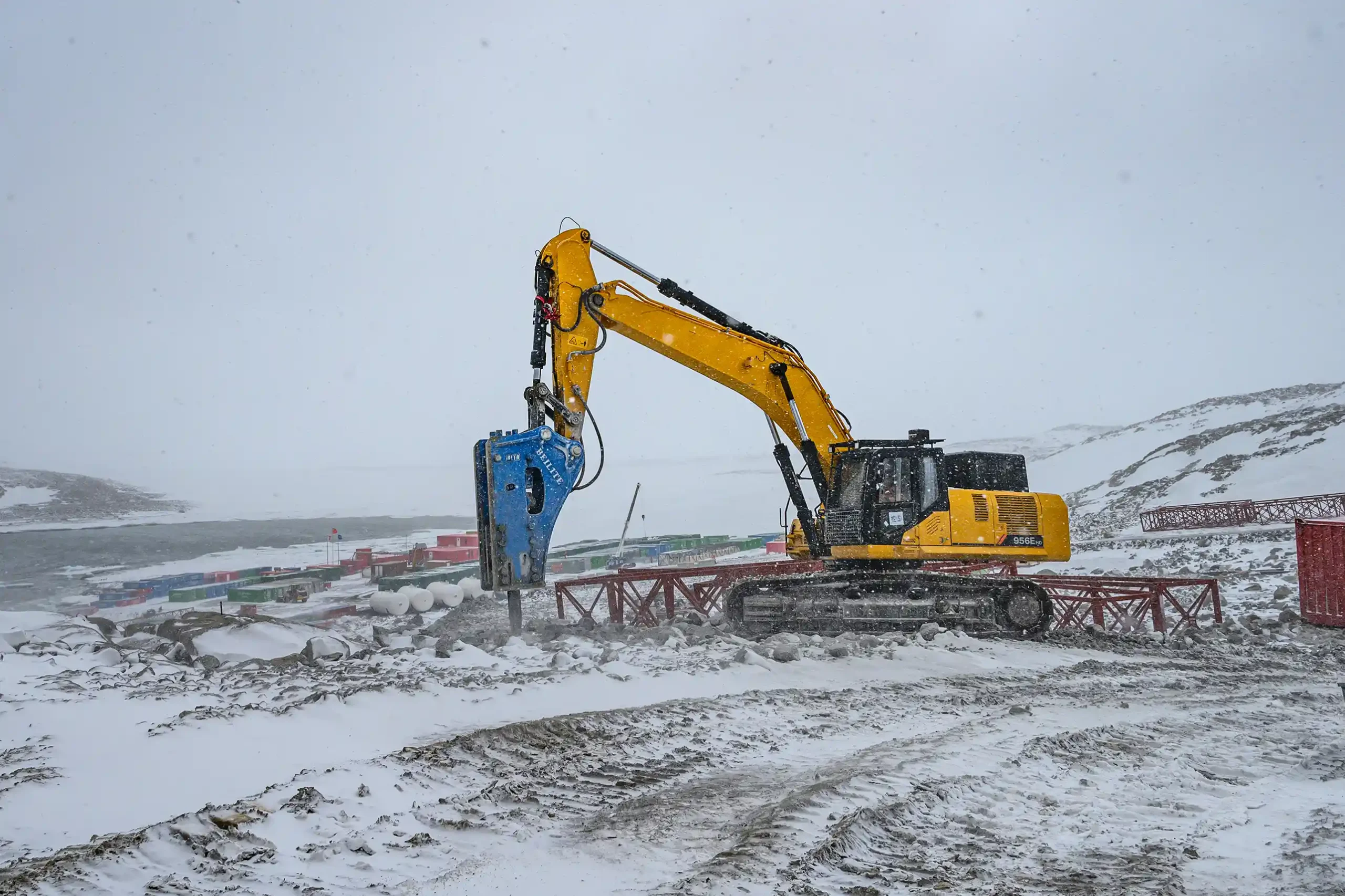
!Hydraulic Breaker working in Antarctica
 ## Preparing Your Equipment Before Winter Arrives
The work you do before cold weather sets in determines how much trouble you’ll face once it arrives. Proactive maintenance isn’t optional for reliable hydraulic breaker winter operation—it’s the foundation everything else builds on.
Start with a thorough inspection of every hydraulic line, fitting, and seal. Look for any signs of wear, cracking, or seepage. A minor leak that’s barely noticeable in September can become a major failure point when temperatures drop and materials contract. Replace anything questionable now rather than dealing with it on a frozen jobsite.
Accumulator charging deserves particular attention. Nitrogen pressure inside the accumulator fluctuates with temperature changes, and what reads as correct at 20°C will be significantly lower at -15°C. Check the manufacturer’s specifications for cold-weather pressure settings and adjust accordingly.
Establish preheating procedures for both the carrier machine and the breaker itself. Bringing components up to operating temperature gradually—rather than demanding full performance from a cold system—reduces thermal shock and extends equipment lifespan considerably.
Selecting the Right Hydraulic Fluid for Sub-Zero Work
Hydraulic fluid selection makes or breaks cold weather performance. Standard oils that work perfectly in moderate conditions become thick enough to starve pumps and damage seals when temperatures plunge.
Low-viscosity hydraulic oils maintain their flow characteristics at colder temperatures. The key specifications to watch are pour point (the lowest temperature at which the oil will flow) and viscosity index (how much the oil’s thickness changes across temperature ranges). A higher viscosity index means more consistent behavior from cold startup to full operating temperature.
| Viscosity Grade (ISO VG) | Minimum Operating Temperature (°C) | Maximum Operating Temperature (°C) | Application Notes |
|---|---|---|---|
| ISO VG 15 | -40 | 0 | Extreme cold, minimal warm-up time |
| ISO VG 22 | -30 | 10 | Very cold conditions, improved pump efficiency |
| ISO VG 32 | -20 | 20 | Standard cold weather, balanced performance |
| ISO VG 46 | -10 | 30 | Moderate cold, general-purpose winter use |
Your breaker’s manual will specify acceptable fluid grades. When conditions push beyond those specifications, contact the manufacturer for tailored recommendations rather than guessing.
For additional guidance on equipment selection and maintenance, our article on 《Hydraulic Breaker Hammer for Mini Compact Excavator》 covers related considerations.
Running the Breaker Safely in Freezing Conditions
How you operate the machine matters as much as how you prepare it. The procedures that work in warm weather can cause serious damage when applied to cold equipment.
Extended warm-up periods are non-negotiable. Cycle the hydraulic system gradually, letting fluid circulate through all circuits before applying load. This brings oil temperature up progressively and allows seals to reach their proper operating dimensions. Rushing this step invites shock loads that stress every component in the system.
Resist the temptation to run at full power immediately after startup. Even after warm-up, the first several minutes of operation should involve reduced intensity. Let the breaker find its rhythm before demanding peak performance.
Operator training specific to cold weather protocols pays dividends. Workers who understand why these procedures matter—not just what to do, but the consequences of shortcuts—make better decisions when conditions deteriorate or schedules pressure them to move faster.
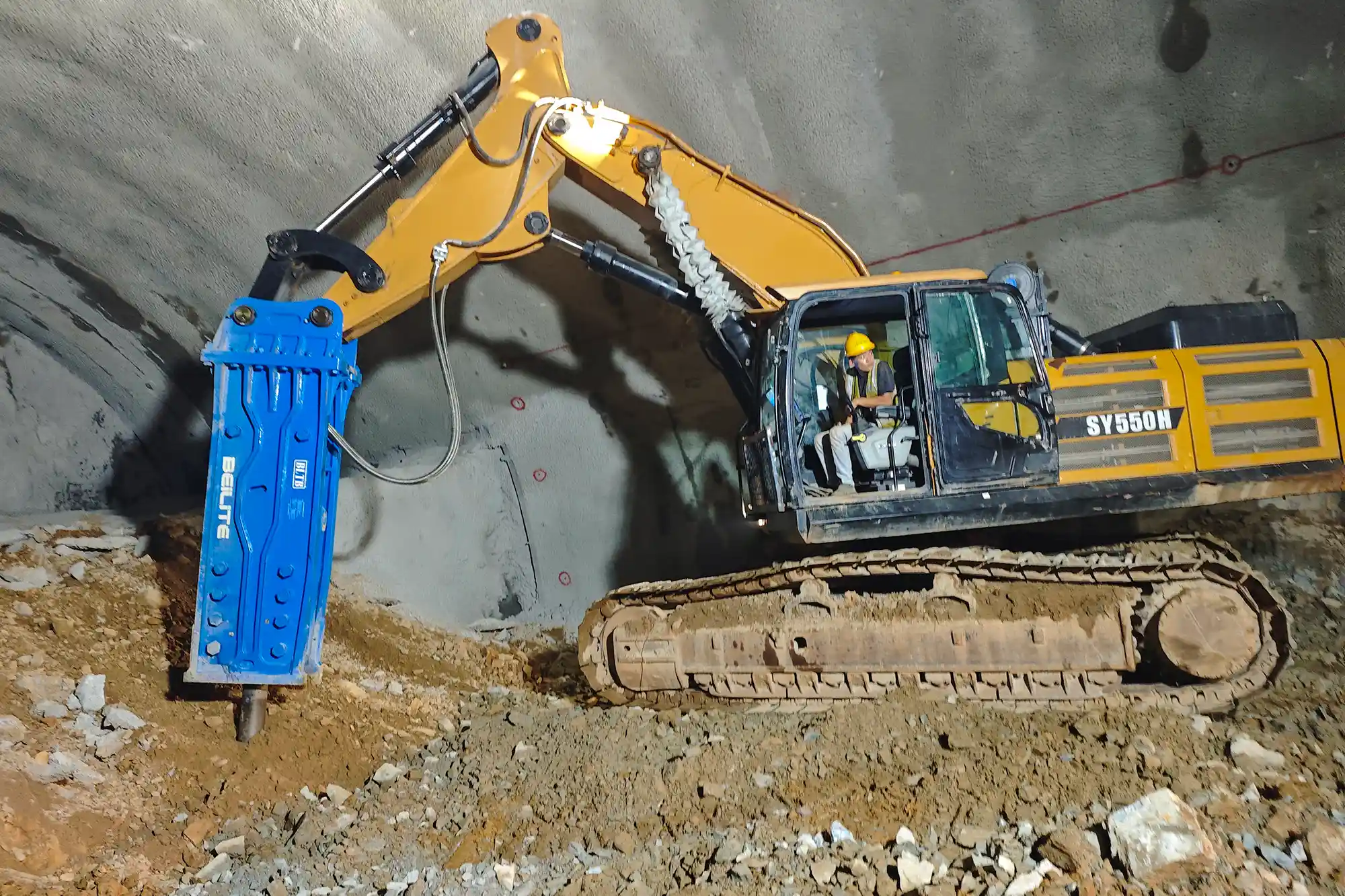
!Tunneling Rock Breaker
 ## Diagnosing Winter-Specific Problems
Certain issues appear almost exclusively in cold conditions. Recognizing them early prevents minor inconveniences from becoming major repairs.
Sluggish performance or weak impact power usually points to hydraulic oil that’s too thick for current temperatures or accumulator pressure that’s dropped below effective levels. Check both before assuming something more serious has failed.
Seal leaks that weren’t present before often result from material contraction or cold-induced brittleness. Rubber compounds shrink slightly in cold, and if a seal was already marginal, that small dimensional change can open a leak path.
Ice formation presents a subtler threat. Condensation inside hydraulic lines or reservoirs can freeze, restricting flow or creating blockages. This happens most often when equipment sits overnight in cold conditions after running warm during the day—moisture in the air condenses on cold internal surfaces.
Check hoses regularly for flexibility. A hose that’s become stiff and unyielding is more likely to crack under pressure or fail at connection points. Tool wear also accelerates in cold conditions, so inspect cutting edges more frequently than you would in summer.
Protecting Seals and Hoses from Cold-Weather Damage
Seal and hose failures account for a significant portion of winter downtime. Preventing them requires attention to both materials and operating practices.
Lubrication becomes more challenging in cold weather. Standard greases can thicken to the point of uselessness, leaving metal-to-metal contact where protection should exist. Switch to low-temperature grease formulations rated for your operating conditions.
Inspect hoses before each shift, looking for surface cracks, stiffness, or any change in flexibility compared to normal conditions. Replace compromised hoses immediately—a rupture under pressure in freezing conditions creates both equipment damage and safety hazards.
Storage matters. Keeping the breaker indoors or under cover when not in use minimizes exposure to temperature extremes and reduces the thermal cycling that stresses seals. If indoor storage isn’t possible, covering the breaker with insulated wraps provides some protection.
Gradual warm-up procedures protect seals by allowing them to reach operating temperature before experiencing full system pressure. Avoiding pressure spikes during operation—which means smooth, controlled movements rather than abrupt inputs—further reduces seal stress.
Storing Equipment for Extended Cold Periods
When a hydraulic breaker won’t be used for weeks or months during winter, proper storage preparation protects your investment and ensures the machine is ready when work resumes.
Clean the unit thoroughly before storage. Dirt and debris left on surfaces can trap moisture, promoting corrosion during the storage period. Apply anti-corrosion agents to all exposed metal surfaces, paying particular attention to the tool, bushings, and any unpainted areas.
Drain the hydraulic system and refill with fresh, winter-grade oil. Old oil may contain moisture or contaminants that become more problematic during extended storage. Fresh fluid provides better protection and ensures the system is ready for cold-weather operation when you return to work.
Check accumulator charge and adjust to storage specifications if your manufacturer provides them. Cap all hydraulic ports to prevent contamination from dust, moisture, or debris. These preventative steps for hydraulic system protection take minimal time but prevent significant problems.
!Excavator Hammer for Infrastructure Construction
 ## Technology Advances for Cold-Weather Performance
Engineering improvements continue to expand what’s possible in extreme conditions. Modern hydraulic breakers incorporate design features specifically intended to handle temperature extremes.
Advanced materials now used in critical components maintain their properties across wider temperature ranges. Alloys and polymers engineered for cold resistance don’t become brittle as quickly, reducing fracture risk and extending service intervals.
Hydraulic circuit design has evolved to optimize flow characteristics even when oil viscosity increases. Better accumulator technology maintains more stable nitrogen pressure across temperature swings, delivering consistent impact energy regardless of ambient conditions.
Beilite’s BLT and BLTB product lines reflect these engineering advances. The focus on maintaining performance in severe conditions—including the kind of cold that stops lesser equipment—means operators can work through conditions that would sideline older designs.
Specialized Equipment for Extreme Cold
Beyond standard cold-weather preparation, specialized attachments and modifications exist for operations in the harshest environments.
Insulated hose wraps maintain hydraulic fluid temperature by reducing heat loss to ambient air. This keeps oil viscosity in the optimal range longer and reduces warm-up time requirements.
Low-temperature seals made from specialized compounds remain flexible at temperatures that would cause standard seals to harden and crack. These materials cost more but pay for themselves in reduced downtime and repair costs.
Integrated preheating systems—either built into the breaker or the carrier machine—bring equipment to operating temperature faster and more uniformly than passive warm-up alone. Some manufacturers offer complete cold weather packages that combine appropriate hydraulic fluid, reinforced components, and heating elements into a single upgrade.
Frequently Asked Questions About Hydraulic Breaker Winter Operation
How frequently should hydraulic breaker oil be changed for winter operation?
Oil change intervals typically need to shorten during winter operation, particularly in extreme cold. The specific frequency depends on your oil type, accumulated operating hours, and manufacturer guidelines. More important than following a fixed schedule is monitoring oil condition—check viscosity and contamination levels regularly. Oil that’s degraded or contaminated compromises hydraulic system protection and accelerates wear on pumps, valves, and cylinders.
What are the signs of a hydraulic breaker Hammer struggling in cold weather?
Watch for sluggish startup response, reduced impact power compared to normal operation, unusual noise during cycling, stiff or slow hydraulic functions, and any visible leaks from seals or hose connections. These symptoms indicate the system is fighting against cold-induced resistance. Addressing them promptly—whether through additional warm-up time, fluid changes, or component replacement—prevents the escalation that leads to major repairs and extended downtime.
Can using the wrong fuel type affect hydraulic breaker performance in winter?
The breaker itself runs on hydraulic power, not fuel directly. But the excavator or loader providing that hydraulic power depends on its engine, and engine performance directly affects available hydraulic flow and pressure. Summer diesel can gel in cold temperatures, causing hard starts, reduced power, and inconsistent engine operation. These problems translate to inadequate hydraulic supply for the breaker. Ensuring the carrier machine runs on winter-grade fuel is essential for maintaining full breaker capability.
Contact Beilite Machinery for Advanced Hydraulic Breaker Solutions
BEILITE Machinery Co., LTD has spent over two decades developing hydraulic breakers that perform reliably in demanding conditions. Our participation in national standard formulation and portfolio of hundreds of patents reflects a commitment to engineering excellence that shows up in real-world performance.
The BLT and BLTB product lines are built for operators who can’t afford downtime—including those working through winter conditions that challenge both equipment and personnel. If you’re facing cold-weather operational challenges or want to discuss equipment options for your specific conditions, reach out at [email protected] or call 40008-40008.