 English
 French
Hydraulic Breaker vs Pneumatic Breaker: An Expert Comparison
Picking the right breaker comes down to understanding what each type actually does well and where it falls short. Hydraulic and pneumatic models solve different problems, and the choice matters more than most equipment decisions because it affects everything from daily productivity to long-term costs. This breakdown covers the mechanical differences, real performance gaps, and practical factors that determine which option fits specific job conditions.
How Hydraulic and Pneumatic Breakers Generate Force
Hydraulic breakers and pneumatic breakers work on completely different principles, which explains why they perform so differently in the field.
Hydraulic breakers tap into an excavator’s existing hydraulic system. High-pressure oil from the pump activates a piston inside the breaker housing. That piston compresses nitrogen gas stored in an accumulator, building up energy. When the system releases, the stored pressure drives the piston down hard against the tool bit. The incompressibility of hydraulic fluid makes this energy transfer remarkably efficient. Every stroke delivers consistent force because the fluid doesn’t absorb or waste energy the way gases do.
Pneumatic breakers rely on compressed air from an external compressor. Air pressure moves a piston back and forth, and that piston strikes the tool bit directly. The design is mechanically simpler with fewer components. But air compresses under pressure, which means energy gets lost as heat and through the compression cycle itself. The result is less force reaching the tool bit compared to what goes into the system.
Real Performance Differences in Impact and Application
Impact force and energy efficiency separate these two breaker types more than any other factor.
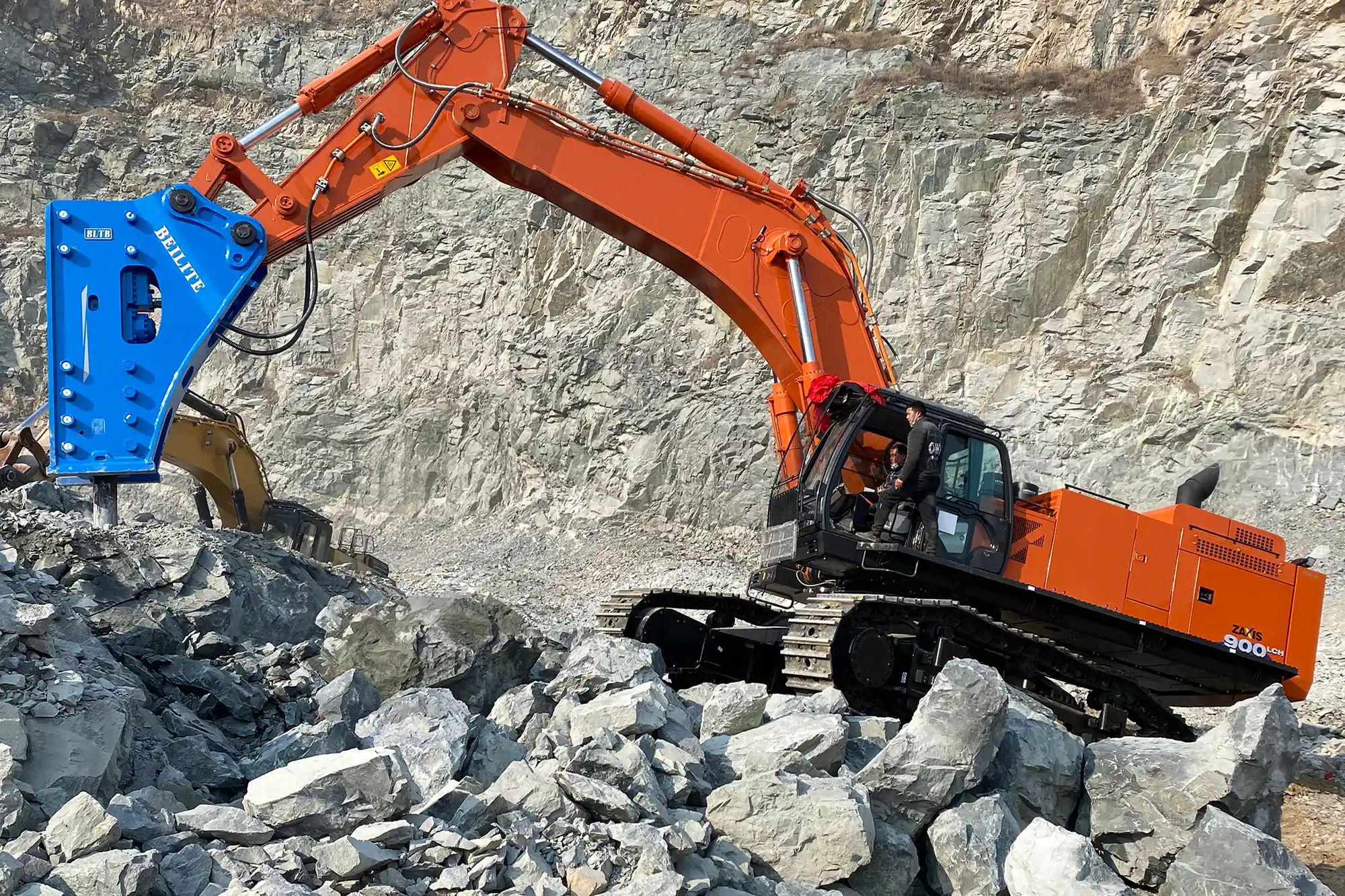
Hydraulic breakers generate substantially more impact energy per blow. Hydraulic fluid allows precise control over piston stroke length and frequency while multiplying force effectively. A BLT-165 hydraulic breaker running on a 33-38 ton excavator operates at 210-230 bar working pressure, producing enough force to break reinforced concrete and hard rock efficiently. The power-to-weight ratio also works in favor of hydraulic systems, meaning smaller carriers can handle demanding breaking work.
Pneumatic breakers deliver lower energy per impact. They can cycle faster, but each individual blow carries less force. This makes them practical for lighter demolition and situations where portability matters more than raw power. The tradeoff is needing an air compressor on site, which adds equipment and logistics. For sustained work on hard materials or large infrastructure projects, pneumatic breakers simply cannot match what hydraulic systems deliver.
| Feature | Hydraulic Breaker | Pneumatic Breaker |
|---|---|---|
| Power Source | Excavator’s hydraulic system (fluid power) | External air compressor (compressed air) |
| Impact Force | High to very high (e.g., BLT-155: 200-300 bpm) | Medium to low |
| Energy Transfer | Highly efficient | Less efficient due to air compressibility |
| Applications | Heavy-duty demolition, hard rock, large projects | Light demolition, small-scale breaking, confined spaces |
| Carrier | Excavators, backhoes, skid steers | Handheld, smaller machinery, specialized rigs |
Maintenance Demands and Safety Factors
Day-to-day operation and long-term reliability depend heavily on maintenance requirements and safety characteristics.
Hydraulic breakers need attention to their fluid systems. Regular checks on hydraulic fluid levels, filter condition, and seal integrity prevent contamination that can damage internal components. The complexity of the hydraulic circuit means maintenance requires some specialized knowledge. Beilite engineers hydraulic breakers for extended service intervals, which reduces how often equipment sits idle for maintenance. Products meet national standards for safety and environmental performance.
Pneumatic breakers have simpler internal mechanisms, but the external compressor adds its own maintenance burden. Filters need changing, oil levels need monitoring, and air lines need inspection for leaks. Noise is a significant concern with pneumatic equipment. These breakers run considerably louder than hydraulic models, creating occupational health issues for operators working near them regularly. Hydraulic breakers offer better vibration control and more precise operation, both of which reduce operator fatigue and injury risk over time.
Focus on hydraulic breaker to improve efficiency. If you’re interested, check 《Hydraulic Breaker Hammer for Mining and Quarrying》.
Total Cost Beyond the Purchase Price
Looking only at sticker price misses most of what determines actual equipment costs.
Hydraulic breakers cost more upfront than pneumatic alternatives. That initial gap narrows quickly when operating expenses enter the calculation. Running an excavator’s hydraulic system to power a breaker burns less fuel than running a separate air compressor alongside the carrier machine. The efficiency difference compounds over weeks and months of operation.
Durability also shifts the math. Hydraulic breakers built with quality components and sound engineering last longer under heavy use. A BLT-150 designed for 24-27 ton excavators with 150-210 L/min working oil flow handles sustained demanding work without premature wear. Longer service life spreads the purchase cost across more productive hours, improving return on the equipment investment. For operations running breakers intensively, the total cost picture favors hydraulic systems despite higher initial outlay.
Matching Breaker Type to Actual Job Requirements
The right choice depends entirely on what the work actually demands.
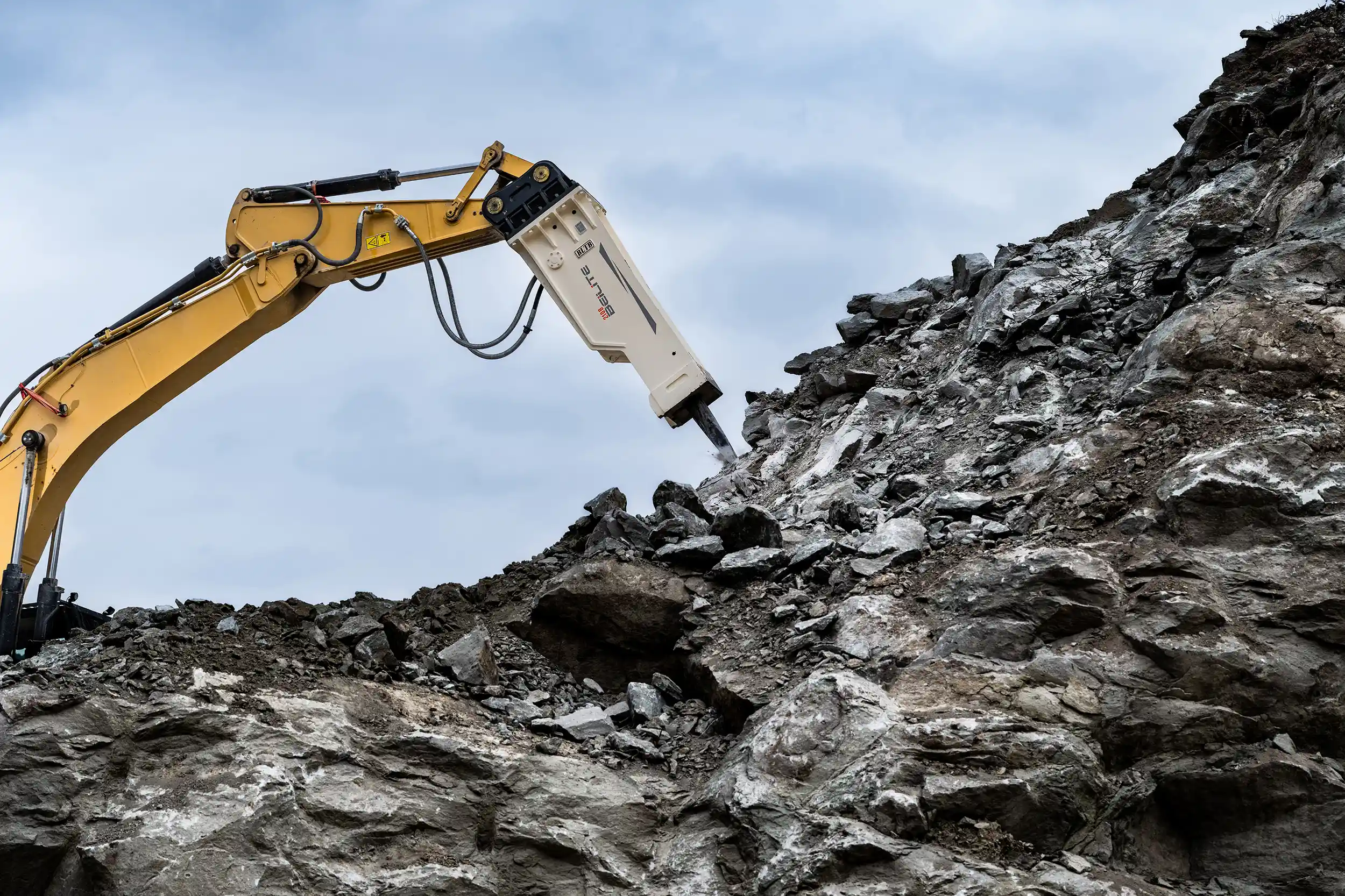
Heavy demolition, quarrying, and breaking hard materials call for hydraulic breakers. The combination of high impact force, sustained performance, and excavator integration makes them the practical option for serious breaking work. BLT hydraulic breakers range from the compact BLT-40 for 0.5-1.2 ton excavators up to the BLT-165 for 33-38 ton machines, covering applications across the spectrum.
Pneumatic breakers fit lighter tasks and situations where portability matters more than power. Confined spaces where an excavator cannot operate, intermittent small jobs, and applications where compressed air is already available all favor pneumatic equipment. But for consistent power, efficiency, and versatility, hydraulic breakers outperform pneumatic models in most professional applications. Beilite’s experience across global working conditions helps match specific equipment to specific site needs.
Frequently Asked Questions About Breaker Selection
Which type of breaker is more powerful for demolition?
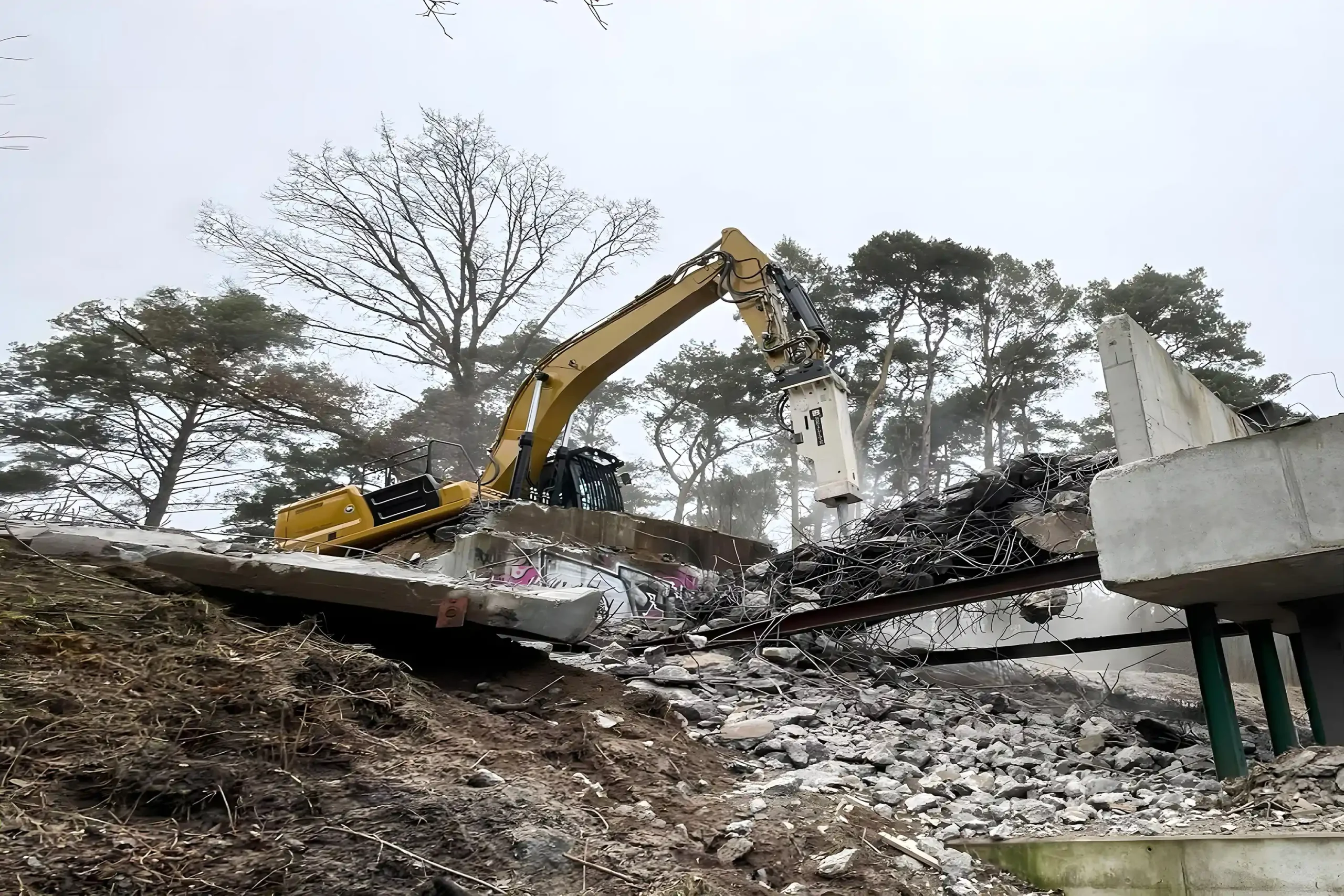
Hydraulic breakers deliver more power for demolition work. They draw from the excavator’s hydraulic system to produce consistent high-energy impacts that break reinforced concrete and hard rock efficiently. This power advantage translates directly to faster progress on large demolition projects.
What are the typical maintenance requirements for each breaker type?
Hydraulic breakers need regular hydraulic fluid checks, filter replacements, and seal inspections to keep the system clean and functional. Pneumatic breakers require compressor maintenance including filter changes and oil monitoring, plus inspection of air lines for leaks. Both types need consistent greasing and tool bit inspection regardless of power source.
Can pneumatic breakers be used with excavators?
Some smaller pneumatic breakers can attach to certain excavators, but this setup is uncommon. Excavators are built around hydraulic systems, and their attachments work best when they tap into that existing power source. Pneumatic breakers typically pair with dedicated air compressors rather than excavator mounting.
Are there environmental considerations when choosing between them?
Hydraulic breakers run quieter than pneumatic models, which matters in urban areas or near occupied buildings. Both types generate dust requiring suppression measures. Hydraulic systems carry some risk of oil leaks, so proper maintenance and spill prevention matter for environmental compliance.
What is the lifespan difference between hydraulic and pneumatic breakers?
Lifespan depends heavily on maintenance quality and operating conditions for both types. Hydraulic breakers with robust construction and efficient power transfer tend to last longer under heavy use. Pneumatic breakers can also achieve long service life with proper care, though the compressor adds another component that ages independently.
Partner with BEILITE for Hydraulic Breaker Solutions
Breaker selection shapes project outcomes in ways that extend well beyond the equipment itself. BEILITE Machinery Co., Ltd. has specialized in hydraulic breaker development and manufacturing since 2002. BLT and BLTB products perform across diverse global conditions, backed by contributions to national hydraulic breaker standards in China and hundreds of patents reflecting ongoing engineering advancement. Reach out for equipment recommendations matched to specific project requirements. Email: [email protected], Phone: 40008-40008.