 English
 French
Hydraulic Breaker vs Hammer: Unpacking Demolition Tool Differences
We often encounter confusion regarding the terms “hydraulic breaker” and “hydraulic hammer” in the demolition industry. While these terms are frequently used interchangeably, subtle technical distinctions exist that impact equipment selection and operational efficiency. Understanding these nuances is crucial for optimizing project outcomes and maximizing equipment lifespan. This article will clarify the terminology, operational mechanics, and application suitability of these powerful demolition tools.
Defining Hydraulic Breakers and Hammers Core Terminology
The terms “hydraulic breaker” and “hydraulic hammer” are largely synonymous in common industry parlance. Historically, “hammer” might have implied a broader category of percussive tools, while “breaker” specifically referred to attachments for breaking rock or concrete. However, modern manufacturing and marketing have blurred these lines. At BEILITE Machinery Co., LTD., we use both terms to describe our robust range of excavator attachments designed for demolition and rock breaking. Our BLT and BLTB series exemplify this, offering powerful solutions regardless of the specific nomenclature. The key is to focus on the tool’s specifications and intended application rather than solely on its name.
Operational Mechanics: Percussion Systems and Energy Transfer
The core of any hydraulic demolition tool lies in its percussion system, which converts hydraulic power into impact energy. This process typically involves a piston driven by hydraulic fluid, which then strikes a tool bit. A critical component in many designs, including those from BEILITE, is the nitrogen accumulator. This device stores energy, stabilizes hydraulic pressure, and enhances the impact force, contributing significantly to the tool’s efficiency.
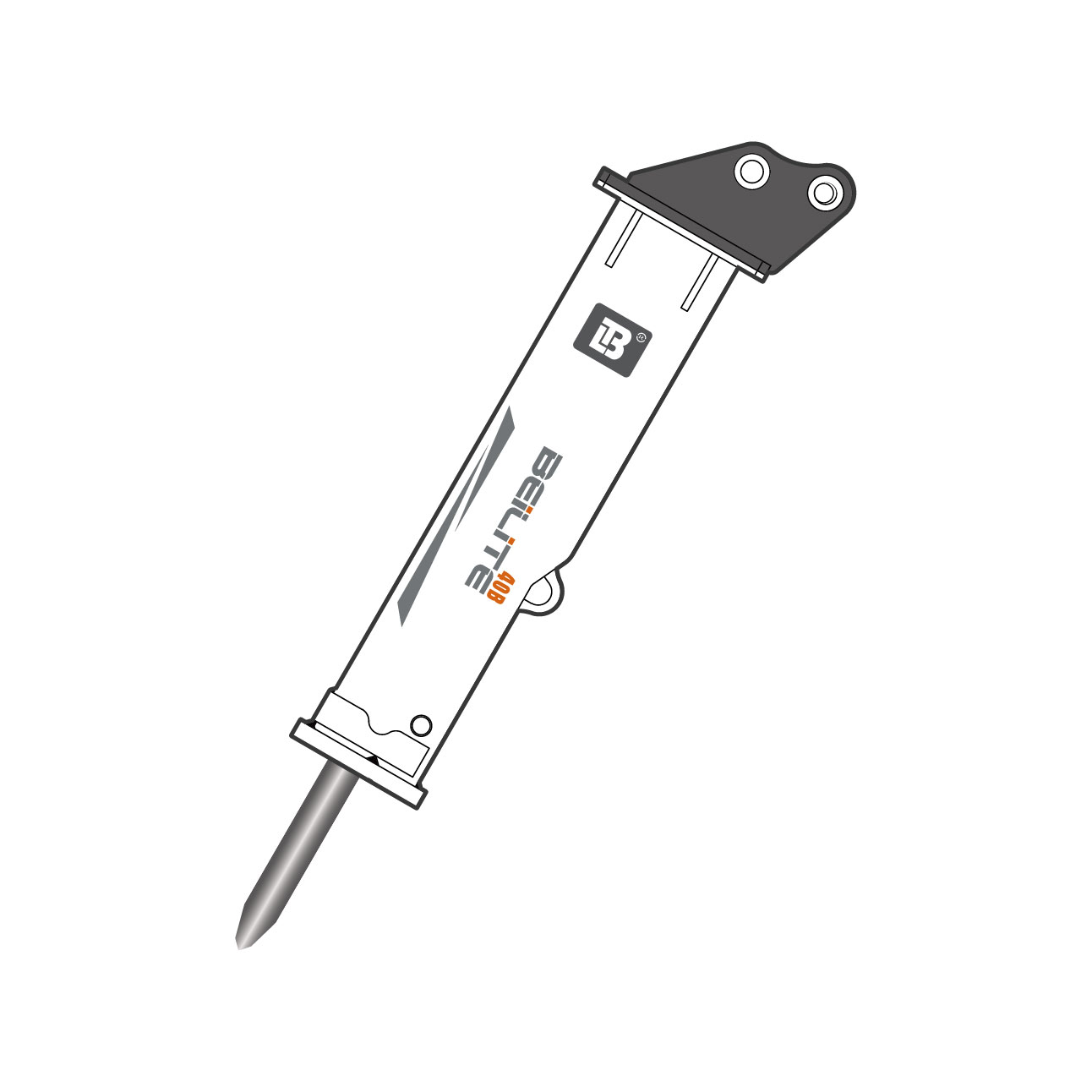
Our advanced designs optimize this energy transfer. For instance, the BLT-155, designed for 27–33 t excavators, operates with a working pressure of 200–220 bar and a blow frequency of 200–300 bpm. This careful engineering ensures maximum impact energy for demanding tasks. The nitrogen accumulator pressure, typically 55–60 bar in our larger models like the BLT-70 and above, plays a vital role in maintaining consistent performance and reducing hydraulic system shock. Understanding these internal mechanisms helps in appreciating why BEILITE’s hydraulic breakers deliver superior power and durability.
Application Suitability: Matching Tools to Demolition Tasks
Selecting the appropriate demolition tool hinges on matching its capabilities to the specific task. While both hydraulic breakers and hammers perform percussive demolition, their design characteristics can make one more suitable than the other for certain applications. For instance, a tool with a higher impact force and lower frequency might be preferred for breaking extremely hard rock in quarrying operations. Conversely, a tool with a higher frequency might be more efficient for concrete demolition where rapid, successive blows are beneficial.
BEILITE’s BLT and BLTB series offer a versatile range to address diverse working conditions. For example, our BLT-40, suitable for 0.5–1.2 t mini excavators, is ideal for light demolition and municipal engineering tasks with its 800–1400 bpm frequency. For heavier applications, the BLT-165, designed for 33–38 t excavators, provides substantial impact with a 150–300 bpm frequency. This range ensures optimal performance whether you are undertaking Hydraulic Breaker Hammer for Demolition&Rock Breaking or specialized tasks like Hydraulic Breaker Hammer for Mining and Quarrying.
| Model | Applicable Excavator (t) | Chisel Diameter (mm) | Working Oil Flow (L/min) | Blow Frequency (bpm) |
|---|---|---|---|---|
| BLT-40 | 0.5–1.2 | 40 | 15–30 | 800–1400 |
| BLT-75 | 6–8.5 | 75 | 50–90 | 400–800 |
| BLT-125 | 14–18 | 125 | 90–120 | 350–650 |
| BLT-150 | 24–27 | 150 | 150–210 | 200–300 |
| BLT-165 | 33–38 | 165 | 200–260 | 150–300 |
If you are looking for specific solutions, you might find our article 《Hydraulic Breaker Hammer for Mini Compact Excavator》 particularly informative.
Performance Metrics: Impact Force, Frequency, and Durability
Performance metrics like impact force, blow frequency, and tool durability are critical differentiators among demolition tools. Impact force, measured in joules, indicates the power of each blow. Blow frequency, expressed in blows per minute (bpm), determines how rapidly these impacts occur. Durability, influenced by material quality and design, dictates the tool’s service life and maintenance requirements.
BEILITE’s patented technologies contribute to superior performance across these metrics. Our BLT series, for instance, features robust construction and optimized internal components to deliver consistent, high impact force. The BLT-100, designed for 10–14 t excavators, achieves 350–700 bpm while maintaining a working pressure of 150–170 bar. This balance of force and frequency ensures efficient material breakdown. Furthermore, our commitment to quality materials and advanced manufacturing processes extends the service life of our hydraulic breaker Hammer, reducing downtime and operational costs.
Strategic Selection: Optimizing Your Investment in Demolition Equipment
Strategic selection of demolition equipment involves a comprehensive assessment of various factors. Consider the type and hardness of the material to be broken, the scale of the project, and the available carrier machine’s hydraulic capacity. For instance, a Hydraulic Breaker Hammer For Backhoe,Factory Direct Price might be ideal for certain tasks, while a larger unit is needed for heavy-duty quarrying. The long-term value of high-quality equipment, like BEILITE’s BLT and BLTB series, often outweighs initial cost savings from lesser alternatives. Our tools are engineered for durability and efficiency, offering a strong return on investment through reduced maintenance and increased productivity.
Contact Us for Expert Demolition Solutions
As a national high-tech enterprise with over two decades of innovation and hundreds of patents, BEILITE Machinery Co., LTD. is dedicated to providing high-end hydraulic breakers engineered for global trust. Discover how our BLT and BLTB series can optimize your demolition and rock breaking projects. Contact us today at [email protected] or call 40008-40008 for expert consultation and to explore our comprehensive range of solutions.
What are the key operational differences between a hydraulic breaker and a hydraulic hammer?
While often used interchangeably, the primary operational difference lies in their internal percussion mechanisms and the resulting impact characteristics. A ‘hydraulic breaker’ typically emphasizes sustained, powerful blows for heavy-duty demolition, whereas a ‘hydraulic hammer’ might imply a broader range of applications with varying impact frequencies. BEILITE’s advanced designs, across both terminologies, focus on maximizing energy transfer and durability for diverse tasks.
Which applications are best suited for a hydraulic breaker versus a hydraulic hammer?
The suitability depends on the specific material and project scale. Hydraulic breakers are generally ideal for robust tasks like rock excavation, concrete demolition, and quarrying due to their high impact force. Hydraulic hammers, encompassing a wide range, can be adapted for similar heavy-duty work or more specialized tasks. BEILITE’s BLT and BLTB series are engineered to cover a vast spectrum of working conditions, ensuring optimal performance for your specific needs.
How does the internal design impact the performance of these demolition tools?
The internal design, particularly the piston and nitrogen accumulator system, critically influences impact energy, frequency, and overall efficiency. BEILITE’s continuous innovation in core technologies has led to breakthroughs in internal design, resulting in superior power, reduced recoil, and enhanced durability for our hydraulic breakers and hammers. This advanced engineering ensures consistent, high-performance output in demanding environments.