 English
 French
Hydraulic Breaker Vibration: Comprehensive Guide to Causes & Control
Anyone who’s spent time running a hydraulic breaker knows the feeling when something’s off. The rhythm changes, the machine fights back harder than it should, and by the end of a shift your arms remember every impact. That vibration isn’t just uncomfortable—it’s telling you something about how energy moves through the system, where it’s being wasted, and what’s wearing down faster than it needs to. Getting this right matters for the equipment, for the operator, and for whether the job actually gets done efficiently.
Where Hydraulic Breaker Vibration Actually Comes From
Excessive hydraulic breaker vibration rarely has a single cause. It builds from a combination of mechanical wear, hydraulic irregularities, and how the tool gets used in the field. Pinpointing the source requires looking at the whole system rather than chasing symptoms.
Mechanical Wear That Creates Instability
Components wear down, and when they do, the precise movements that make a breaker work efficiently start to break down too.
A worn or improperly sharpened chisel changes how energy transfers into the material. Instead of clean penetration, the breaker bounces, sending shock loads back through the machine. Tool pins develop play over time, allowing the tool to move unpredictably within the housing. Bushings and retainers that should hold everything in alignment start letting things shift.
Mounting bolts matter more than people often realize. Loose or incorrectly torqued bolts let the entire attachment vibrate against the carrier arm, amplifying every impact. And if there’s any cracking or damage to the breaker housing or mounting bracket, structural integrity suffers and instability follows.
Hydraulic System Behavior and Its Role
The hydraulic circuit drives everything, so any irregularity there shows up as vibration at the working end.
Sudden pressure spikes cause erratic piston movement. The accumulator’s nitrogen pre-charge directly affects impact energy delivery—get it wrong and the breaker either hits too hard or not hard enough, both creating vibration problems. For reference, models like the BLT-70 through BLT-165 typically need accumulator nitrogen pressure in the 55-60 bar range to operate smoothly.
Contaminated hydraulic oil causes valve blockages and accelerates component wear. Insufficient oil flow prevents proper cycling, leading to inconsistent impacts that the operator feels as roughness and vibration.
Practical Approaches to Reducing Hydraulic Breaker Vibration
Cutting down on vibration involves both how the equipment gets operated and what technology goes into the breaker itself.
Operating Technique Makes a Real Difference
The person running the breaker has significant control over how much vibration the system generates.
Keeping the breaker perpendicular to the work surface ensures energy transfers efficiently into the material rather than bouncing back. Consistent downward pressure maintains contact between chisel and material—losing that contact even briefly creates blank firing, which generates severe internal shocks.
Material assessment matters too. Softer materials don’t need aggressive operation, and pushing harder than necessary just creates unnecessary stress. And matching the breaker to the carrier is fundamental. A BLT-40 with its 40mm chisel suits 0.5-1.2 ton excavators, while a BLT-165 with a 165mm chisel belongs on 33-38 ton machines. Mismatches create problems from the start.
Engineering Solutions Built Into Modern Breakers
Good breaker design addresses vibration at the source rather than just managing symptoms.
Anti-vibration mounts isolate the breaker from the carrier, absorbing shock before it transmits through the boom. Internal dampening mechanisms dissipate shock waves within the breaker housing itself. Intelligent hydraulic systems regulate oil flow and pressure to minimize the fluctuations that cause rough operation.
Fully enclosed housings contain vibrational energy while also reducing noise. These aren’t just comfort features—they directly affect how long components last and how much fatigue accumulates over a work shift.
For related equipment considerations, see 《Hydraulic Breaker Hammer For Backhoe,Factory Direct Price》.
What Happens When Hydraulic Breaker Vibration Goes Unmanaged
The consequences of ignoring vibration problems extend beyond immediate discomfort. They affect equipment value and operator health in ways that compound over time.
Equipment Degradation Accelerates
Constant vibration wears internal components faster than normal operation would. Pistons, seals, and bushings all suffer. The excavator arm itself experiences structural fatigue from continuous stress.
Hydraulic seals fail earlier, causing leaks and efficiency losses. Bearings take damage from high-frequency vibration exposure. Hoses and pipes crack from the constant movement. All of this translates to higher maintenance costs and shorter equipment life—exactly the opposite of what anyone wants from a capital investment.
Operator Health Risks Are Serious
Hand-Arm Vibration Syndrome develops from prolonged exposure and affects blood vessels, nerves, and joints. It’s not a minor inconvenience—it’s a debilitating condition that can end careers.
Beyond HAVS, high vibration levels cause fatigue that reduces concentration and increases accident risk. Musculoskeletal problems in the back, neck, and shoulders become more likely. Productivity drops as operators work through discomfort or take more breaks. And in many regions, vibration exposure limits aren’t just guidelines—they’re legal requirements.
How Beilite Approaches Low-Vibration Breaker Design
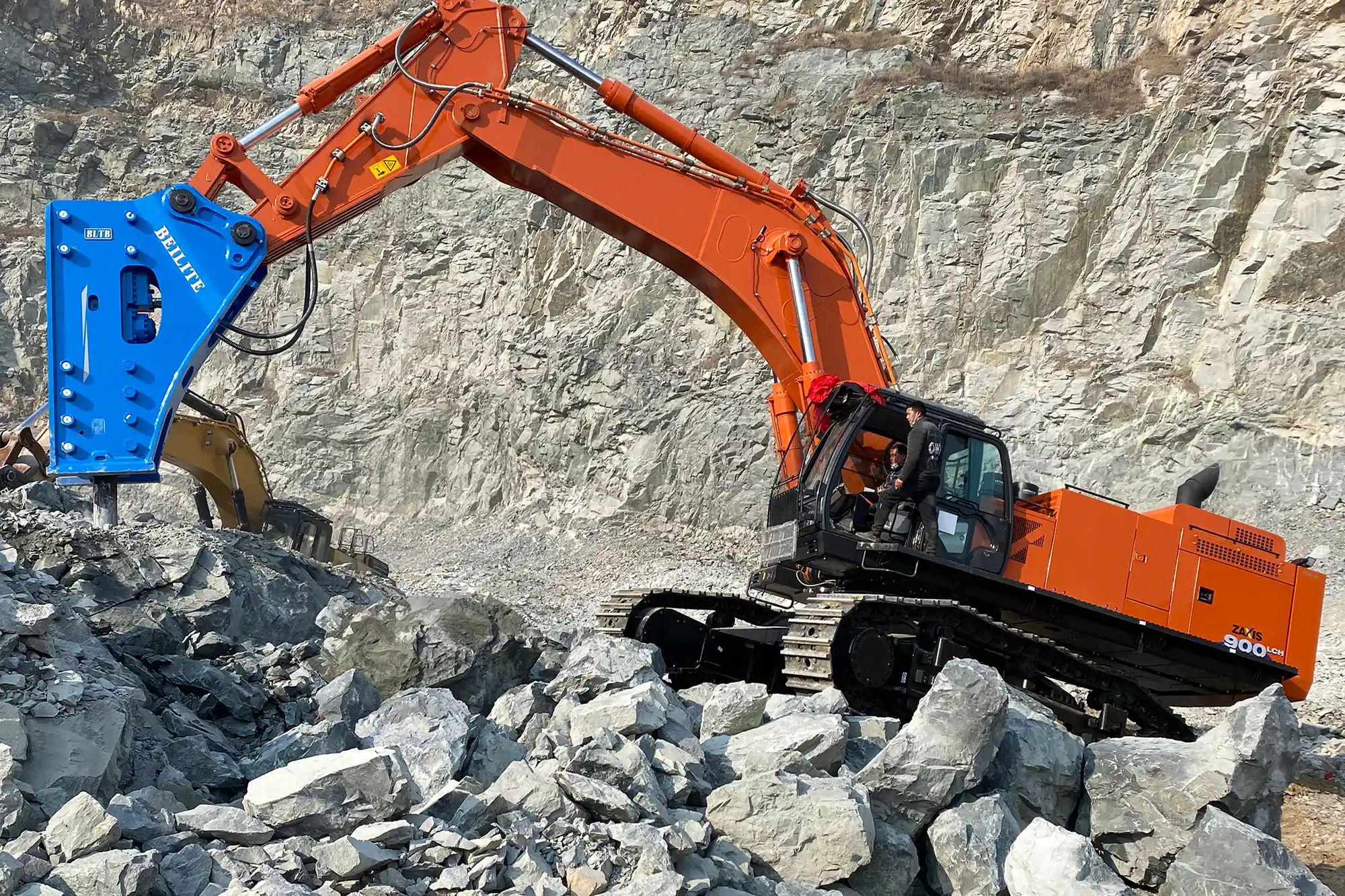
BEILITE Machinery, operating since 2002 as a national high-tech enterprise, focuses specifically on reducing vibration through engineering rather than just adding dampers after the fact.
The BLT and BLTB product lines incorporate precision-machined components and optimized hydraulic circuits calibrated for smooth operation. The BLT-70, for example, runs at 110-140 bar working pressure with rear cylinder nitrogen at 14-17 bar and accumulator pressure at 55-60 bar—all tuned to minimize operational vibration for 4.5-6 ton excavators.
This attention to hydraulic breaker vibration control reflects hundreds of patents and continuous development work aimed at delivering impact power without the associated stress on equipment and operators.
Making Vibration Management Standard Practice
Managing hydraulic breaker vibration isn’t a one-time fix. It requires attention to maintenance schedules, operating practices, and equipment selection. The payoff comes in longer equipment life, lower repair costs, and operators who can work productively without accumulating physical damage. Choosing breakers engineered for low vibration from the start makes every other aspect of vibration management easier to maintain.
Work With BEILITE
BEILITE’s BLT and BLTB series breakers are engineered for operators and equipment managers who take vibration seriously. With decades of development and hundreds of patents behind the designs, these breakers deliver the impact energy needed for demanding work while minimizing the stress that shortens equipment life and affects operator health. Reach out at [email protected] or call 40008-40008 to discuss which model fits your application.
Common Questions About Hydraulic Breaker Vibration
What kind of equipment damage results from ongoing vibration problems?
Chisels, bushings, tool pins, and mounting brackets all wear faster under excessive vibration. The excavator arm itself can develop structural fatigue. Hydraulic hoses fail earlier, seals leak, and bearings degrade. The cumulative effect is significantly higher maintenance costs and reduced equipment lifespan. Regular inspection catches problems before they cascade into major repairs.
How does vibration exposure affect operators over time?
The primary concern is Hand-Arm Vibration Syndrome, which damages blood vessels, nerves, and joints in the hands and arms. Operators also experience fatigue that affects concentration, increasing accident risk. Musculoskeletal problems in the back, neck, and shoulders become more common with sustained exposure. Following exposure limits and using properly maintained, low-vibration equipment protects long-term health.
What maintenance tasks actually help with vibration reduction?
Checking and maintaining correct nitrogen pressure in the accumulator is essential—incorrect pressure directly affects how the breaker cycles. Keeping the chisel sharp and tool pins in good condition prevents bouncing and play. Mounting bolts need regular torque verification. Hydraulic oil quality and pressure settings should be monitored. Following manufacturer service intervals and using genuine wear parts prevents the gradual degradation that leads to vibration problems.