 English
 French
Hydraulic Breaker Pressure Testing: Mastering System Diagnostics
Getting accurate pressure readings from a hydraulic breaker tells you more about system health than almost any other single diagnostic. The numbers reveal wear patterns, seal integrity, and pump condition long before visible symptoms appear. I’ve found that technicians who build pressure testing into their routine catch problems weeks earlier than those who wait for performance drops. The process itself is straightforward once you understand what each reading means and where deviations point.
Pressure Testing Determines Equipment Reliability
Accurate pressure testing forms the backbone of effective hydraulic breaker maintenance. The relationship between pressure readings and equipment performance is direct and measurable. When pressure falls outside specified ranges, the consequences show up as premature wear, weakened impact force, and in severe cases, complete component failure.
Preventative diagnostics through precise pressure measurement extend system longevity in ways that reactive maintenance cannot match. Industry data consistently shows that regular hydraulic system checks reduce unscheduled downtime by up to 30% and extend breaker lifespan by 15-20%. Those numbers translate into substantial cost savings over a machine’s working life. Subtle shifts in hydraulic pressure serve as early warning signals, allowing intervention before damage spreads to the breaker or the host excavator.
Testing Procedures That Produce Reliable Results
Performing comprehensive pressure testing on hydraulic breakers requires adherence to standardized methodologies and safety protocols. Proper execution of these steps identifies potential system anomalies and maintains optimal breaker functionality. The sequence matters because each measurement builds context for interpreting the next.
Tools Required for Accurate Measurement
Accurate pressure testing depends on specialized, high-precision tools. Calibrated pressure gauges matched to expected operating ranges form the foundation. A hydraulic test kit with various adapters and hoses allows connection to different test point locations across breaker models.
For complete system assessment, a flow meter and temperature sensor provide additional data on hydraulic fluid behavior. Temperature affects viscosity, which in turn influences pressure readings. Regular calibration of all testing equipment maintains measurement integrity over time.
Executing the Test Sequence
Systematic execution minimizes errors and ensures comprehensive data collection. Each step builds on the previous one.
- Safety First: Wear appropriate personal protective equipment and ensure the excavator is securely parked with the engine off before starting any work.
- Connect Gauges: Attach pressure gauges to designated test ports on the hydraulic breaker and the excavator’s hydraulic lines.
- Warm-Up System: Start the excavator and allow the hydraulic system to reach normal operating temperature.
- Idle Pressure Check: With the breaker idle, record the system’s static pressure.
- Operating Pressure Check: Engage the breaker and record the working pressure during operation.
- Accumulator Pressure Check: If applicable, test the accumulator pressure according to manufacturer guidelines.
- Relief Valve Pressure Check: Verify the pressure relief valve setting by observing maximum pressure achieved when the breaker is stalled.
- Record Data: Document all readings accurately, noting any deviations from manufacturer specifications.
- Disconnect Safely: Turn off the excavator, relieve any residual pressure, and carefully disconnect testing equipment.
Reading the Numbers and Finding the Problem
Interpreting pressure test results requires correlating observed readings with known hydraulic faults. The diagnostic process works backward from symptoms to causes.
Consistently low pressure during operation might indicate a worn main pump, a faulty relief valve, or internal leakage within the breaker. High pressure faults point toward blockages, incorrect relief valve settings, or a damaged accumulator. Accumulator pressure deserves particular attention because improper pre-charge reduces impact energy and increases system shock. Cavitation effects, often indicated by unusual noise and reduced performance, show up through pressure and flow analysis when other causes have been ruled out.
Typical Operating Pressures Across Breaker Classes
Operating pressures vary significantly based on breaker size and design. Light-duty breakers like the BLT-40 operate at 90–120 bar, while medium-duty models such as the BLT-75 require 120–150 bar. Heavy-duty breakers including the BLT-155 operate at 200–220 bar to deliver maximum impact force. These specifications serve as critical benchmarks for proper breaker operating pressure.
| Breaker Model | Applicable Excavator (t) | Operating Pressure (bar) | Overflow Valve Pressure (bar) |
|---|---|---|---|
| BLT-40 | 0.5–1.2 | 90–120 | 130 |
| BLT-75 | 6–8.5 | 120–150 | 180 |
| BLT-100 | 10–14 | 150–170 | 210 |
| BLT-135 | 18–22 | 160–180 | 210 |
| BLT-155 | 27–33 | 200–220 | 250 |
Corrective Actions Based on Test Findings
Once pressure testing identifies specific issues, implementing corrective actions restores hydraulic system performance. The fix depends entirely on what the readings revealed.
Low-pressure readings may require adjustments to the pressure relief valve, or a worn pump might need replacement. High-pressure issues often trace back to clogged filters or hoses, and recalibrating the relief valve resolves many cases. Seal replacement addresses internal leakage and restores hydraulic integrity. Fluid contamination causes premature wear and pressure fluctuations, making fluid analysis and filtration part of the corrective process. Regular preventative measures guided by pressure testing avoid the major breakdowns that shut down operations.
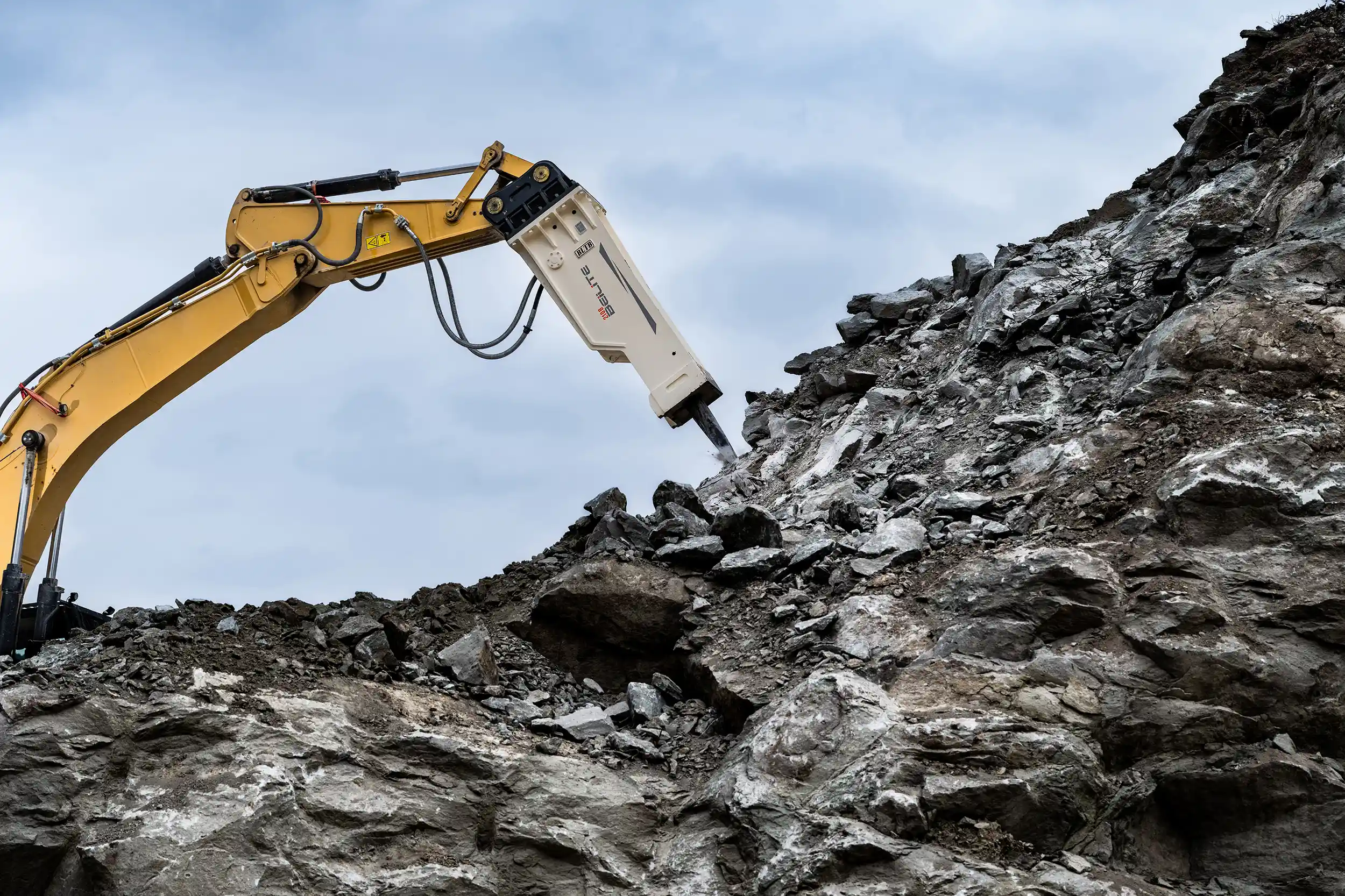
If you are interested in how hydraulic breakers perform in demanding environments, consider reading 《Hydraulic Breaker Hammer for Mining and Quarrying》.
Building a Maintenance Schedule Around Pressure Data
Strategic maintenance underpinned by regular pressure testing extends hydraulic breaker lifespan. Effective maintenance schedules based on usage and environmental conditions prevent component wear before it becomes critical. Using genuine parts in all repairs ensures compatibility and maintains system integrity.
Beilite reliability stems from a commitment to high-quality components and precision engineering, ensuring sustained performance in diverse applications, from Hydraulic Breaker Hammer for Demolition&Rock Breaking to Hydraulic Breaker Hammer for Mini Compact Excavator.
Testing Frequency Recommendations
The frequency of hydraulic breaker pressure testing depends on usage intensity, environmental conditions, and manufacturer recommendations. Heavy-duty applications or extreme conditions call for quarterly testing. Standard operations generally warrant semi-annual or annual checks. Always consult your breaker’s manual for specific service intervals. Usage-based maintenance programs optimize testing schedules by tracking actual operating hours rather than calendar time.
Warning Signs of Incorrect Operating Pressure
Several observable symptoms indicate a hydraulic breaker operating at incorrect pressure. Reduced impact force stands out as a primary indicator because the breaker cannot deliver its full power. Excessive heat generation in the hydraulic system suggests inefficiency or internal leakage. Unusual noise such as banging or screeching often points to cavitation or component wear. Slow operation or erratic piston movement signal pressure anomalies requiring immediate inspection.
Partner with Beilite for Superior Hydraulic Breaker Solutions
Ensure your hydraulic breakers operate at peak efficiency and reliability. Beilite Machinery Co., LTD, a leader in high-end hydraulic breaker innovation, offers products engineered for superior performance and durability. We participate in national standards formulation and hold hundreds of patents, reflecting our commitment to advanced technology. Partner with us for expert insights, robust equipment, and dedicated support that minimizes downtime and maximizes your operational output. Contact Beilite today to discuss your hydraulic breaker needs or schedule a consultation with our technical specialists. Email: [email protected] Phone: 40008-40008.
Frequently Asked Questions
What is the primary benefit of regular hydraulic breaker pressure testing?
Regular hydraulic breaker pressure testing catches potential issues before they escalate into costly breakdowns. Testing ensures your breaker operates within optimal parameters, maximizing impact force, extending lifespan, and significantly reducing unexpected downtime. This proactive approach to hydraulic breaker Hammer maintenance protects your investment and keeps operations running.
Can incorrect hydraulic pressure damage my breaker or excavator?
Operating a hydraulic breaker at incorrect pressure causes damage to both the breaker and the excavator’s hydraulic system. Overpressure accelerates wear on seals and internal components. Underpressure reduces efficiency and can cause cavitation, shortening the life of critical parts. Proper pressure management protects system integrity, particularly for equipment used in demanding applications like Hydraulic Breaker Hammer for Underwater Construction.
How do Beilite hydraulic breakers ensure consistent pressure performance?
Beilite hydraulic breakers incorporate advanced internal designs and high-quality components that maintain pressure consistency. R&D efforts focus on optimizing hydraulic flow and accumulator systems, ensuring stable operating pressures across diverse conditions. This precision engineering produces reliable, high-performance breakers meeting stringent national and international standards, even in extreme working conditions such as those requiring Models for Scaling Machine.