 English
 French
Hydraulic Breaker Pressure: Optimizing Performance and System Health
Getting hydraulic breaker pressure right feels like tuning an instrument. Too tight and something breaks. Too loose and the performance falls flat. I’ve watched operators chase demolition problems for hours when the real issue was a pressure setting that drifted 20 bar off spec. The fix took five minutes once someone actually checked the gauge.
This piece walks through the mechanics of hydraulic breaker pressure, how to dial in the correct settings, and what to do when things go wrong. The goal is simple: keep your breaker hitting hard without destroying itself or the carrier machine underneath it.
How Hydraulic Breaker Pressure Actually Works
The basic mechanics are straightforward. Hydraulic fluid from the carrier machine’s pump creates pressure that drives a piston. That piston slams into the chisel, and the chisel breaks material. What makes this interesting is the relationship between pressure, flow rate, and impact energy.
Higher pressure means more force behind each blow. Adequate flow rate keeps the piston cycling fast enough to deliver rapid, consistent impacts. Push beyond the recommended pressure range and you start wearing components faster than they should wear. The system wasn’t designed for that load.
Beilite’s engineering approach matches breaker specifications precisely to carrier hydraulic systems. The BLT-40, built for 0.5–1.2 t excavators, runs optimally at 90–120 bar with 15–30 L/min flow. Compare that to the BLT-155, which handles 27–33 t excavators and needs 200–220 bar with 180–240 L/min. These aren’t arbitrary numbers. They represent the sweet spot where impact force, cycle speed, and component longevity all balance out.
Running outside these parameters creates problems. Too much pressure generates excess heat. Too little pressure means weak impacts and wasted fuel. Either way, you’re compromising both the breaker’s impact force adjustment capability and overall hydraulic system compatibility.

Setting and Adjusting Optimal Hydraulic Breaker Pressure
Getting hydraulic breaker pressure calibrated correctly matters more than most operators realize. The difference between optimal settings and slightly-off settings shows up in cycle times, fuel consumption, and maintenance intervals. Wrong settings either waste energy or cause damage that accumulates over time.
The adjustment process centers on relief valve settings. These valves control maximum system pressure by diverting flow once a threshold is reached. Setting them correctly protects the system while allowing full performance.
How do I adjust the operating pressure of a hydraulic breaker?
Adjusting operating pressure requires methodical work and attention to safety.
Start by reading your breaker’s manual for the specific pressure range and adjustment procedure. Park the carrier machine on level ground, shut down the engine, and depressurize the hydraulic system completely.
Find the main relief valve. It might be on the breaker itself or in the carrier machine’s hydraulic circuit. Attach a calibrated pressure gauge for hydraulic breaker testing to the designated test port.
Start the carrier machine and let the hydraulic oil reach operating temperature. Cold oil behaves differently than warm oil, so this step matters. Operate the breaker briefly and note the pressure reading.
Adjust the relief valve in small increments. Clockwise increases pressure. Counter-clockwise decreases it. Check the reading after each adjustment. Stay within the manufacturer’s specified optimal range.
Once you hit the target, secure all settings and remove the gauge. Run a functional test to confirm proper operation and impact force before putting the machine back to work.
For more detail on matching breakers to smaller machines, our article on 《Hydraulic Breaker Hammer for Mini Compact Excavator》 covers the specifics.
Diagnosing and Troubleshooting Hydraulic Breaker Pressure Issues
Pressure problems announce themselves through symptoms that experienced operators learn to recognize. Reduced impact force is the obvious one. Erratic operation, where the breaker seems to hesitate or stutter, points to pressure instability. Excessive heat generation suggests the system is working harder than it should.
Consider a BLT-75 breaker that normally operates at 120–150 bar. If performance drops noticeably, a pressure check should be the first diagnostic step. Use a reliable gauge to measure both operating pressure and relief valve setting. Catching high pressure hydraulic breaker issues or low breaker pressure early prevents cascading failures.
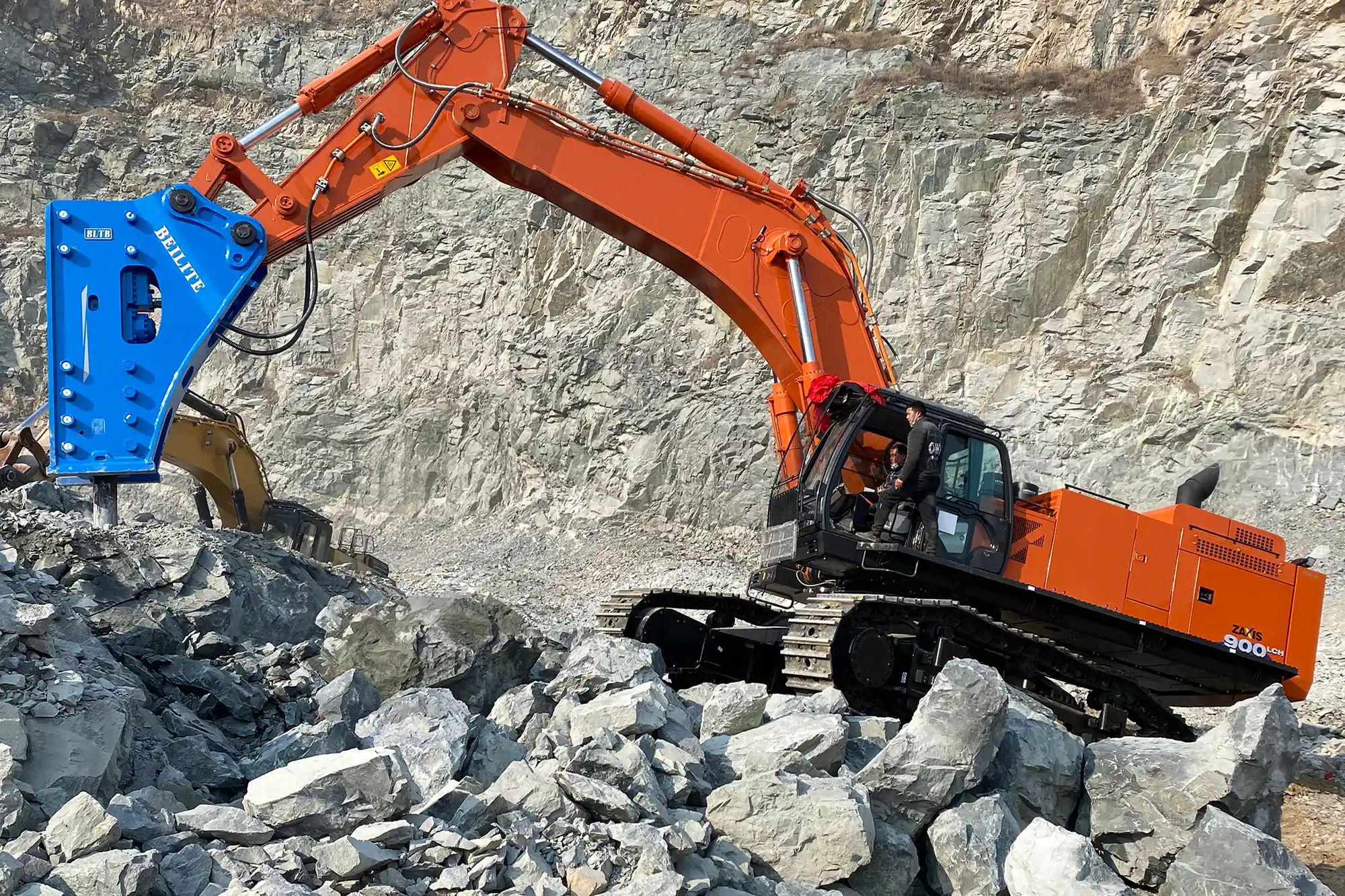
What are the common causes of hydraulic breaker pressure loss?
Pressure loss usually traces back to a handful of root causes.
Worn or damaged seals inside the breaker allow hydraulic fluid to bypass the piston instead of driving it. The pressure gauge might read normal, but the effective force reaching the chisel drops because fluid is leaking past where it shouldn’t.
The carrier machine’s hydraulic pump can develop internal wear or cavitation. When the pump can’t deliver adequate flow, pressure suffers regardless of how the breaker is set up.
Relief valves sometimes fail or drift out of adjustment. A valve that opens prematurely diverts fluid before pressure builds to working levels.
Accumulator problems contribute too. Low nitrogen pressure in the accumulator reduces the stored energy available for each impact, which shows up as weaker blows and pressure instability.
Regular inspections of seal integrity breaker components and hydraulic pump efficiency catch these issues before they become expensive repairs.
The Role of Nitrogen Pressure in Accumulator Performance
The accumulator does more than most people give it credit for. It functions as a hydraulic shock absorber, storing energy during the piston’s return stroke and releasing it to boost the next impact. This smooths out the pressure pulses that would otherwise hammer the carrier machine’s hydraulic system.
Proper nitrogen charging keeps the accumulator doing its job. The BLT-70, designed for 4.5–6 t excavators, specifies 55–60 bar nitrogen pressure. That charge level supports the breaker’s 110–140 bar operating pressure and maintains impact frequency between 500–900 bpm.
When nitrogen pressure drops, impacts become inconsistent. The accumulator can’t store enough energy to supplement the hydraulic pump’s output, so blow strength varies depending on exactly when in the cycle each impact lands. Maintaining correct nitrogen pressure accumulator levels directly affects both performance and component life. Regular checks and charging of hydraulic breaker accumulator systems should be part of standard maintenance.
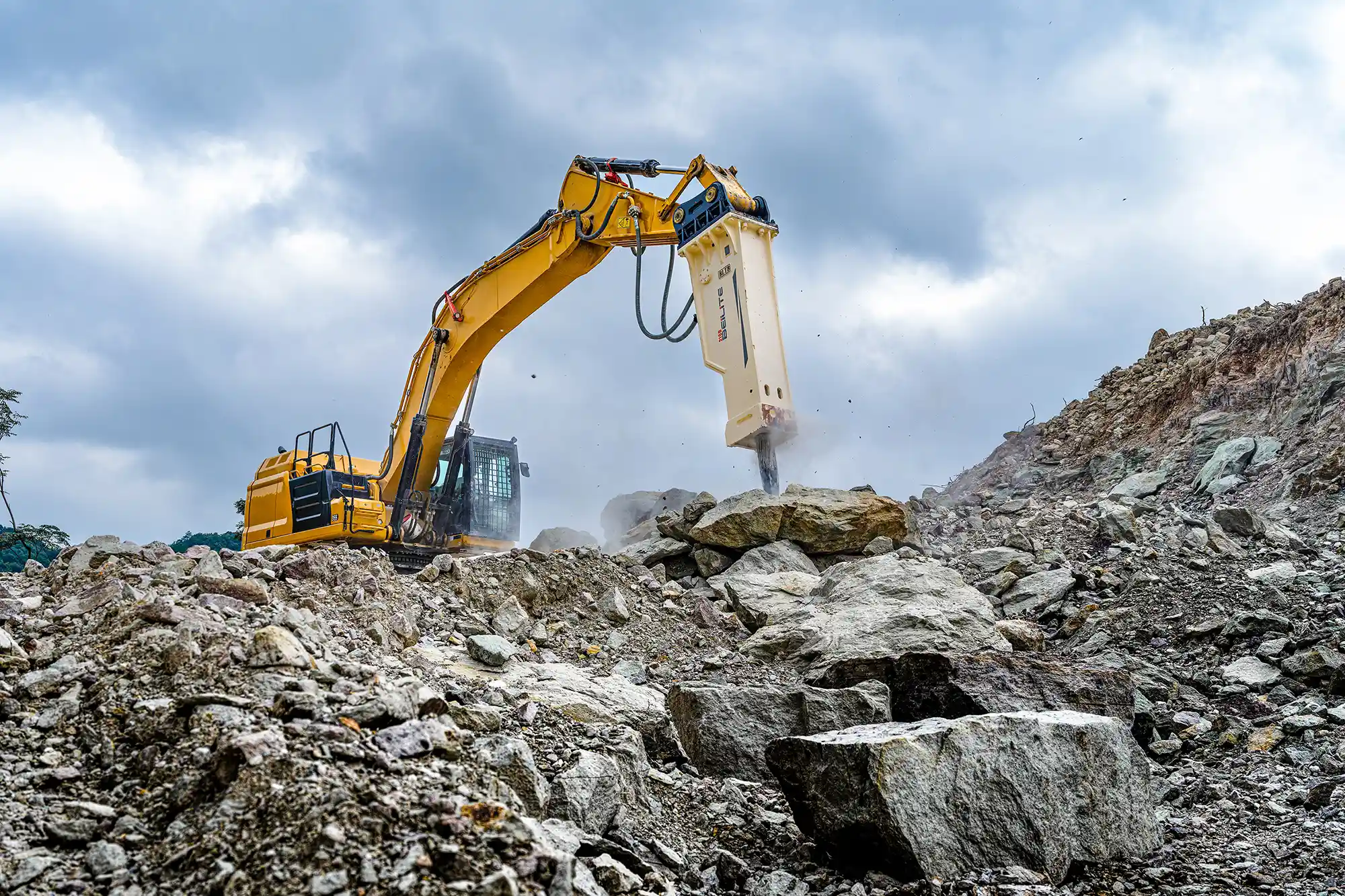
What is the role of nitrogen pressure in a hydraulic breaker’s accumulator?
Nitrogen serves two functions in the accumulator. First, it stores energy. Nitrogen compresses during the piston’s rebound phase, absorbing hydraulic energy that would otherwise dissipate. When the piston starts its next power stroke, that stored energy releases, accelerating the piston faster than hydraulic pressure alone would achieve.
Second, nitrogen dampens shocks. The rapid pressure fluctuations generated during breaking would stress the carrier machine’s hydraulic components without something to absorb them. The accumulator smooths these spikes, protecting pumps, valves, and hoses from fatigue damage.
Proper nitrogen charging is essential for both accumulator energy storage and hydraulic shock absorption. Get it wrong and you sacrifice efficiency while accelerating wear on everything connected to the hydraulic circuit.
Maintaining Peak Hydraulic Breaker Pressure for Longevity
Consistent pressure doesn’t happen by accident. It requires attention to the factors that cause pressure to drift or degrade over time.
Hydraulic oil quality and temperature deserve daily attention. Contaminated oil accelerates seal wear. Hot oil loses viscosity and flows differently, changing effective pressure even when gauge readings look normal. The hydraulic oil temperature effects on performance become more pronounced as systems age.
Check hose connections daily. Inspect the chisel and bushings weekly. Excessive breaker chisel wear creates additional stress on the hydraulic system because the piston has to work harder to achieve the same breaking effect.
Follow manufacturer service intervals for filter replacement and oil changes. These schedules exist because engineers calculated how long components last under normal operating conditions. Skipping maintenance saves money in the short term and costs more later.
For a model like the BLT-100, which runs at 80–110 L/min and 150–170 bar, preventative maintenance hydraulic breaker practices make the difference between a machine that lasts and one that doesn’t.
For applications in demanding environments, explore our range of Hydraulic Breaker Hammer for Mining and Quarrying.
Partner with Beilite for Hydraulic Breaker Excellence
Beilite Machinery Co., LTD brings decades of engineering expertise and hundreds of patents to hydraulic breaker design. As a national high-tech enterprise that participates in formulating China’s national standards for hydraulic breakers, we understand what it takes to build equipment that performs under pressure.
Whether you need help optimizing hydraulic breaker pressure for your specific application, guidance on system compatibility, or maintenance support, our specialists can help. The BLT and BLTB product lines cover applications from compact excavators to heavy mining equipment.
Contact us at [email protected] or call 40008-40008 for solutions tailored to your operation.
Frequently Asked Questions
What is the ideal hydraulic breaker pressure for different materials?
Material hardness changes the equation significantly. Concrete, rock, and asite each respond differently to impact energy. Harder materials generally need higher impact energy, achieved through optimized pressure and flow combinations. The breaker’s size and the carrier machine’s hydraulic capacity set the upper limits on what’s achievable. Your breaker’s manual and Beilite’s specifications provide the starting point for dialing in settings for specific materials.
How does back pressure affect hydraulic breaker performance?
Back pressure restricts hydraulic oil returning from the breaker to the tank. When return flow can’t move freely, heat builds up in the system. Impact force drops because the piston can’t complete its cycle efficiently. Seals and internal components wear faster under these conditions. Proper hydraulic system design minimizes back pressure, and regular maintenance keeps return lines clear.
Can incorrect hydraulic breaker pressure damage the excavator?
Absolutely. Running too high creates stress that the excavator’s hydraulic pump and components weren’t designed to handle. Overheating, seal failures, and structural fatigue follow. Running too low causes different problems. Inefficient breaking means more time on each task, and the excessive vibration transfers to the excavator’s boom and pins. Matching breaker requirements to excavator capabilities protects both machines.