 English
 French
Hydraulic Breaker Oil Flow: Optimizing Performance and Longevity
Hydraulic Breaker Oil Flow: What Actually Matters for Performance and Longevity
Getting oil flow right on a hydraulic breaker isn’t complicated, but getting it wrong costs real money. Too little flow and you’re watching your operator struggle through material that should break clean. Too much and you’re replacing seals and hoses months ahead of schedule. The specifications exist for good reasons, and the breakers that last are the ones running within their designed parameters. This covers what happens inside the hydraulic circuit, why flow deviations cause the problems they do, and how to keep everything running where it should be.
What Happens Inside the Hydraulic Circuit
Hydraulic oil flow measures how much fluid moves through the system per minute. In a breaker, this flow drives the piston that generates impact force. The excavator’s pump sends oil to the breaker, starting the percussion cycle. Pressure builds, pushes the piston down, then releases so the piston can return. How efficiently this happens determines your power output and how fast you can work.
The flow rate has to be right for the piston to complete its full stroke at the intended frequency. Oil viscosity affects how smoothly fluid moves and how much heat builds up during operation. A properly designed circuit keeps flow consistent and minimizes energy losses along the way. Temperature matters more than many operators realize. When hydraulic fluid gets too hot, it breaks down faster and takes the seals and hoses with it.
Different breaker sizes need dramatically different flow rates. A BLT-40 runs on 15-30 L/min, while a BLT-165 needs 200-260 L/min. That range tells you something important about matching equipment to the job.
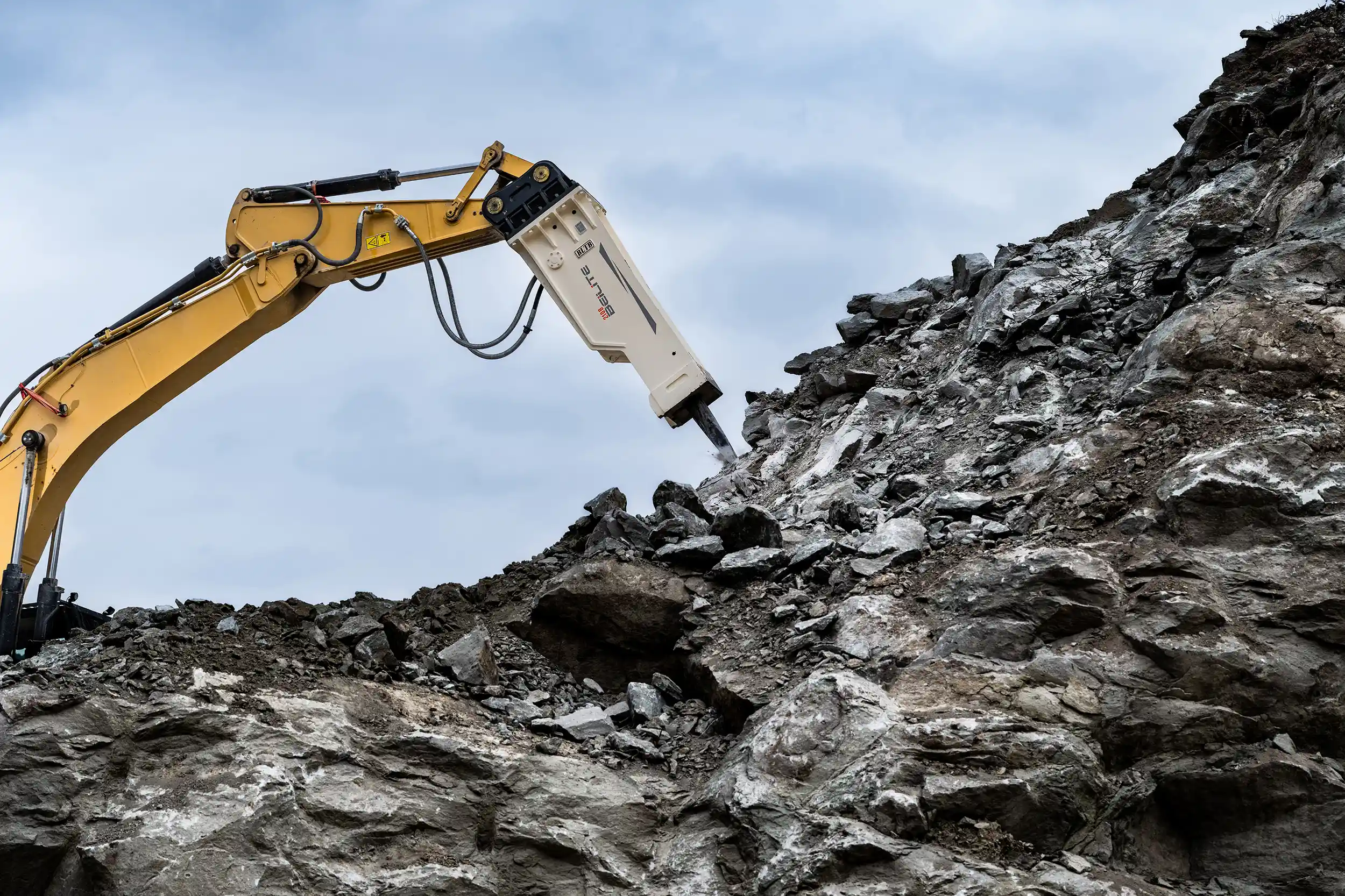
When Oil Flow Goes Wrong
Flow problems show up in predictable ways, and both directions cause trouble. Understanding the failure modes helps you catch issues before they become expensive.
When flow runs low, impact energy drops and blow frequency slows down. The breaker can’t reach full power, so material breaks inefficiently and jobs take longer. The hydraulic pump works harder trying to compensate, which generates heat. That heat degrades the fluid, damages seals, and shortens hose life. You end up replacing components that should have lasted much longer.
Excessive flow creates different problems. Pressure spikes stress internal components beyond their design limits. Seals wear out faster. Hoses fail prematurely. Cavitation becomes a real risk. When air bubbles form in the fluid and then collapse, they damage pumps and valves in ways that aren’t immediately obvious but show up later as performance degradation.
Both scenarios mean more maintenance, more downtime, and shorter equipment life. Regular flow checks during preventive maintenance catch deviations before they cascade into bigger problems.
Finding the Right Flow Rate
Every hydraulic breaker has specific flow requirements based on its design. A BLT-40 needs 15-30 L/min to hit its rated impact frequency and power. A BLT-100 requires 80-110 L/min. These numbers come from engineering calculations about piston stroke, impact energy, and cycle timing. The technical manual for your specific breaker contains the exact specifications, and those specifications matter. The excavator’s hydraulic output has to match what the breaker needs.
Keeping Flow Where It Should Be
Maintaining optimal oil flow requires attention to several factors that work together.
Start with the manufacturer’s specifications. Those flow rates and pressure settings reflect how the breaker was designed to operate. Running outside those parameters means running outside the engineering envelope.
Match the breaker to the excavator. An undersized carrier can’t deliver enough flow. An oversized one may push too much. Either mismatch creates problems that show up as performance issues or premature wear.
Measure actual flow periodically. A flow meter tells you what’s really happening, not what should be happening. Deviations from specifications indicate something has changed in the system.
Use the excavator’s auxiliary flow control valves to dial in the right rate. Most machines have this adjustment capability, and using it correctly makes a measurable difference.
Watch system pressure. High readings suggest blockages or incorrect settings. Low readings point toward pump problems or leaks somewhere in the circuit.
Keep operating temperature in the recommended range. Hot oil loses viscosity and lubricating properties. Components that run hot fail sooner.
Stay on top of fluid and filter changes. Clean oil flowing through clean filters maintains consistent performance. Contaminated fluid causes problems throughout the system.
Diagnosing Flow Problems
When something goes wrong, systematic troubleshooting saves time and identifies the actual cause rather than just treating symptoms.
Reduced impact force usually means insufficient flow or pressure. Slow cycle times point toward restricted flow or a control valve that isn’t working properly. Overheating can come from wrong viscosity oil, a clogged cooler, or flow rates that don’t match specifications.
Start with basics. Check fluid level and condition. Low levels let air into the system, which disrupts flow. Contaminated fluid clogs filters and orifices. Verify pressure settings against what the manufacturer specifies. Use a flow meter to confirm actual rates. Look at hoses and connections for leaks or damage. Make sure the oil cooler is doing its job.
If basic checks don’t reveal the problem, the pump or control valves need closer examination. Regular fluid analysis catches contamination and degradation early, before they cause flow problems that affect performance.
Performance Impact of Flow Deviations
When oil flow deviates from specifications, the energy transfer mechanism that makes the breaker work gets disrupted. Low flow means the piston moves slower and doesn’t complete its full stroke. Impact force drops. Cycle times stretch out. Less material breaks per hour.
High flow causes different damage. The pump wears faster. The system runs hotter. Cavitation becomes more likely. Impact consistency suffers as components struggle with pressures they weren’t designed to handle. Neither situation lets the hydraulic breaker operate at its designed capacity.
Fluid Quality and Filtration
The hydraulic fluid does three jobs simultaneously. It transmits power, lubricates moving parts, and carries heat away from components. When fluid quality degrades, all three functions suffer.
Viscosity has to be right for the operating conditions. Too thick and the fluid doesn’t flow efficiently. Too thin and lubrication suffers while heat builds up faster. The correct viscosity grade depends on the breaker design and the temperatures you’re working in.
Contamination causes more hydraulic system failures than any other single factor. Dirt, water, and wear particles clog filters, accelerate pump and valve wear, and compromise seal effectiveness. The damage often happens gradually, showing up as declining performance before anything actually fails.
Filtration isn’t optional. Regular filter changes remove contaminants before they cause damage. The maintenance schedule exists because contamination accumulates over time, and waiting until you notice problems means the damage has already started. Periodic fluid analysis tells you what’s happening inside the system before performance degrades noticeably.
Monitoring and Predictive Approaches
Modern hydraulic systems can be monitored continuously rather than checked periodically. Sensors track flow rate, pressure, temperature, and contamination levels in real time. That data goes somewhere useful, either to a display on the machine or to a remote monitoring system.
The value comes from catching small changes before they become big problems. A slight flow deviation or a temperature trend that’s creeping upward indicates something is changing in the system. Addressing it early costs less than waiting for a failure.
Predictive maintenance uses this data to schedule work based on actual conditions rather than fixed intervals. If flow measurements and pressure readings indicate a pump is wearing, you can plan the replacement during scheduled downtime rather than dealing with an unexpected failure in the middle of a job.
Why Flow Matters for Equipment Life
Correct oil flow prevents the stress that wears components out prematurely. When flow stays within specifications, the pump doesn’t work harder than it should. Seals don’t see pressure spikes that accelerate wear. Lubrication stays adequate. Heat stays manageable.
Components that operate within their design parameters last longer than components that don’t. That’s not complicated, but it’s easy to overlook when the breaker seems to be working. The damage from flow problems accumulates over time, and by the time performance drops noticeably, wear has already progressed significantly.
Common Questions About Hydraulic Breaker Oil Flow
What indicates insufficient hydraulic oil flow?
Low flow shows up as weaker impacts, slower cycle times, and a system that runs hotter than it should. Components wear faster because the pump works harder trying to compensate. Catching these signs early prevents the cascade of damage that follows when flow problems persist.
Does excessive flow damage breakers?
Excessive flow causes real damage, just different damage than low flow. System pressure rises beyond design limits. Heat builds up. Cavitation becomes more likely. Seals, hoses, and internal components wear out faster than they should. The breaker may still work, but its service life shortens significantly.
How frequently should flow be checked?
Operating hours, working conditions, and manufacturer recommendations all factor into the right interval. Flow should definitely be checked after installation, when switching attachments, or when performance seems off. Routine preventive maintenance should include flow verification. Fluid analysis can reveal flow-related problems between scheduled checks.
Working with Beilite
Beilite Machinery Co., LTD brings decades of hydraulic breaker development and manufacturing experience to every product. The BLT and BLTB brands reflect that expertise, backed by hundreds of patents and a track record of global exports. For consultation on hydraulic system optimization or to discuss specific application requirements, reach out at [email protected] or call 40008-40008.