 English
 French
Hydraulic Breaker Impact Energy: An Advanced Performance Guide
Hydraulic breakers turn hydraulic flow into percussive force, and that force has to go somewhere useful. Impact energy is the metric that tells you whether it will. Getting this number right matters more than most operators realize because it shapes everything from cycle times to tool wear. This piece breaks down what impact energy actually means, how to get the most from it, and where things tend to go wrong.
What Impact Energy Actually Measures
Hydraulic breaker impact energy quantifies the kinetic energy the piston delivers to the chisel on each stroke. The measurement typically appears in Joules or foot-pounds, with Joules being the international standard. A higher Joule rating generally means more breaking power against harder materials, though the relationship is not perfectly linear once you account for material properties and tool geometry.
The mechanism itself involves hydraulic fluid driving the piston upward, compressing nitrogen gas in the accumulator. That stored energy then propels the piston downward into the tool. The energy that actually reaches the chisel determines whether the material fractures or simply absorbs the blow.
Impact frequency and impact energy often pull in opposite directions during design. Some breakers prioritize high blow rates for faster material removal in softer applications. Others emphasize raw energy per blow for resistant rock. The BLT-40, for example, runs at 800-1400 blows per minute for lighter work, while the BLT-165 delivers 150-300 bpm with substantially more force behind each stroke. Neither approach is universally better. The material and the job dictate which balance makes sense.
Accurate impact energy ratings require rigorous testing during development. Internal components, particularly the piston geometry and hydraulic valving, must be designed to maximize energy transfer efficiency. Losses occur at every stage of the cycle, and minimizing them is where engineering effort pays off.
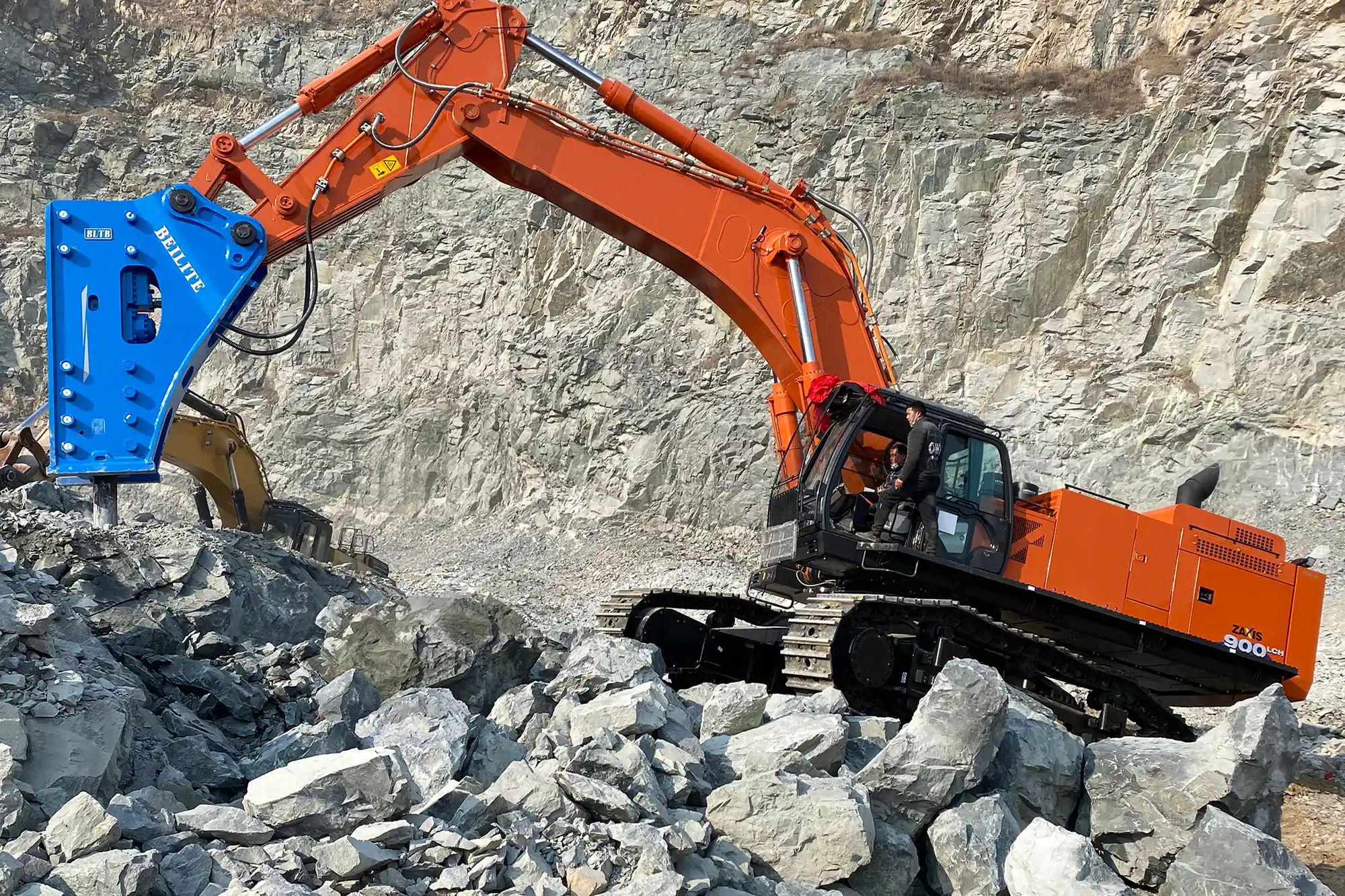
!Heavy Duty Hydraulic Breaker
 ## Factors That Shape Actual Energy Output
Achieving rated impact energy in the field depends on managing several interconnected variables. Hydraulic system pressure, attachment condition, and excavator matching all influence what the breaker actually delivers. External factors like material resistance and wear part condition add further complexity.
Hydraulic Pressure and Flow Dynamics
System pressure directly drives the piston’s downward stroke. Higher pressure generally produces more forceful impacts, but exceeding the recommended operating range accelerates wear and risks component damage. The BLT-40 specifies 90-120 bar for this reason. Staying within that window protects the breaker while delivering consistent performance.
Oil flow rate affects how quickly the piston cycles, which determines impact frequency. Insufficient flow starves the system and reduces both frequency and energy. The accumulator supplements the hydraulic system during the piston’s return stroke, storing energy to maintain consistent power delivery across the cycle. When accumulator pressure drops, performance becomes inconsistent even if the hydraulic supply remains adequate.
Matching Impact Energy to the Work
Selecting the right breaker means matching its energy output to what the application actually demands. Demolition work, quarrying, and trenching each require different energy levels. Getting this wrong costs money in either direction. Too little energy means slow progress and excessive tool wear. Too much energy means paying for capacity you cannot use.
Hard materials like granite require substantial force to initiate and propagate fractures. A breaker with a large piston diameter and long stroke delivers the powerful, sustained blows these applications need. The BLT-100 or BLT-125 would suit granite work, offering enough impact energy to break through dense formations without excessive cycling. Matching the breaker’s energy output to the material’s compressive strength is essential for both productivity and tool life.
Softer applications benefit from higher frequency at moderate energy levels. The material fractures more easily, so rapid cycling removes it faster than fewer, heavier blows would. Trenching often falls into this category, where speed matters more than raw force.
Excavator Compatibility Requirements
The breaker’s weight class must suit the excavator’s operating weight. An oversized breaker stresses the boom and compromises stability. An undersized breaker wastes the carrier’s hydraulic capacity.
Flow and pressure requirements must fall within the excavator’s output range. The BLT-60 requires 30-60 liters per minute at 100-130 bar. If the excavator cannot deliver those parameters, the breaker will underperform regardless of its rated specifications. Conversely, excessive hydraulic power can damage the breaker’s internal components.
Maintenance Practices That Preserve Performance
Impact energy degrades when maintenance lapses. Worn components absorb energy that should reach the material. Friction from inadequate lubrication generates heat instead of useful work. Preventative routines protect the investment and maintain productivity.
Regular inspections should cover the tool, bushings, and retaining pins. These components wear predictably, and replacing them before they fail prevents cascading damage. Worn bushings allow the tool to move laterally, wasting energy and accelerating wear on adjacent components.
Lubrication reduces friction throughout the system. The chisel, bushings, and piston all require consistent greasing to operate efficiently. Without it, energy dissipates as heat, reducing effective impact force and shortening component life.
Daily checks should include hydraulic connections, greasing points, and nitrogen pressure. The BLT-70 requires accumulator nitrogen pressure between 55-60 bar for consistent performance. Pressure below this range produces inconsistent blows as the accumulator fails to supplement the hydraulic system adequately.
Engineering Behind Reliable Impact Energy
BEILITE Machinery Co., LTD has manufactured hydraulic breakers since 2002, accumulating hundreds of patents and participating in national standard formulation for hydraulic breakers in China. This technical depth shows in the BLT and BLTB product lines, which span applications from compact excavators in the 0.5-1.2 ton range to heavy carriers between 33-38 tons.
Each model incorporates design principles that maximize energy transfer while minimizing losses. Material selection, component geometry, and hydraulic circuit design all contribute to consistent performance across the operating envelope. The products reach over 100 countries, which provides continuous feedback on performance under varied conditions.
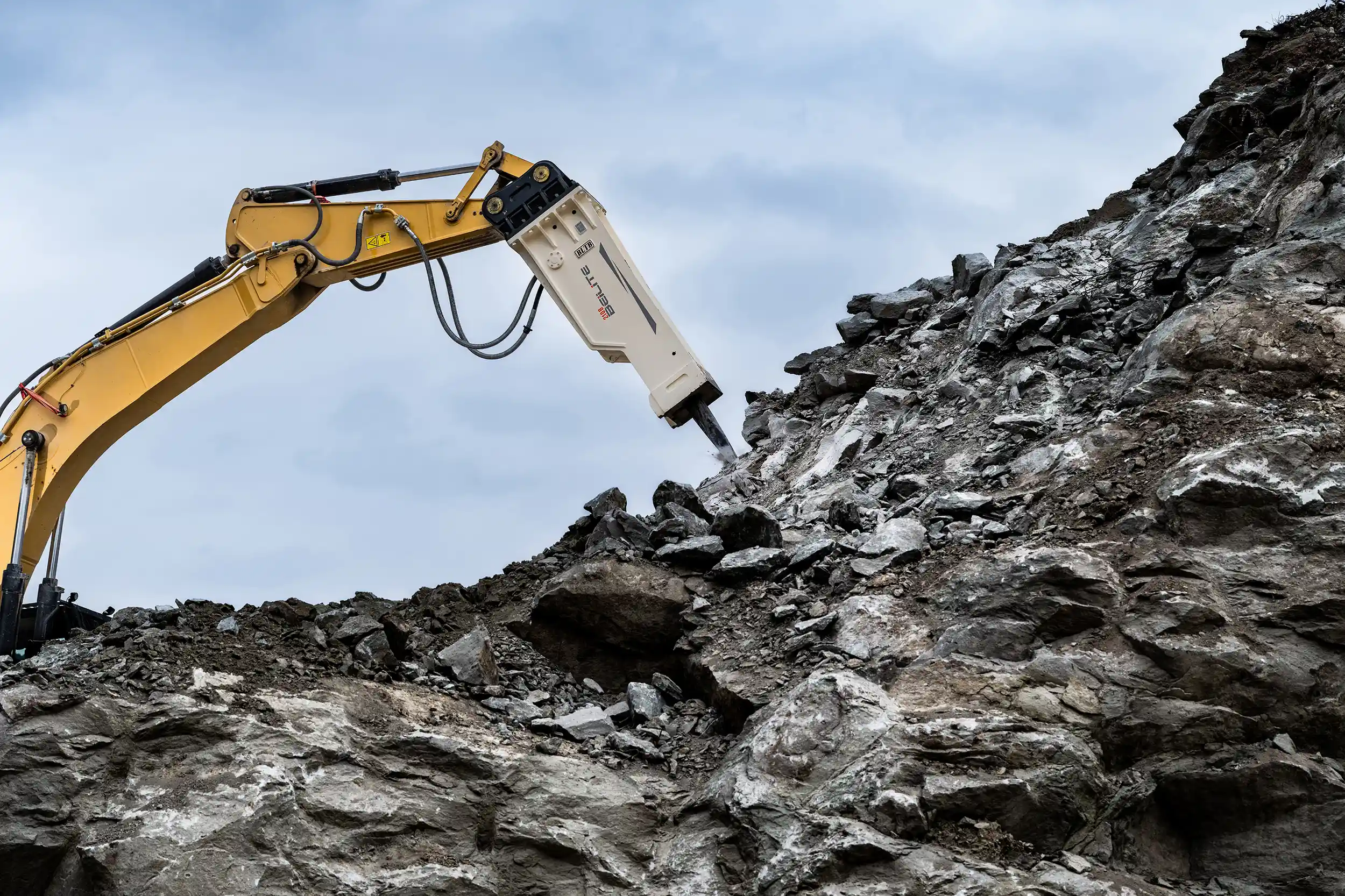
!Hydraulic Breaker for Mining and Quarrying
 ## Working with BEILITE
Selecting the right hydraulic breaker for a specific application involves matching impact energy to material properties, carrier capabilities, and operational requirements. BEILITE’s engineering team can help evaluate these factors and recommend appropriate solutions from the BLT and BLTB product lines.
For project-specific discussions or technical questions about hydraulic breaker impact energy and performance, contact [email protected] or call 40008-40008.
Frequently Asked Questions
What distinguishes impact energy from impact frequency in practical terms?
Impact energy measures the force of each individual blow in Joules. Impact frequency counts how many blows occur per minute. Hard materials need high energy per blow to initiate fractures. Softer or already fractured materials often respond better to rapid cycling at moderate energy levels. Most applications benefit from balancing both parameters rather than maximizing either one.
How does BEILITE maintain consistent impact energy across different breaker models?
Consistent impact energy comes from controlling the variables that affect energy transfer. This includes precise manufacturing tolerances, quality materials for critical components, and hydraulic circuit designs that minimize losses. Testing validates that production units match design specifications. Participation in national standard development reflects the technical rigor applied to these processes.
Does lubrication actually affect impact energy output?
Significantly. Friction between the chisel and bushings, and within the piston assembly, converts kinetic energy into heat. That energy never reaches the material being broken. Consistent, high-quality lubrication minimizes these losses and maintains the effective impact force. Neglecting lubrication also accelerates wear on components that further degrade energy transfer as they deteriorate.