 English
 French
Hydraulic Breaker Housing: Advanced Design and Material Science
Choosing the right breaker starts with understanding its capacity and impact rating. A properly rated breaker keeps performance stable and prevents structural stress or unexpected failures. We look at machine specifications, the material being broken, operating environment, and required productivity. When the breaker’s impact rating matches real working conditions, efficiency goes up, wear goes down, and equipment lasts longer. This foundation guides us through selecting the right breaker for your machine and work conditions.
How Breaker Housing Engineering Actually Works
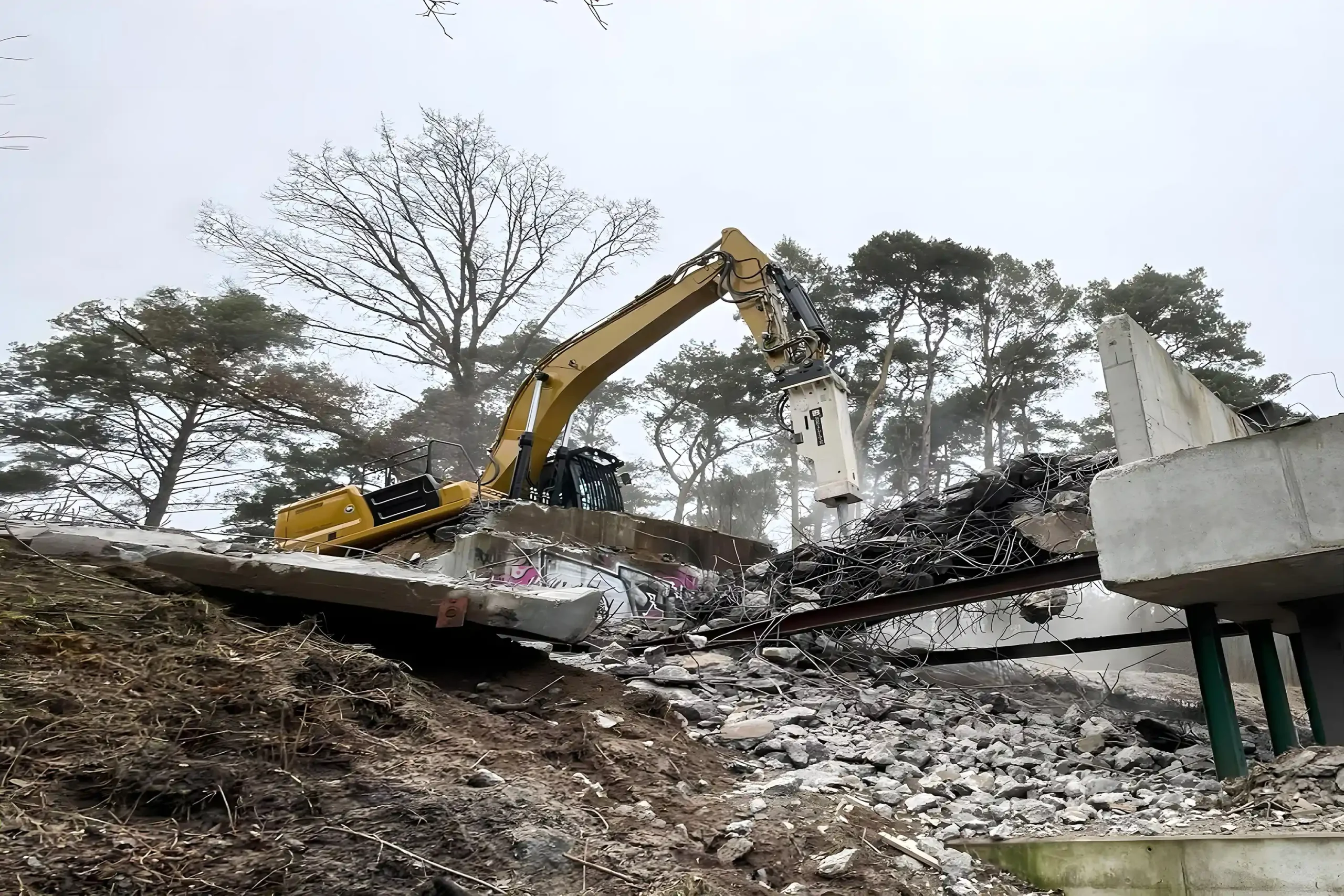
The hydraulic breaker housing does more than protect internal parts. It shapes how the entire system performs and how long it lasts. Its design determines how effectively impact energy moves from the piston to the tool, which directly affects breaking power. Robust housing designs maximize energy efficiency and minimize power loss during operation. A well-engineered housing also shields internal components from external impacts, dust, and debris that show up constantly in construction and demolition work. This protection maintains operational integrity and extends service life.
The housing absorbs and dissipates significant shock and vibration during breaking operations. Without proper design, these forces cause premature wear, structural fatigue, and sometimes catastrophic failure. Engineering for these dynamic loads requires advanced structural analysis to optimize stress distribution. This approach delivers exceptional breaker casing durability, even under continuous heavy-duty use. The housing also reduces noise, which matters in urban areas and sensitive work zones. Beilite’s designs incorporate features that minimize operational sound, making equipment more environmentally compliant and easier on operators.
The hydraulic hammer shell also provides the mounting interface between the breaker and the excavator or other carrier machine. Precision here is critical for secure attachment and correct alignment, both of which affect operational stability and safety. Misalignment creates excessive stress on both the breaker and the carrier, reducing efficiency and increasing maintenance needs. We design our impact mechanism enclosure with precise tolerances for seamless integration with a wide range of excavators. This attention to detail reflects our commitment to reliable, high-performing equipment.
Material Selection for Optimal Housing Performance
Material choice fundamentally determines how hydraulic breaker housings perform and how long they last. We select advanced alloys and employ sophisticated heat treatment processes to achieve optimal material properties. These properties include high tensile strength, exceptional toughness, and superior wear resistance, all critical for enduring extreme forces during rock breaking and demolition. Our expertise in material science allows us to develop proprietary material compositions that significantly extend product life. This commitment means our rock breaker body can handle the most challenging applications.
Alloy Composition and Heat Treatment for Durability
Housing longevity depends heavily on alloy composition and heat treatment. We use specialized alloy steels formulated to balance hardness and ductility. This balance prevents brittle fracture while resisting plastic deformation under immense impact loads. Our heat treatment processes are precisely controlled through stages like austenitizing, quenching, and tempering. These processes refine the alloy’s microstructure, enhance mechanical properties, and ensure consistent housing longevity.
Our BLT-155 model, designed for 27–33 t excavators, features a 155 mm chisel diameter and operates at 200–220 bar working pressure. Such demanding specifications require materials with exceptional housing material strength. The precise heat treatment applied to its chisel housing materials guarantees it can endure prolonged, high-frequency impacts without degradation. We continuously research new heat treatment processes to further improve performance and lifespan. This dedication to material innovation sits at the core of Beilite’s engineering philosophy.
Corrosion and Abrasion Resistance in Breaker Housings
Hydraulic breakers often work in harsh environments with moisture, corrosive chemicals, and abrasive materials. Corrosion protection and abrasion resistant housing are necessary for maintaining structural integrity. We incorporate advanced surface treatments and coatings that form a protective barrier against these environmental challenges. These treatments include specialized paints, anti-corrosion primers, and sometimes hard-facing applications in high-wear areas.
Our material selection also considers the alloy’s intrinsic resistance to chemical degradation and abrasive wear. Certain chromium and nickel alloys offer enhanced resistance to rust and chemical attack. This multi-layered approach keeps the hydraulic breaker housing robust and functional even in highly corrosive or abrasive conditions, reducing maintenance costs and downtime. This focus on environmental resilience ensures reliable performance across diverse operating scenarios.
Precision Manufacturing Techniques for Breaker Housings
Precision manufacturing produces high-performance hydraulic breaker housings. Our production facilities integrate advanced CNC machining, robotic welding, and rigorous quality control measures for superior product consistency and reliability. Every step of the manufacturing process is managed to meet stringent industry standards and our internal quality benchmarks. This commitment to precision guarantees that each hydraulic hammer manufacturing component functions optimally.
Impact of Housing Design on Efficiency and Maintenance
Housing design significantly influences both operational efficiency and maintenance requirements. Our designs optimize internal geometry to facilitate smooth energy transfer and minimize hydraulic losses. This means a greater proportion of input hydraulic power converts into effective breaking force, leading to higher breaker efficiency design. Accessible design features simplify routine inspections and component replacement, reducing housing maintenance impact.
This design philosophy translates into tangible benefits for users, including reduced operational costs and increased productivity. The BLT-165, designed for 33–38 t excavators, features a total length of 3456 mm and a chisel diameter of 165 mm. Its sophisticated housing design contributes to its striking frequency of 150–300 bpm, enhancing operational performance in heavy-duty applications. We engineer our housings to provide exceptional durability while streamlining maintenance procedures.
Quality Assurance and Testing Protocols for Housings
Our commitment to excellence shows in comprehensive quality assurance and testing protocols for all hydraulic breaker housings. These protocols begin with raw material inspection, verifying chemical composition and mechanical properties. Throughout manufacturing, we employ in-process checks, including dimensional inspections and non-destructive testing methods like ultrasonic and magnetic particle testing to detect subsurface flaws.
Final assembly involves rigorous performance validation, where each breaker undergoes operational tests to confirm impact energy, frequency, and overall functional integrity. These tests ensure every housing meets national standards and exceeds customer expectations for durability and reliability. Our quality control breaker procedures guarantee that only top-tier products reach the market, reflecting Beilite’s dedication to superior quality.
Innovative Housing Features and Future Trends
Innovation drives hydraulic breaker technology evolution, and Beilite develops innovative breaker housing features. We continuously invest in research and development to integrate cutting-edge materials and design concepts. Our participation in formulating national standards for hydraulic breakers in China underscores our leadership in advancing industry benchmarks. This forward-thinking approach positions us as a leader in advanced housing technology.
Future trends in hydraulic breaker housing design are moving toward lighter, stronger materials and more intelligent systems. We are exploring advanced composite materials that offer superior strength-to-weight ratios, potentially reducing overall breaker weight without compromising durability. The integration of sensors for real-time performance monitoring and predictive maintenance is also a key focus. These advancements will enable operators to optimize usage and anticipate maintenance needs, further enhancing efficiency and reducing downtime. Our goal is to develop the future hydraulic hammer, setting new standards for performance and sustainability.
Frequently Asked Questions
What are the primary factors influencing hydraulic breaker housing lifespan?
The lifespan of a hydraulic breaker housing depends primarily on material composition quality, manufacturing precision, and heat treatment effectiveness. Beilite’s commitment to advanced alloys and rigorous quality control ensures extended durability for our breaker housings.
How does the design of a hydraulic hammer shell impact its operational efficiency?
The design of a hydraulic hammer shell significantly impacts operational efficiency by dictating energy transfer, shock absorption, and overall structural integrity. An optimized design minimizes energy loss and maximizes impact force, leading to superior performance.
What advanced materials are used in high performance rock breaker bodies?
High performance rock breaker bodies utilize advanced alloy steels, often with proprietary heat treatments. These materials are selected for their exceptional strength, wear resistance, and ability to withstand extreme impact forces and harsh working conditions.
Can hydraulic breaker casing durability be improved through maintenance?
Proper maintenance, including regular inspections and lubrication, contributes to hydraulic breaker casing longevity. The foundational durability, though, is inherent in initial design and manufacturing quality. Beilite’s robust casings are built to last and complement good maintenance practices.
What role does precision machining play in hydraulic breaker housing manufacturing?
Precision machining ensures the exact tolerances and smooth finishes required for optimal internal component fit and function. Beilite’s use of advanced CNC machining guarantees the high precision necessary for reliable and efficient impact mechanism enclosures.
Discover Beilite’s Advanced Breaker Solutions
Elevate your operations with hydraulic breaker housings engineered for unparalleled durability and performance. As a national high-tech enterprise with decades of innovation and hundreds of patents, BEILITE Machinery Co., LTD provides premium BLT and BLTB brand products trusted globally. Contact us today at [email protected] or 40008-40008 to discover how our advanced solutions can enhance your productivity and extend equipment life.