 English
 French
Hydraulic Breaker for Post Driving: Maximizing Efficiency and Durability
Driving posts into the ground sounds straightforward until you’re standing in front of rocky terrain or frozen soil with a deadline approaching. That’s where hydraulic breakers change the equation entirely. These attachments deliver the kind of consistent, high-impact force that manual methods simply cannot match, turning what used to be backbreaking work into a controlled, efficient process. The difference shows up in project timelines, labor costs, and the condition of the posts themselves when the job is done.
How Hydraulic Breakers Transform Post Driving Efficiency
Hydraulic breakers deliver consistent, high-impact force that dramatically reduces the time and physical effort traditionally required for fence post installation and heavy-duty post driving. The numbers tell the story clearly: a hydraulic post driver attachment can cut installation time by an average of 70% compared to manual methods. For large-scale projects requiring hundreds or thousands of post installations, that efficiency gain translates directly into faster completion and lower labor costs.
Using a skid steer post driver or an excavator post driver provides precise control over each strike, which minimizes downtime between posts and keeps crews moving. The hydraulic system maintains consistent power output throughout the workday, unlike manual methods where fatigue inevitably slows progress. This reliability in force delivery means fewer incomplete drives and less time spent repositioning or reworking posts that didn’t seat properly on the first attempt.
Where Hydraulic Breakers Prove Their Worth Across Different Applications
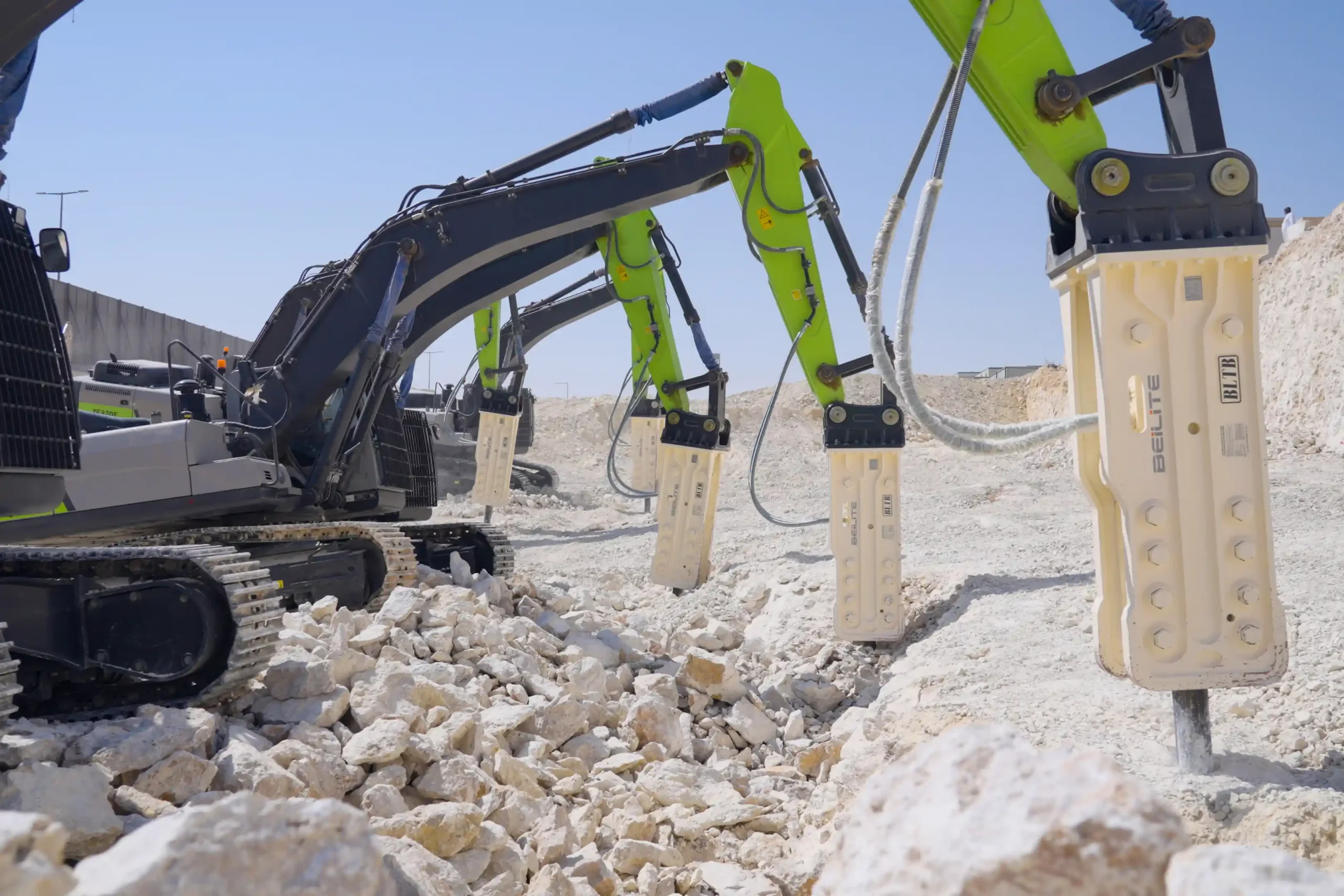
The real test of any post driving equipment comes when ground conditions turn difficult. Rocky soil, frozen ground, and dense clay all present challenges that can stop manual methods cold. Hydraulic breakers handle these conditions because they generate enough concentrated force to penetrate resistant materials without relying on operator strength or endurance.
Post material matters too. Wood, steel, and concrete posts each respond differently to impact, and hydraulic breakers adapt to drive all three effectively. This makes them essential pile driving equipment for mixed-material projects. Beilite’s BLT and BLTB series covers this range of working conditions, with models engineered for specific ground types and post materials. A breaker attachment for posts becomes particularly valuable when projects span multiple terrain types, eliminating the need to switch between different driving methods as conditions change.
If you’re interested, check 《Hydraulic Breaker Hammer for Mining and Quarrying》.
What Actually Matters When Selecting a Hydraulic Breaker for Post Driving
Choosing the right breaker for post driving comes down to matching specifications to real-world project demands. Impact energy, weight, and chisel type all need to align with what you’re driving and what machine you’re mounting it on. Getting this match wrong means either underpowered performance or unnecessary equipment costs.
Beilite’s research and development work, backed by hundreds of patents, addresses these matching challenges directly. The goal is equipment that performs reliably under demanding conditions without requiring constant adjustment or maintenance.
Matching Breaker Impact Energy to Post Driving Demands
Impact energy determines how effectively a hydraulic breaker penetrates the ground and seats posts. Too little energy means slow, incomplete drives. Too much risks damaging posts or driving them past the intended depth.
The relationship between impact frequency and post type guides selection. A BLT-40 operates at 800-1400 blows per minute, making it well-suited for lighter posts and smaller excavators in the 0.5-1.2 ton range. The rapid strikes work well for quick, shallow installations. For heavy-duty post driving or ground that resists penetration, a BLT-165 delivers 150-300 blows per minute with substantially more force behind each strike, designed for 33-38 ton excavators handling large structural posts.
Beilite’s hydraulic breakers are engineered to deliver precise, powerful blows that drive posts efficiently while preserving their structural integrity. The chisel design concentrates force appropriately for post driving rather than demolition work.
Ensuring Machine Compatibility for Optimal Performance
The breaker must match the carrier machine’s hydraulic capacity and operating weight. An undersized breaker wastes the machine’s potential, while an oversized one strains hydraulic systems and creates safety concerns.
For an excavator post driver setup, the breaker’s hydraulic flow requirements need to fall within the machine’s output range. A BLT-75 fits 6-8.5 ton excavators, while a BLT-140 matches 20-24 ton machines. Skid steer post driver applications have different mounting and flow considerations that affect which models work effectively.
| Model | Total Weight (kg) | Chisel Diameter (mm) | Working Oil Flow (L/min) | Applicable Excavator (t) |
|---|---|---|---|---|
| BLT-40 | 86 | 40 | 15–30 | 0.5–1.2 |
| BLT-70 | 362 | 70 | 40–70 | 4.5–6 |
| BLT-100 | 986 | 100 | 80–110 | 10–14 |
| BLT-135 | 1736 | 135 | 100–150 | 18–22 |
| BLT-165 | 3149 | 165 | 200–260 | 33–38 |
Why Beilite Hydraulic Breakers Perform Consistently in Post Driving Work
Beilite hydraulic breakers earn their reputation through engineering focused on core technologies and manufacturing quality. BEILITE Machinery Co., Ltd. operates as a national high-tech enterprise and participated in formulating China’s national standards for hydraulic breakers. That involvement in standards development reflects deep technical understanding of what makes these tools perform reliably.
The BLT and BLTB brand products incorporate hundreds of patents developed through continuous improvement cycles. These high-end hydraulic breakers handle varied working conditions because they’re designed with real-world demands in mind, not just laboratory specifications. Products now reach over 100 countries, and that global presence depends on equipment that performs as expected regardless of where it’s deployed. The hydraulic breaker hammer lineup represents this commitment to quality and service.
Operational Best Practices and Safety for Hydraulic Post Driving
Equipment longevity and operator safety both depend on following proper procedures. Regular maintenance catches problems before they cause failures in the field. Daily checks should cover hydraulic connections, chisel condition, and mounting hardware. Scheduled servicing addresses wear items before they compromise performance.
Operator training matters as much as equipment quality. Proper handling includes understanding correct angles for post driving, which affects both efficiency and post alignment. Monitoring hydraulic pressure during operation reveals potential problems and ensures the breaker operates within design parameters. Personal protective equipment requirements exist for good reasons, and enforcement protects both workers and project timelines.
Prioritizing safety in post driving operations and maintaining consistent hydraulic breaker maintenance schedules keeps equipment running and crews productive. The investment in training and maintenance pays returns through reduced downtime and extended equipment life.
Partner with Beilite for Your Post Driving Needs
BEILITE Machinery Co., Ltd. delivers high-end hydraulic breakers that handle demanding post driving projects. Our commitment to innovation and quality has built trust with customers globally. Contact us at [email protected] or call 40008-40008 for a consultation on how our BLT and BLTB brand products can improve your operations.
What are the advantages of using a hydraulic breaker over traditional methods for post driving?
Hydraulic breakers drive posts faster, reduce physical labor demands, and handle difficult ground conditions that stop manual methods. Rocky soil and frozen ground yield to consistent hydraulic force where hand-driving becomes impractical. The controlled impact produces more uniform post installation with less damage to post materials compared to manual pounding or improvised equipment. Beilite’s hydraulic breakers are engineered specifically for this kind of demanding, repetitive work.
Which type of hydraulic breaker is best suited for different post driving conditions?
The right hydraulic breaker depends on post size and material, ground conditions, and carrier machine specifications. Lighter breakers work well for smaller posts in cooperative soil, while heavy-duty models handle large piles or extremely hard ground. Beilite’s BLT and BLTB hydraulic breakers span a range of impact energies and chisel configurations, allowing precise matching to specific post driving requirements.
How does the impact energy of a hydraulic breaker affect post driving performance?
Impact energy controls penetration speed and the ability to drive posts through resistant ground. Higher impact energy moves larger posts through dense or rocky soil more efficiently. However, excessive force can split wooden posts or deform metal ones. Beilite’s hydraulic breakers deliver optimized impact energy that balances power with control, ensuring effective driving while protecting post integrity across different materials and ground conditions.