 English
 French
Hydraulic Breaker Flow Testing: Optimizing Performance and Longevity
Getting the most out of a hydraulic breaker comes down to one thing most operators underestimate: knowing exactly what’s happening inside the hydraulic circuit. Flow testing isn’t just a troubleshooting step you pull out when something breaks. It’s the difference between catching a worn pump at 500 hours and replacing an entire breaker at 1,200. After years of watching breakers come back for service, the pattern is clear — the ones that last are the ones where someone actually measured the flow before problems became obvious.
How Hydraulic Flow Actually Drives Breaker Performance
Hydraulic breakers generate impact energy through a precise cycle of fluid delivery and release. The excavator’s pump pushes hydraulic fluid through hoses, valves, and into the breaker’s internal piston mechanism. When that flow stays consistent, the breaker hits hard and cycles smoothly. When it doesn’t, you feel it immediately — weaker strikes, longer cycle times, and that frustrating sense that the machine just isn’t working the way it should.
The relationship between flow rate and impact force is direct. A 10% drop in flow doesn’t mean 10% less power — it often means noticeably sluggish performance because the piston isn’t building pressure fast enough between strikes. System pressure drops or erratic flow patterns almost always point to something upstream: a pump losing efficiency, a relief valve bleeding off pressure, or contamination restricting passages. Hydraulic breaker flow testing catches these issues before they cascade into bigger failures.
Practical Methods for Reliable Hydraulic Breaker Flow Testing
Accurate hydraulic breaker flow testing combines the right instruments with a systematic approach. The goal isn’t just to get numbers — it’s to get numbers you can actually trust and compare against baseline specifications.
Flow meters and pressure gauges form the core of any testing setup. But calibration matters more than most people realize. A flow meter that’s off by 5% can make a marginal pump look acceptable, or a healthy system look problematic. We’ve seen technicians chase phantom problems for hours because their gauge hadn’t been calibrated in two years.
How to Perform Hydraulic Flow Testing Effectively?
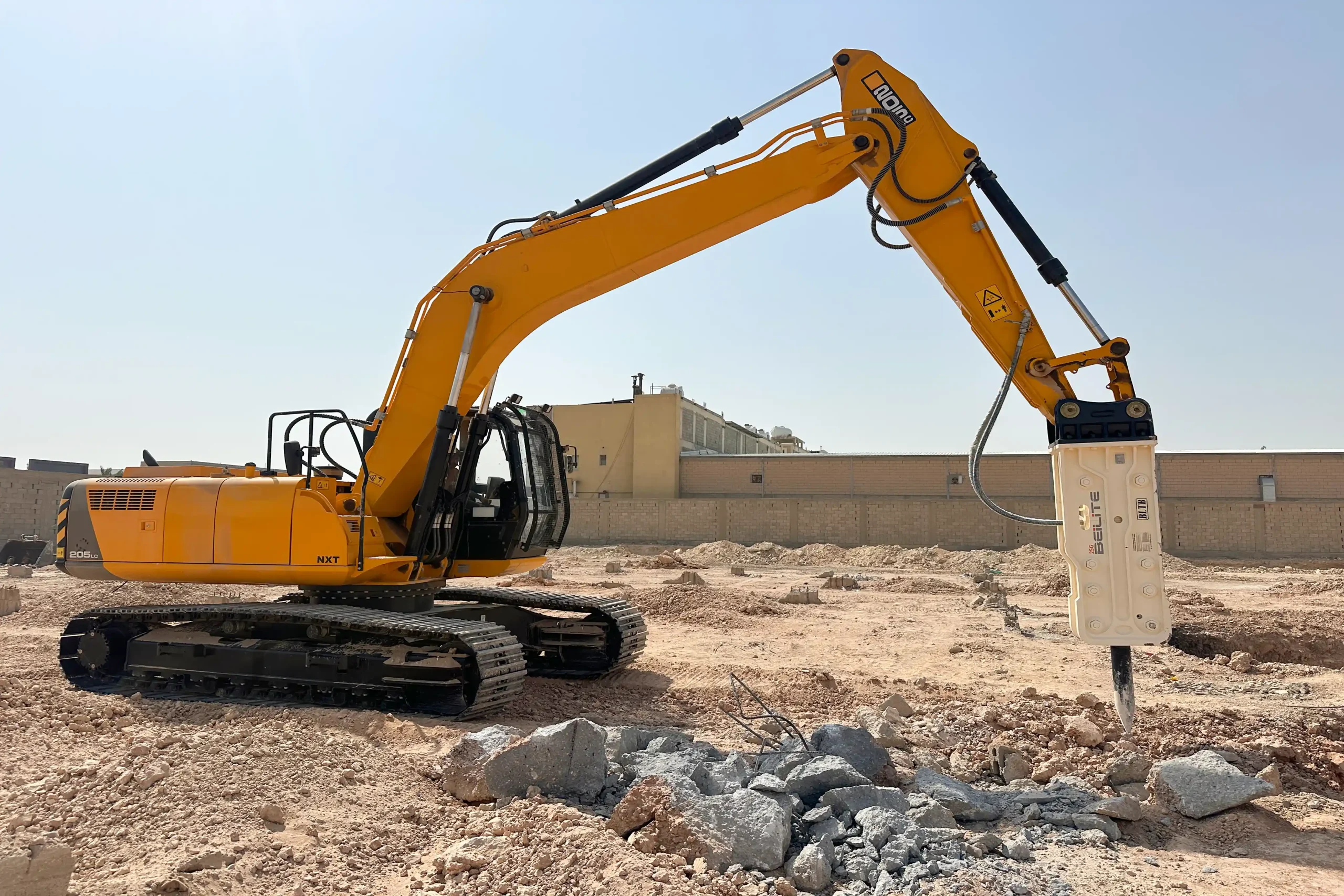
Effective hydraulic breaker flow testing follows a structured sequence that accounts for variables like oil temperature and throttle position.
- Connect a calibrated flow meter in series with the breaker’s pressure line.
- Attach pressure gauges to both the pressure and return lines of the breaker.
- Ensure the hydraulic oil is at its normal operating temperature.
- Engage the breaker at various throttle settings on the excavator.
- Record flow rate and pressure readings simultaneously.
- Compare these readings against the manufacturer’s specifications for the specific hydraulic breaker Hammer.
- Check for any significant deviations or fluctuations in the recorded data.
- Perform hydraulic pump testing and valve block diagnostics if discrepancies are found.
- Log all hydraulic parameters for future reference and trend analysis.
- Adhere strictly to safety protocols hydraulic testing throughout the process.
Reading the Results and Spotting Trouble Early
Raw numbers from hydraulic breaker flow testing only become useful when you know what they mean. Low flow at full throttle usually points to pump wear — the internal clearances have opened up enough that fluid slips past instead of moving downstream. Fluctuating pressure readings often indicate a sticking relief valve or air in the system. Excessive heat during operation suggests the system is working harder than it should, typically because of restricted flow or internal leakage.
Fluid contamination shows up in subtle ways. Sometimes flow looks acceptable but pressure spikes erratically as particles momentarily block orifices. Incorrect oil viscosity — too thick when cold, too thin when hot — creates performance swings that look like mechanical problems but disappear once the fluid is corrected. Component wear analysis becomes much easier when you have flow data to correlate with physical inspection findings.
Building Flow Testing Into Your Maintenance Routine
Treating hydraulic breaker flow testing as routine maintenance rather than emergency diagnostics changes the economics of breaker ownership. Catching a pump at 85% efficiency gives you time to plan a rebuild during scheduled downtime. Discovering it at 60% efficiency usually means the breaker is already damaged and the excavator is sitting idle while you scramble for parts.
The cost math is straightforward. A flow test takes maybe an hour including setup. An unplanned breaker failure can mean days of downtime, emergency shipping for parts, and often collateral damage to seals and other components that overheated while the system struggled. Preventative maintenance schedules built around regular flow testing consistently show lower total cost of ownership.
How Often Should Hydraulic Breaker Flow Testing Be Conducted?
Testing frequency depends on how hard the breaker works and what conditions it operates in. The general recommendation is every 250-500 operating hours. Breakers working in dusty environments or breaking abrasive materials should lean toward the shorter interval. Units running in cleaner conditions with well-maintained excavators can stretch toward 500 hours.
Beyond scheduled intervals, test whenever something feels off. A noticeable drop in impact force, unusual sounds from the breaker or pump, or longer cycle times all warrant immediate hydraulic breaker flow testing. Waiting to see if the problem gets worse almost always means it does.
Where Flow Testing Fits in Modern Diagnostic Systems
The integration of hydraulic breaker flow testing with continuous monitoring systems represents a significant shift in maintenance strategy. Telematics platforms can now track hydraulic parameters in real time, flagging deviations before operators even notice performance changes.
This approach enables genuinely predictive maintenance — scheduling service based on actual system condition rather than arbitrary hour counts. Continuous monitoring also catches intermittent problems that might not show up during a single test session. A relief valve that sticks only when hot, or a pump that loses efficiency under sustained load, becomes visible in trend data even when spot checks look normal.
Fluid contamination control benefits particularly from this integration. Particle counts and moisture levels can be tracked over time, triggering filter changes or fluid replacement based on actual condition rather than calendar intervals.
Matching Breaker Specifications to Excavator Hydraulics
Selecting a hydraulic breaker that matches your excavator’s hydraulic output is fundamental to stable flow characteristics and consistent performance. Mismatched specifications create problems that no amount of testing can fix — you’re either starving the breaker or overwhelming it.
The BLT-100, for example, requires 80-110 L/min of working oil volume and 150-170 bar of working pressure. That range suits 10-14 ton excavators with hydraulic systems designed for that output. Installing it on a smaller machine means the breaker never reaches full impact energy. Putting it on a larger machine risks overpressure damage.
Smaller units like the BLT-40, designed for 0.5-1.2 ton mini excavators, operate optimally with just 15-30 L/min at 90-120 bar. The engineering behind these specifications accounts for piston mass, stroke length, and the accumulator sizing needed for efficient energy storage and release.
| Model | Working Oil Volume (L/min) | Working Pressure (bar) | Applicable Excavator (t) |
|---|---|---|---|
| BLT-40 | 15–30 | 90–120 | 0.5–1.2 |
| BLT-45 | 20–40 | 90–120 | 0.8–1.5 |
| BLT-53 | 20–50 | 90–120 | 1.5–3.5 |
| BLT-60 | 30–60 | 100–130 | 3–5.5 |
| BLT-70 | 40–70 | 110–140 | 4.5–6 |
What Equipment is Needed for Accurate Hydraulic Breaker Flow Testing?
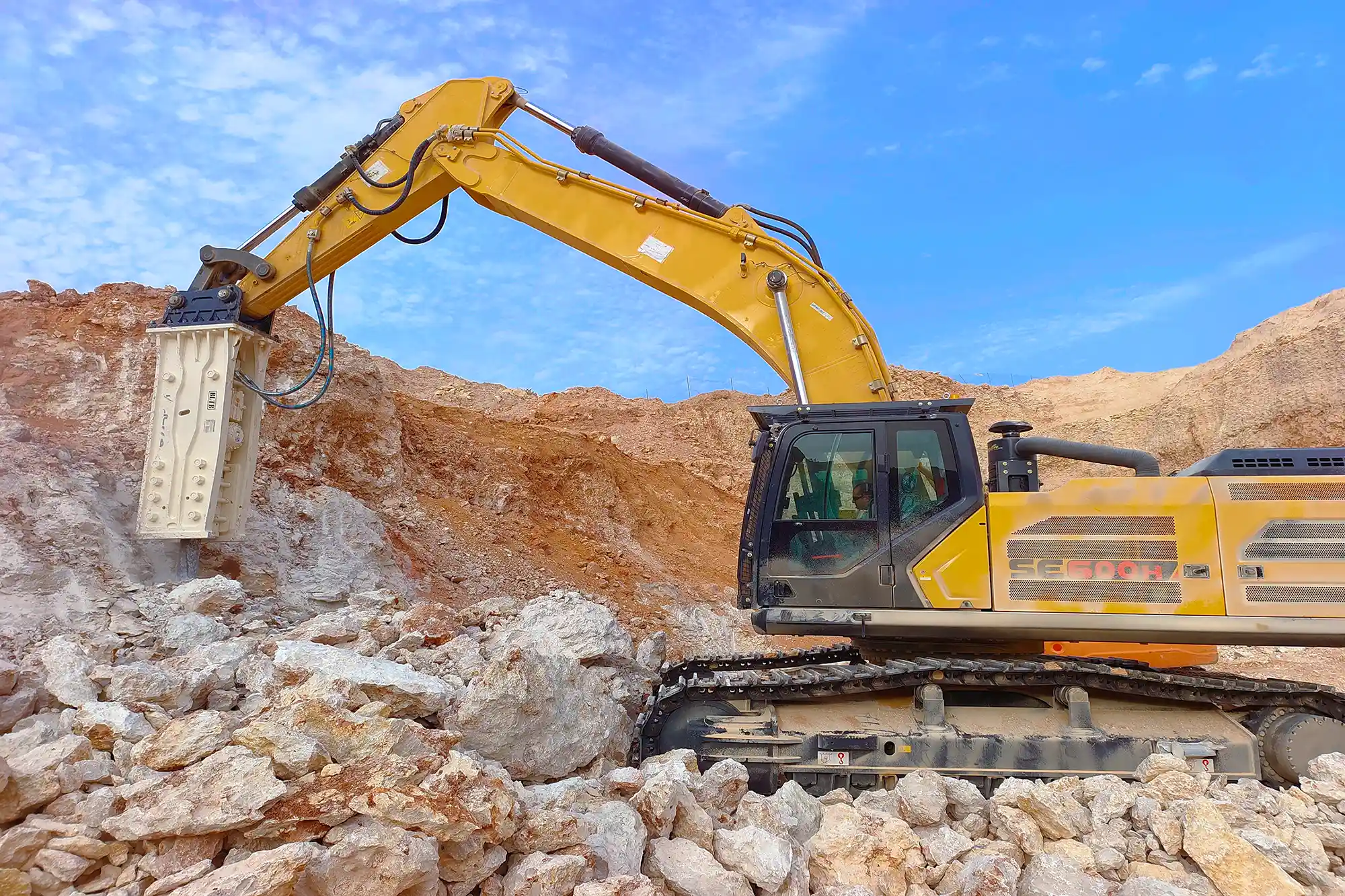
The core requirement is a hydraulic flow meter rated for the pressures and flow rates your system produces. Most breaker applications need meters capable of handling at least 200 bar and flow rates up to 150 L/min or more for larger units. Pressure gauges — ideally glycerin-filled for stable readings — monitor both supply and return lines.
Temperature sensors track hydraulic fluid temperature, which directly affects viscosity and system behavior. Testing cold oil gives different results than testing at operating temperature, and both data points matter for complete diagnostics. A data logger that records readings over time helps identify patterns that single-point measurements miss. The investment in calibrated test equipment pays for itself quickly in diagnostic accuracy and avoided false alarms.
Get More Life From Your Hydraulic Breaker
Beilite Machinery Co., LTD brings decades of engineering focus to hydraulic breaker design, with particular attention to flow characteristics that support consistent performance and long service life. Our BLT and BLTB product lines are built for operators who expect reliability in demanding applications. Contact us at [email protected] or call 40008-40008 to discuss your specific equipment requirements and find the right match for your excavator’s hydraulic system.
Frequently Asked Questions About Hydraulic Breaker Flow Testing
What are the common causes of hydraulic flow issues in breakers?
Worn hydraulic pumps top the list — internal clearances increase with use, allowing fluid to bypass instead of building pressure. Faulty control valves, particularly relief valves that stick or leak, create pressure instability. Clogged filters restrict flow in ways that worsen under load. Fluid contamination accelerates wear throughout the circuit, while incorrect oil viscosity causes performance to vary with temperature. Leaks anywhere in the hydraulic circuit reduce available flow to the breaker. Regular hydraulic breaker flow testing identifies these problems before they cause secondary damage.
How often should hydraulic breaker flow testing be conducted?
Most applications call for testing every 250-500 operating hours. Harsh environments with dust, debris, or temperature extremes warrant more frequent checks. Beyond scheduled intervals, test immediately when you notice reduced impact force, unusual sounds, or longer cycle times. The goal is catching degradation while it’s still gradual — waiting for obvious failure usually means the problem has already spread to other components.
What equipment is needed for accurate hydraulic breaker flow testing?
A specialized hydraulic flow meter rated for your system’s pressure and flow capacity forms the foundation. Pressure gauges for both supply and return lines show what’s happening on each side of the breaker. Temperature sensors help correlate readings with fluid condition, since viscosity changes significantly across the operating temperature range. A data logger captures readings over time, making trend analysis possible. Calibration of all instruments is non-negotiable — uncalibrated equipment produces numbers that look precise but lead to wrong conclusions.