English
 French
Hydraulic Breaker Explained Understanding This Essential Demolition Tool
Choosing the right breaker starts with a clear read on capacity and impact rating. Get that right and performance stays steady while structural stress and surprise failures stay off the job. Weigh your machine’s specifications, the material you’re breaking, the work environment, and the productivity you’re aiming for. When the breaker’s impact rating matches real conditions, efficiency improves, wear drops, and equipment lasts longer. With that groundwork in place, I’ll walk through the core principles, mechanics, types, innovations, applications, and what’s ahead, so you can select a breaker that fits your machine and site.
Unveiling the Hydraulic Breaker Core Principles
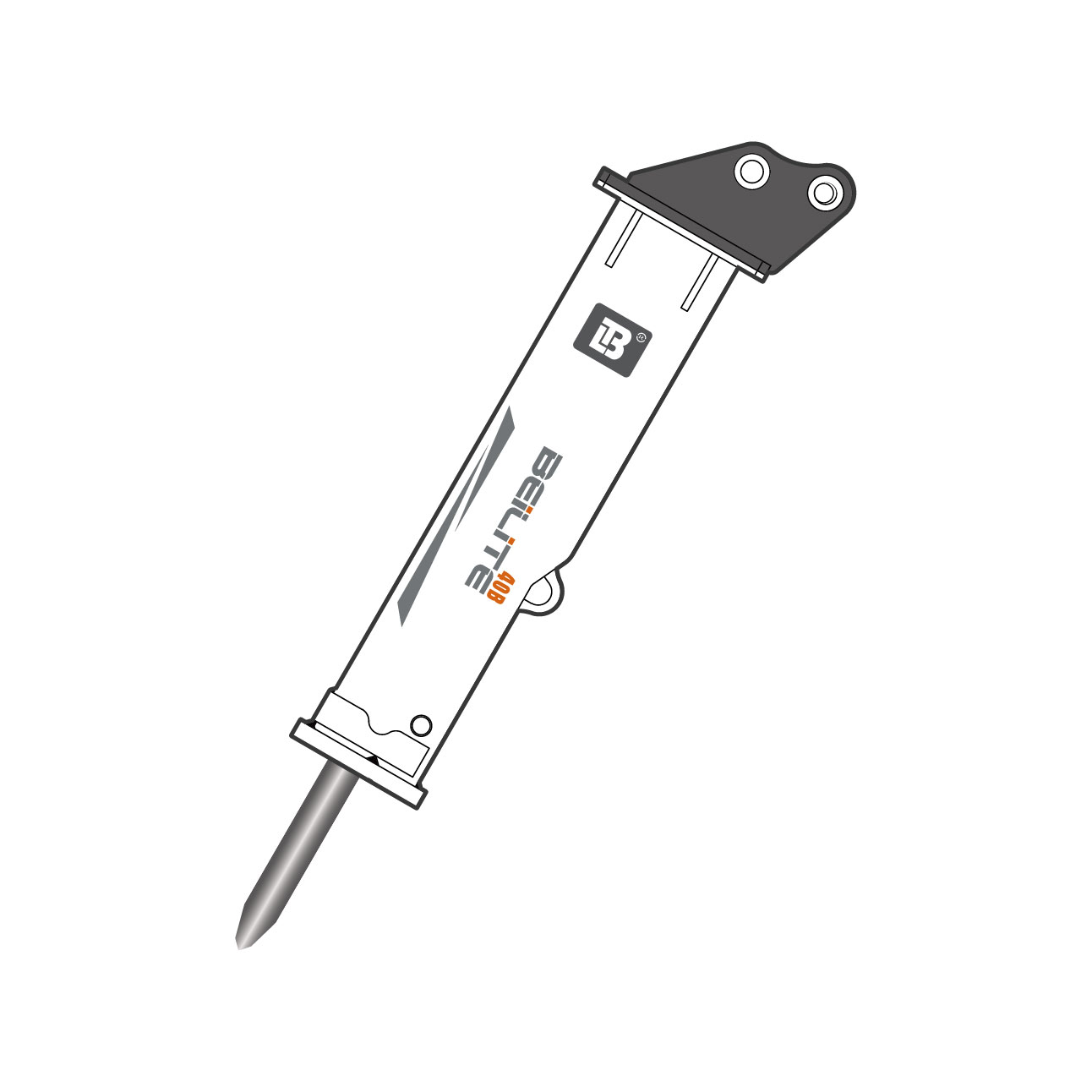
A hydraulic breaker, often called a hydraulic hammer, is a go-to attachment for excavators, backhoes, or skid steer loaders. Its job is to fracture hard materials like rock, concrete, and asphalt. It converts hydraulic pressure from the carrier into percussive energy, delivering rapid, high-impact blows. At the heart of the system, a piston driven by hydraulic fluid strikes a chisel-like tool, known as a moil or chisel. That repeated impact produces the force needed to break the target material. We design our BLT and BLTB brand hydraulic breaker Hammer to maximize this energy transfer, ensuring efficient material breakdown across various applications. Understanding how hydraulic breaker works is key to optimizing performance and extending operational life. The basic hydraulic hammer function relies on a precisely engineered hydraulic circuit that controls the piston’s movement, making it a cornerstone of modern demolition equipment basics.
Engineering Marvel: The Mechanics of Hydraulic Impact
Inside a hydraulic breaker, hydraulic and mechanical systems work in concert. Hydraulic fluid from the carrier powers a piston within the breaker’s cylinder. Pressure drives the piston upward and compresses nitrogen gas in an accumulator. As the piston reaches the top of its stroke, a valve mechanism redirects the hydraulic flow, sending the piston accelerating downward. The downward motion culminates in the piston striking the tool bit and transferring immense kinetic energy to the target material. Impact energy transfer is precisely controlled to deliver maximum force with each blow. Our designs incorporate advanced hydraulic system components to ensure consistent and powerful operation. Anti-blank firing technology protects the breaker from damage when operating without material contact, enhancing durability and reducing maintenance.
Types of Hydraulic Breakers and Their Design
Hydraulic breakers are categorized by their structural design, each offering distinct advantages for specific applications. Top type breakers, also known as top-mounted, attach directly to the excavator arm, providing excellent visibility and balance. Side type breakers mount to the side of the arm, offering a lower profile and often used in confined spaces or for specific angles. Box type breakers, or silenced breakers, fully enclose the impact mechanism within a robust housing. This design significantly reduces noise and vibration, making them ideal for urban demolition or environmentally sensitive areas. Each of these breaker design variations is engineered for optimal performance in its intended environment.
| Breaker Type | Mounting Position | Key Advantage | Typical Application |
|---|---|---|---|
| Top Type | Direct to arm | Visibility | General demolition |
| Side Type | Side of arm | Low profile | Confined spaces |
| Box Type | Fully enclosed | Noise reduction | Urban demolition |
Innovations in Hydraulic Breaker Performance
Continuous innovation drives the evolution of hydraulic breaker technology, enhancing efficiency and user experience. Modern hydraulic breakers integrate advanced features such as energy recovery systems, which recapture a portion of the recoil energy from each blow to augment the next, significantly boosting overall power and fuel efficiency. Noise reduction technology, particularly prevalent in box-type breakers, employs sound-dampening materials and designs to minimize operational noise, important for urban environments. Vibration dampening breaker systems protect both the carrier machine and operator from excessive vibration, improving comfort and extending equipment lifespan. These innovations contribute to more sustainable and productive demolition practices.
Diverse Applications of Hydraulic Breakers
Hydraulic breakers are indispensable tools across a wide spectrum of industries due to their exceptional power and versatility. In the demolition industry tools, they are used for dismantling concrete structures, breaking foundations, and clearing sites. The mining rock breaking sector relies on these attachments for secondary breaking of oversized rocks, tunnel excavation, and quarrying operations. Construction site equipment frequently includes hydraulic breakers for trenching through hard ground, road construction, and utility installation. Their robust design and high impact force make them well suited to breaking through tough materials in these challenging environments. From large-scale infrastructure projects to specialized tasks like Hydraulic Breaker Hammer for Underwater Construction, hydraulic breakers prove their value.
Future Outlook and Industry Leadership
The future of hydraulic breaker technology points toward greater efficiency, sustainability, and integration with smart systems. We anticipate further advancements in energy recovery, material science for enhanced durability, and intelligent monitoring systems for predictive maintenance. BEILITE Machinery Co., Ltd., established in 2002, is at the forefront of this evolution. As a national high-tech enterprise, we focus on the R&D and manufacturing of high-end hydraulic breakers. Our commitment to continuous innovation has led to breakthroughs in core technologies and participation in formulating national standards for hydraulic breakers in China. With hundreds of patents, BEILITE’s BLT and BLTB brand products cover diverse working conditions and are exported to over 100 countries. We are dedicated to becoming a globally trusted hydraulic breaker brand.
Frequently Asked Questions
What is the primary function of a hydraulic breaker?
The primary function of a hydraulic breaker is to fracture and break hard materials such as rock, concrete, and asphalt. It does this by converting hydraulic power from a carrier machine into high-frequency, high-impact blows, making it an effective demolition tool function.
How do hydraulic breakers differ from other demolition tools?
Hydraulic breakers differ from other demolition tools, like jackhammers, by their power source and mounting. They attach to heavy machinery, utilizing the carrier’s hydraulic system for significantly greater impact force and efficiency, making them suitable for large-scale demolition.
What factors should be considered when selecting a hydraulic breaker for a project?
When selecting a hydraulic breaker, consider the carrier machine’s weight and hydraulic flow, the material to be broken, and the project’s specific requirements. Key factors include impact energy, operating pressure, and the breaker’s overall weight to ensure compatibility and optimal performance.
Discover BEILITE’s Advanced Hydraulic Breaker Solutions
For high-performance, reliable demolition equipment and cutting-edge BEILITE hydraulic breaker solutions, trust BEILITE Machinery Co., LTD. Our team can help you select the right hydraulic hammer for your specific needs. Contact us to learn more about our innovative products and how we can support your next project. Reach out via email at [email protected] or call us at 40008-40008.