 English
 French
How to Grease a Hydraulic Breaker for Peak Performance
Greasing a hydraulic breaker properly determines whether the machine runs smoothly for years or breaks down after a few months of hard use. The chisel and bushings take a beating during every impact cycle, and without consistent lubrication, metal grinds against metal until something fails. Getting the grease type right, applying it at the correct intervals, and avoiding common mistakes makes the difference between equipment that earns its keep and equipment that drains your budget.
Why Hydraulic Breaker Lubrication Actually Matters
Hydraulic breaker lubrication does more than reduce friction. It creates a barrier between moving parts that would otherwise destroy each other under repeated impact forces. The chisel slides through bushings thousands of times per hour, and each stroke generates heat and wear. Grease absorbs some of that punishment.
The piston and tool bit interface takes the hardest hits. This area experiences forces that would strip unprotected metal surfaces in days. A proper grease film keeps temperatures manageable and prevents the microscopic welding that occurs when hot metal surfaces contact each other directly. Seals and O-rings also depend on lubrication to stay pliable. Dry seals crack, and cracked seals leak hydraulic fluid.
Breakers like the BLT-150 for 24-27 ton excavators or the BLT-165 for 33-38 ton excavators work under conditions that push components to their limits. Skipping greasing sessions or using inadequate lubricant shortens their working life significantly. The cost of grease is trivial compared to replacing bushings, seals, or worse, an entire breaker assembly.
Picking the Right Grease for Hydraulic Hammer Applications
Not every grease works for hydraulic hammer lubrication. The wrong choice can cause as much damage as no grease at all. Several factors determine which product fits your situation.
Extreme-pressure lithium complex grease handles most hydraulic breaker applications well. This formulation sticks to metal surfaces under high loads and resists being squeezed out during impact cycles. It also tolerates a wide temperature range without breaking down or separating.
Operating conditions change the equation. Slag breaking or furnace work generates temperatures that destroy ordinary greases. These applications need products with high dropping points that maintain their structure when things get hot. Cold weather creates the opposite problem. Grease that thickens in low temperatures won’t flow to where it’s needed. Check the pumpability rating if your breakers work in freezing conditions.
| Grease Type | Pros | Cons | Recommended Use Cases |
|---|---|---|---|
| Lithium Complex (EP) | Excellent EP properties, good water resistance, wide temperature range | Can be more expensive | General hydraulic breaker use, high-load applications |
| Calcium Sulfonate (EP) | Superior corrosion protection, high dropping point | Limited availability | Marine, wet environments, high-temperature applications |
| Polyurea | High temperature stability, long service life | Not compatible with all other greases | High-speed bearings, sealed-for-life applications |
The BLT-75 hydraulic breaker, designed for 6-8.5 ton excavators with working pressure of 120-150 bar, performs best with robust EP lithium complex grease. Water resistance matters too. Wet or muddy job sites wash away greases that don’t adhere well, leaving components unprotected.
For specific hydraulic breaker models suited to your operation, consider exploring our range of hydraulic breaker Hammer.
Manual Greasing Procedures That Actually Work
Manual greasing of a hydraulic breaker follows a straightforward sequence. Doing it correctly takes only a few minutes but pays off in extended component life.
Position the hydraulic breaker horizontally on solid ground or a stable stand. Clean every grease nipple before attaching anything. Dirt on the fitting gets pushed straight into the bushing area when you pump grease through it.
Attach the grease gun securely to the first nipple. Pump slowly and watch the gap between the chisel and lower bushing. When fresh grease starts pushing out around that gap, the internal cavity is full. If your breaker has a rotating chisel, turn it 90 degrees and grease again. This distributes lubricant evenly around the entire circumference.
Move through all grease points systematically. Wipe off excess grease when finished. Leaving globs of grease on the outside attracts dirt that eventually works its way inside.
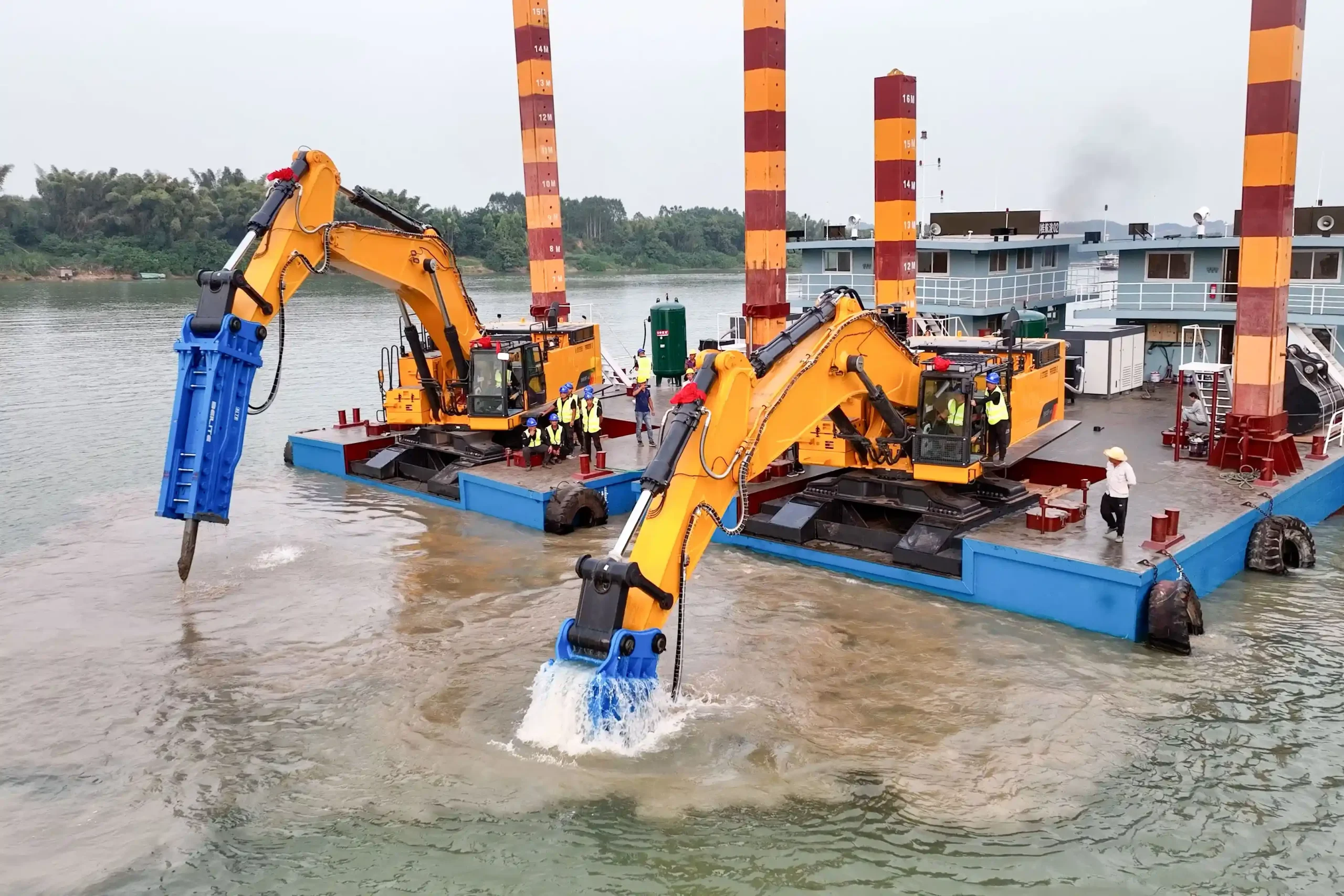
Greasing frequency depends on how hard the breaker works. Every 2-4 operating hours covers most situations. Heavy-duty applications like underwater construction or continuous demolition may need greasing every hour or two. Daily maintenance checks catch problems before they become expensive.
How often should a hydraulic breaker be greased?
Greasing intervals depend on workload and environment. Standard operations call for greasing every 2-4 operating hours or once per shift. Dusty conditions, wet environments, or high-impact applications increase wear rates and may require hourly greasing. The chisel-to-bushing gap tells the real story. If grease coming out looks dark or contains metal particles, the interval needs shortening.
Automated Greasing Systems and What They Offer
Automated greasing systems deliver measured amounts of lubricant at set intervals without operator involvement. For breakers that run continuously, this approach solves several problems at once.
Manual greasing requires stopping work. Someone has to climb down, locate the grease gun, and spend time on each fitting. Automatic systems eliminate this interruption. The breaker receives lubrication while it operates, maintaining protection without productivity losses.
Consistency matters more than most operators realize. Manual greasing varies with whoever does it. Some people pump too much, some too little, some forget entirely. Automatic systems deliver the same amount every time. This precision prevents both under-greasing damage and over-greasing waste.
Larger hydraulic breakers benefit most from automation. The BLT-125 for 14-18 ton excavators and the BLT-140 for 20-24 ton excavators work in mining and quarrying environments where stopping for maintenance costs real money. Automated lubrication keeps them running while protecting internal components.
The initial cost exceeds manual greasing equipment by a significant margin. Long-term savings in parts, labor, and reduced downtime usually justify the investment for high-utilization machines. Hard-to-reach grease points receive proper attention without requiring awkward positioning or missed applications.
Greasing Mistakes That Damage Hydraulic Breakers
Several common errors undermine even well-intentioned lubrication programs. Recognizing these mistakes prevents unnecessary equipment damage.
Under-greasing ranks as the most frequent problem. Operators get busy, skip a session, and figure they’ll catch up later. Meanwhile, metal contacts metal, temperatures rise, and wear accelerates. Reduced impact power often signals lubrication starvation before visible damage appears.
Over-greasing causes different problems. Excess grease builds pressure inside the breaker housing. This pressure can blow seals, creating leak paths for hydraulic fluid and entry points for contaminants. Wasted grease also adds up financially over time.
Contaminated grease introduces abrasive particles directly into the areas you’re trying to protect. Dirty grease nipples, contaminated containers, or grease guns stored improperly all contribute to this problem. Those particles act like grinding compound, accelerating wear instead of preventing it.
Wrong grease type causes subtle but serious issues. Using general-purpose grease where extreme-pressure formulation is needed leaves components vulnerable under high loads. Temperature mismatches cause grease to thin out and run away or thicken and stop flowing. Manufacturer specifications exist for good reasons.
For optimal performance with your Hydraulic Breaker Hammer for Mining and Quarrying, following manufacturer guidelines prevents most of these issues.
Can you over-grease a hydraulic breaker, and what are the risks?
Over-greasing creates real problems. Excess grease that cannot escape builds internal pressure. This pressure damages seals, causing leaks and allowing contamination. Grease forced into unintended areas can interfere with internal mechanisms and reduce impact performance. The correct amount produces a small bead around the chisel when the internal cavity is full. Pumping beyond this point wastes grease and risks component damage.
How Consistent Lubrication Extends Breaker Life
Regular greasing prevents the accumulation of microscopic damage that eventually causes major failures. Each impact cycle without proper lubrication removes a tiny amount of material from contact surfaces. Thousands of cycles per hour multiplied by months of operation adds up to significant wear.
The BLT-100 for 10-14 ton excavators and the BLT-85 for 7-11 ton excavators both depend on consistent maintenance to reach their design lifespan. Chisels and bushings maintained properly last far longer than neglected ones. The cost difference between scheduled greasing and emergency repairs makes preventative maintenance the obvious choice.
Equipment that receives proper care also holds its value better. Buyers of used hydraulic breakers look for signs of maintenance history. Well-greased machines show less wear and command higher prices. This matters whether you’re keeping equipment long-term or planning to upgrade.
Partner with BEILITE for Unmatched Hydraulic Breaker Performance
For over two decades, BEILITE Machinery Co., LTD has been at the forefront of hydraulic breaker innovation, delivering high-performance, reliable solutions to over 100 countries. Our commitment to excellence, backed by hundreds of patents and national standard participation, ensures our equipment stands the test of time. Discover how BEILITE’s advanced hydraulic breakers can enhance your operational efficiency and extend equipment life. Contact us today at [email protected] or call 40008-40008 for expert consultation and to explore our range of high-end hydraulic breakers.
Frequently Asked Questions About Hydraulic Breaker Greasing
What type of grease is best for a hydraulic breaker?
Extreme-pressure lithium complex grease works for most hydraulic breaker applications. It adheres well under impact loads, resists water washout, and handles a wide temperature range. Specific operating conditions may require specialized formulations. High-temperature applications need greases with elevated dropping points. Cold weather operations require products that maintain pumpability below freezing. Manufacturer specifications for your particular breaker model provide the most reliable guidance.
How often should I grease my hydraulic hammer?
Most hydraulic hammers need greasing every 2-4 operating hours or once per shift. Harsh conditions change this calculation. Dusty environments contaminate grease faster. Wet conditions wash lubricant away. High-impact applications generate more heat and wear. Watching the condition of grease that exits during application provides feedback on whether intervals need adjustment. Dark or metallic-looking grease indicates the current schedule isn’t keeping up with wear.
What are the signs of improper hydraulic breaker lubrication?
Visible wear on the chisel and bushings indicates lubrication problems. Unusual sounds during operation often signal metal-to-metal contact. Reduced impact power suggests internal components aren’t moving freely. Elevated operating temperatures point to friction that proper greasing would prevent. Excessive grease leaking from seals indicates over-greasing. Scoring or pitting on the chisel surface shows under-greasing. Any of these signs calls for immediate review of greasing practices.