 Anglais
 Français

Hydraulic Breaker Working Temperature: Key to System Health
Getting hydraulic breaker temperature right isn’t something you figure out from a spec sheet alone. I’ve watched operators push through jobs with systems running hot, convinced they were saving time, only to face seal failures and fluid breakdown that cost them days. The working temperature of a hydraulic breaker shapes everything from how smoothly the tool responds to how long the seals and fluid will last. When you understand what’s actually happening inside that system as temperatures shift, you start making decisions that keep equipment running instead of sitting in the shop.
Where Hydraulic Breaker Temperature Should Actually Sit
The working temperature sweet spot for a hydraulic breaker falls between 50-80°C (122-176°F). That range exists for a specific reason: hydraulic oil behaves predictably within it. The fluid maintains the viscosity it was designed for, which means it lubricates moving parts properly, carries heat away from friction points, and transmits force without energy loss.
Drop below 50°C and the oil thickens. The breaker feels sluggish, internal resistance climbs, and you risk cavitation as the pump struggles to move fluid that doesn’t want to flow. Push above 80°C and the oil starts breaking down chemically. Seals harden faster than they should. Metal surfaces that depend on a consistent oil film start wearing against each other.
| Plage de température | Impact on Components |
|---|---|
| Below 50°C | Increased viscosity, sluggish operation, cavitation risk |
| 50-80°C | Optimal viscosity, efficient lubrication, stable performance |
| Above 80°C | Oil degradation, seal hardening, component wear |
What Temperature Does to the Parts That Matter
Temperature swings don’t just affect performance in the moment. They accumulate damage over time in ways that aren’t always obvious until something fails.
Hydraulic fluid itself degrades when it runs hot for extended periods. The additives that provide lubrication and corrosion protection break down, leaving the base oil to do work it wasn’t formulated to handle alone. This accelerates wear throughout the system, not just in the breaker but in pumps, valves, and motors upstream.
Seals take the hardest hit. These components rely on elasticity to maintain pressure and contain fluid. High temperatures cause them to harden and lose flexibility. Cold temperatures make them brittle. Either extreme leads to the same outcome: leaks that reduce system efficiency and contaminate the hydraulic circuit.
Metal components experience thermal stress that contributes to fatigue, particularly in high-pressure zones where the material already operates near its limits. And when viscosity drops too low from excessive heat, or climbs too high from cold, pumps work harder than they should. Cavitation becomes a real threat. Air bubbles form in low-pressure areas, then collapse violently when they hit high-pressure zones, eroding metal surfaces from the inside out.
Why Hydraulic Oil Temperature Determines Breaker Lifespan
The connection between oil temperature and breaker longevity comes down to what the fluid does when it’s working correctly versus when it’s not. At the right temperature, hydraulic oil maintains the viscosity needed to form a protective film between moving parts. It transfers power efficiently without wasting energy as heat. It carries contaminants to the filter and heat to the cooler.
When temperatures run high consistently, the oil oxidizes faster. Oxidation products form sludge and varnish that coat internal surfaces and clog passages. The fluid loses its ability to protect against wear, and it stops dissipating heat effectively, which creates a feedback loop where temperatures climb even higher. Every hour of operation under these conditions shortens the service life of seals, bearings, and the oil itself.
Recognizing and Stopping Overheating Before It Causes Damage
Overheating rarely happens without warning. The signs show up in how the breaker behaves and what the operator sees and hears.
Reduced impact power or slower cycling often appears first. The breaker still works, but it doesn’t hit as hard or as fast as it should. This happens because thinned oil doesn’t transmit force as efficiently, and because internal components may be expanding from heat, changing clearances.
Unusual sounds follow. A high-pitched whine suggests the pump is struggling, possibly because viscosity has dropped so low that internal leakage has increased. Grinding or knocking points to metal-on-metal contact where the oil film has failed.
Visible smoke from the hydraulic system or discolored components means temperatures have reached a critical point. Hydraulic fluid leaks, especially when accompanied by a burning smell, indicate seals have already started failing. Temperature warnings on the excavator’s display confirm what the other symptoms suggest.
The response needs to be immediate: stop operation, let the system cool, and identify the root cause before resuming work. Pushing through overheating conditions turns a manageable situation into a major repair.
Managing Heat Across the Operating Cycle
Thermal management isn’t a single fix. It’s a combination of maintenance practices, operational habits, and equipment choices that work together.
Fluid condition matters more than most operators realize. Degraded oil doesn’t cool as effectively as fresh oil, and it doesn’t lubricate as well either. Regular fluid analysis catches problems before they become visible. Filter changes prevent contaminated oil from circulating through the system and depositing debris on heat-sensitive surfaces.
Duty cycle management makes a significant difference. Continuous breaking without pauses generates heat faster than the cooling system can remove it. Building short breaks into the work rhythm lets temperatures stabilize and gives the cooler time to catch up.
Cooling system capacity should match the application. Standard air-cooled systems work fine for moderate duty in reasonable ambient conditions. Heavy-duty applications, enclosed spaces, or hot climates often need water cooling or auxiliary oil coolers to maintain acceptable temperatures.
| Cooling System Type | Avantages | Inconvénients | Best Application |
|---|---|---|---|
| Air-cooled | Simple, cost-effective | Less efficient in hot climates, dust sensitive | Moderate duty, ambient conditions |
| Water-cooled | Highly efficient, compact | Requires water source, potential for corrosion | High duty, enclosed spaces, extreme heat |
| Oil Cooler (Plate) | High heat transfer, compact | Can be prone to clogging | General purpose, medium to heavy duty |
| Oil Cooler (Fin) | Robust, less prone to clogging | Larger footprint | Off-road, heavy construction, mining |
How Ambient Conditions Change the Temperature Equation
The air temperature around the equipment shifts the baseline for everything else. In cold weather, hydraulic fluid thickens before the system even starts. Running a breaker hard on thick oil creates excessive pressure and inadequate lubrication simultaneously. Warm-up procedures aren’t optional in these conditions. The system needs time to bring fluid temperature up gradually before taking on full load.
Hot weather creates the opposite problem. The cooling system has less temperature differential to work with, so it removes heat less efficiently. Fluid that would stay in the safe range during spring operations can climb into the danger zone during summer. Operators may need to adjust duty cycles, add cooling capacity, or schedule heavy work during cooler parts of the day.
Fluid selection should account for the climate. Multi-grade fluids with high viscosity indices resist thinning in heat and thickening in cold better than single-grade alternatives. Seasonal fluid changes make sense in regions with extreme temperature swings.
Matching Fluid and Equipment to Temperature Demands
The right hydraulic fluid for extreme temperatures depends on which extreme you’re facing. Synthetic fluids offer the widest operating range, maintaining stable viscosity and resisting oxidation across conditions that would degrade conventional oils quickly. They cost more upfront but often pay for themselves in extended fluid life and reduced component wear.
For high-temperature applications, look for fluids with high viscosity indices and thermal stability ratings that match your operating conditions. For cold environments, low-pour-point formulations ensure the fluid flows properly during startup and maintains protective properties when ambient temperatures drop well below freezing.
BEILITE’s BLT and BLTB series breakers incorporate design features that help manage heat across varying conditions. Internal hydraulics are optimized to minimize energy loss as heat, and material choices account for thermal expansion and stress. This doesn’t eliminate the need for proper fluid selection and maintenance, but it does provide more margin for error in demanding applications.
| Modèle de disjoncteur BEILITE | Excavateur applicable (t) | Débit d'huile de travail (L/min) | Pression de service (bar) |
|---|---|---|---|
| BLT-40 | 0.5-1.2 | 15-30 | 90-120 |
| BLT-75 | 6-8.5 | 50-90 | 120-150 |
| BLT-125 | 14-18 | 90-120 | 150-170 |
| BLT-155 | 27-33 | 180-240 | 200-220 |
| BLT-165 | 33-38 | 200-260 | 210-230 |
Selecting Hydraulic Oil for Temperature Extremes
Synthetic hydraulic oil or multi-grade formulations handle extreme temperatures better than conventional single-grade fluids. Synthetics maintain consistent viscosity across a wider range, which means they protect components in both startup cold and sustained high-load heat. Multi-grade fluids, identified by their high viscosity index ratings, resist the thinning and thickening that causes problems at temperature extremes.
The viscosity grade (ISO VG) should match both the equipment specifications and the expected operating conditions. Running a fluid that’s too light for cold conditions or too heavy for hot conditions creates problems even if the base oil quality is excellent.
Common Questions About Hydraulic Breaker Working Temperature
What temperature range works best for continuous hydraulic breaker operation?
Continuous operation runs best with hydraulic oil between 50-80°C (122-176°F). This range keeps viscosity where it needs to be for efficient power transmission and proper lubrication. Staying within these limits prevents the accelerated oil degradation that comes with sustained high temperatures and the sluggish response that comes with running too cold.
How frequently should operators check hydraulic fluid temperature?
Temperature monitoring should be continuous during heavy work, extended operation, or when ambient conditions are pushing the system toward its limits. Integrated sensors on modern equipment provide real-time data. For older systems, regular gauge checks throughout the shift catch developing problems before they cause damage. The goal is catching trends early enough to adjust operations before temperatures reach critical levels.
Can hydraulic breakers run safely in freezing conditions?
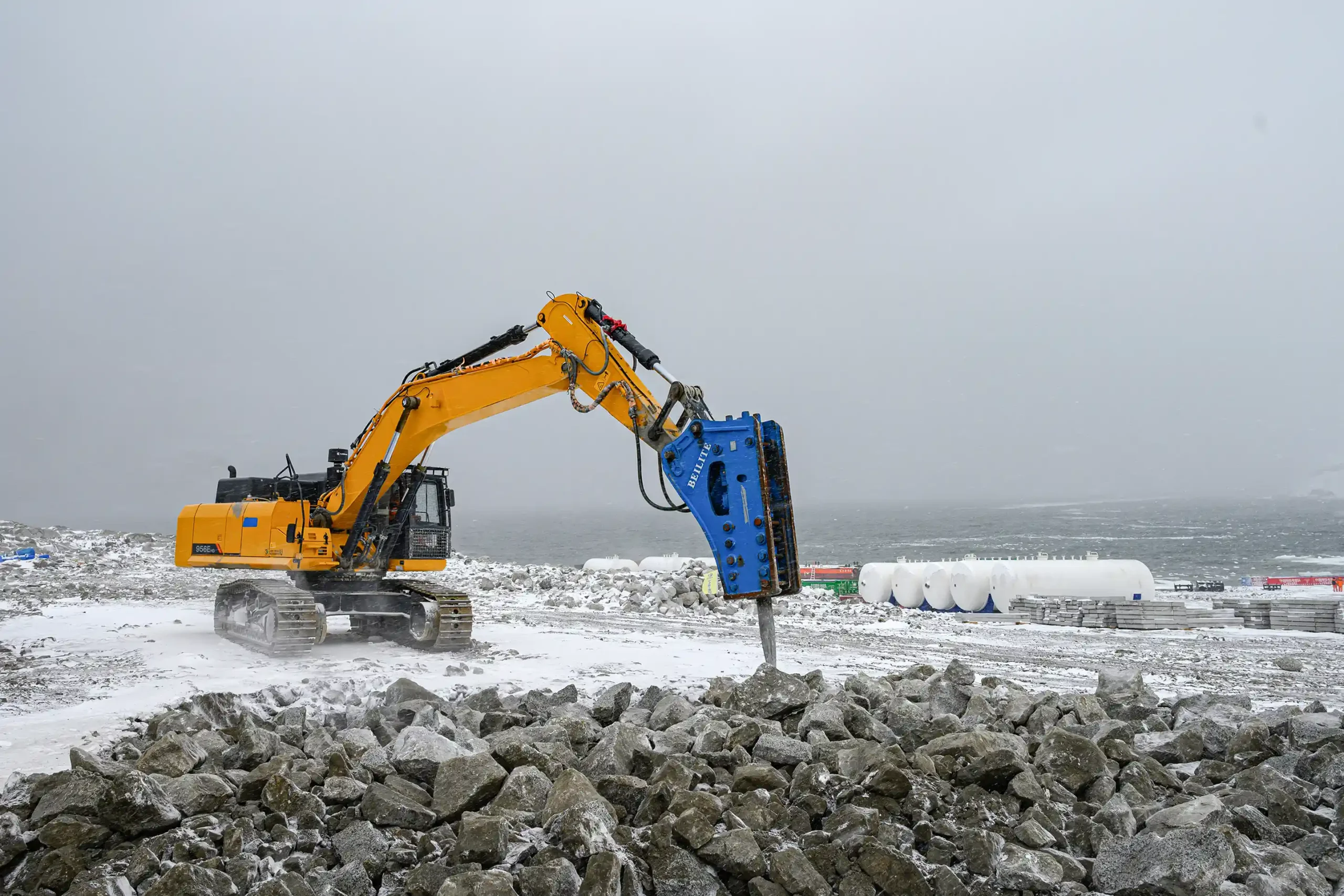
Freezing conditions require preparation, not avoidance. Low-temperature hydraulic fluids maintain proper viscosity when ambient temperatures drop below freezing. Warm-up procedures let the system reach adequate operating temperature before taking on full load. Skipping these steps risks damage from high-pressure spikes in thick oil and inadequate lubrication during the critical startup period.
How does the excavator’s hydraulic system affect breaker temperature?
The excavator and breaker share a hydraulic circuit, so the excavator’s pump efficiency, reservoir size, and cooling capacity directly influence breaker operating temperature. An undersized cooler or a pump running near its limits adds heat that the breaker has to deal with. Matching the breaker to the excavator’s hydraulic capacity prevents situations where the carrier equipment can’t support the attachment’s thermal demands.
Work With BEILITE for Equipment That Handles the Heat
Operational efficiency and equipment longevity depend on getting temperature management right. BEILITE Machinery Co., LTD brings decades of R&D focused on hydraulic breakers engineered for thermal performance across demanding conditions. The BLT and BLTB series reflect that experience in designs that manage heat effectively while delivering consistent breaking power. Contact our team at [email protected] or visit beilite.com to discuss how the right equipment choice supports your specific operational requirements.