 Anglais
 Français
Hydraulic Breaker vs Demolition Shear: Strategic Equipment Choice
Picking the right demolition attachment feels less like a technical decision and more like a bet on how the job will actually unfold. I’ve watched crews lose entire days because someone assumed a breaker could handle rebar-heavy concrete, or because a shear sat idle while operators struggled with solid rock. The gap between hydraulic breakers and demolition shears isn’t just about specifications—it’s about matching tool physics to real site conditions. Get it wrong, and you’re burning fuel, wearing out equipment, and watching your timeline slip. Get it right, and the work flows in a way that almost feels easy. This breakdown covers what each attachment actually does well, where each one fails, and how to make the call before the excavator even rolls onto site.
How Hydraulic Breakers Generate Destructive Force
Hydraulic breakers work through concentrated percussive energy. The excavator’s hydraulic pump drives fluid into the breaker housing, accelerating a heavy piston downward at high speed. That piston strikes a chisel or point tool, transferring kinetic energy directly into whatever material sits beneath it. A nitrogen gas chamber inside the housing amplifies both impact frequency and force—essentially storing energy between strokes and releasing it to boost each blow.
The result is rapid, repetitive strikes that fracture hard, brittle materials from the outside in. Rock, unreinforced concrete, and asphalt all respond well to this approach because they lack the internal tensile strength to absorb repeated impacts. The material cracks, fragments, and eventually breaks apart into manageable pieces.
BEILITE hydraulic breakers use this same fundamental mechanism but refine it through tighter tolerances and optimized nitrogen chamber design. The goal is consistent energy delivery across thousands of cycles without the performance degradation that plagues lower-quality units.
Where Hydraulic Breakers Perform Best
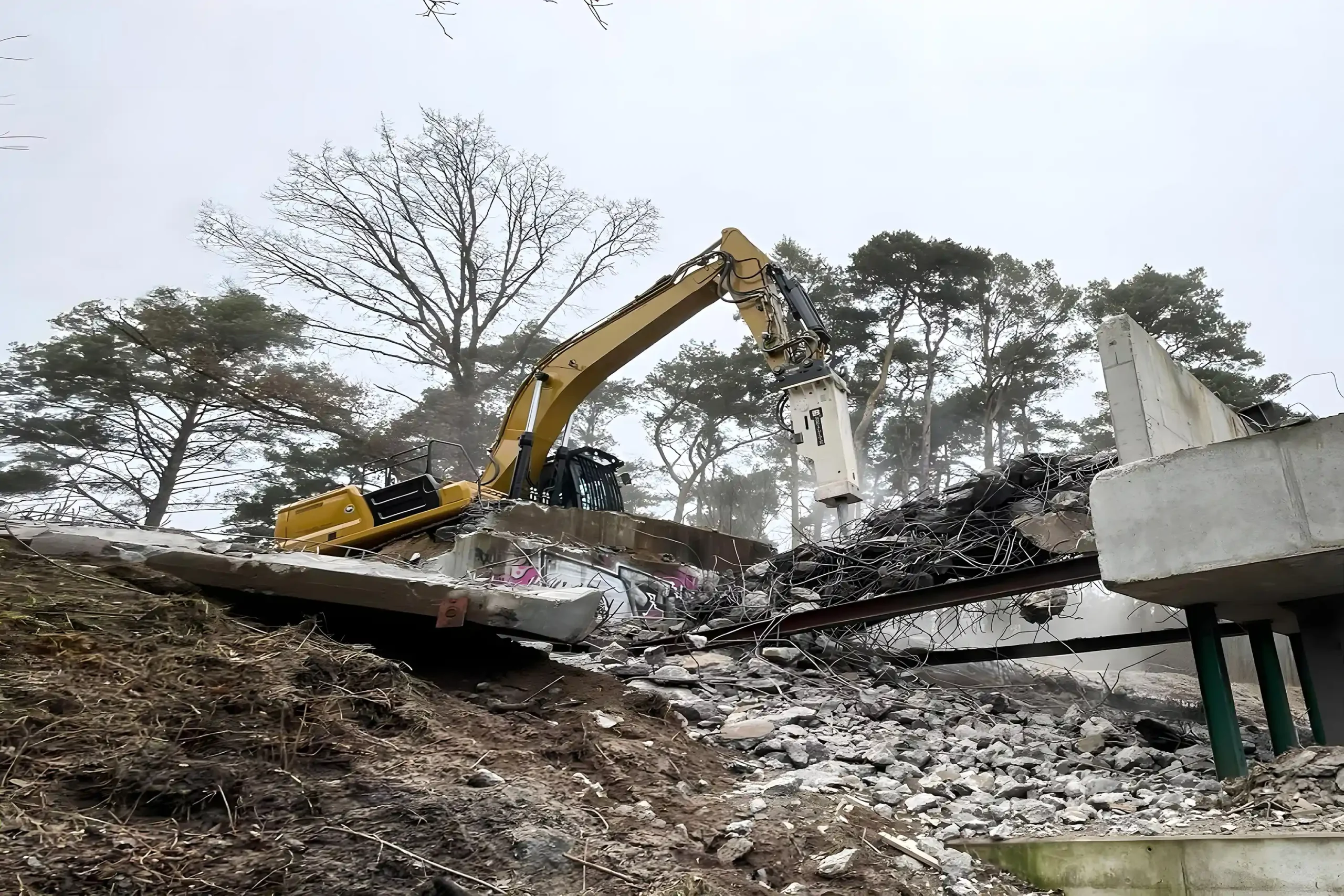
Breakers earn their place on jobs where raw impact force matters more than precision. Reinforced concrete foundations, bridge abutments, thick slabs, and bedrock all fall into this category. Quarrying operations depend on breakers to fragment rock faces efficiently. Tunneling projects use them to advance through hard ground where drilling and blasting aren’t practical or permitted.
The common thread is material density and brittleness. When you need to destroy something solid and unyielding, a hydraulic breaker delivers the concentrated force required. Mass demolition—tearing down parking structures, breaking up highway sections, clearing rock for excavation—plays to the breaker’s strengths.
Demolition Shears and the Physics of Cutting
Demolition shears operate on entirely different principles. Instead of impact, they generate crushing and cutting force through hydraulic cylinders that close powerful jaws around the target material. Those jaws feature hardened blades capable of shearing through steel, severing rebar, and pulverizing concrete simultaneously.
The mechanical advantage comes from the cylinder geometry and jaw design. Large-bore cylinders generate immense closing pressure, while blade profiles concentrate that pressure along cutting edges. Many demolition shears include rotation mechanisms that let operators position the jaws precisely before making a cut—critical when working around structural elements that need to fall in specific directions.
Design variations expand the shear’s capabilities. Pulverizer configurations add crushing surfaces for concrete processing. Multi-processors combine cutting, crushing, and material separation functions in a single attachment. This versatility makes shears valuable beyond primary demolition, extending into secondary processing and recycling operations.
Applications That Favor Demolition Shears
Shears excel where precision matters and where materials contain steel. Structural steel removal—cutting beams, columns, and trusses—requires the controlled severing that only a shear can provide. A breaker would simply bounce off structural steel without accomplishing anything useful.
Reinforced concrete presents a mixed case. The concrete itself could theoretically be broken with a breaker, but the embedded rebar creates problems. Breakers can’t cut steel, so operators end up with partially demolished sections still held together by bent but intact reinforcement. Shears cut through both materials, separating concrete from steel and preparing each for appropriate recycling streams.
Urban demolition often mandates shears regardless of material type. Noise restrictions, vibration limits near adjacent structures, and the need for selective removal all favor the quieter, more controlled operation of cutting over impact. When a building needs to come down floor by floor with minimal disturbance to neighboring properties, shears provide the surgical capability that breakers lack.
Direct Performance Comparison
The fundamental difference between these attachments shows up across every performance metric. Understanding where each tool leads—and where it falls short—prevents costly mismatches between equipment and task.
| Fonctionnalité | Brise-roche hydraulique | Demolition Shear |
|---|---|---|
| Primary Function | Impact breaking, fragmentation | Cutting, crushing, pulverizing, material separation |
| Adéquation des matériaux | Hard, brittle materials (rock, unreinforced concrete) | Reinforced concrete, steel structures, mixed materials |
| Précision | Lower precision, broad impact zone | High precision, selective cutting |
| Vitesse | Fast for mass breaking | Moderate for cutting, high for material processing |
| Noise/Vibration | High noise, high vibration | Moderate noise, lower vibration |
| Cost Factors | Chisel wear, fuel for impact | Blade wear, hydraulic system maintenance |
Hydraulic breakers win on raw speed when facing appropriate materials. A breaker can reduce a concrete slab to rubble faster than a shear can process the same volume. But that speed advantage disappears—and often reverses—when rebar enters the picture or when the demolished material needs to be sorted for recycling.
Demolition shears win on versatility and precision. They handle a wider range of materials, produce less noise and vibration, and leave material in a more processable state. The tradeoff is slower operation on pure concrete or rock, where the cutting action can’t match the breaker’s impact efficiency.
Concrete Demolition: Choosing Between Impact and Cutting
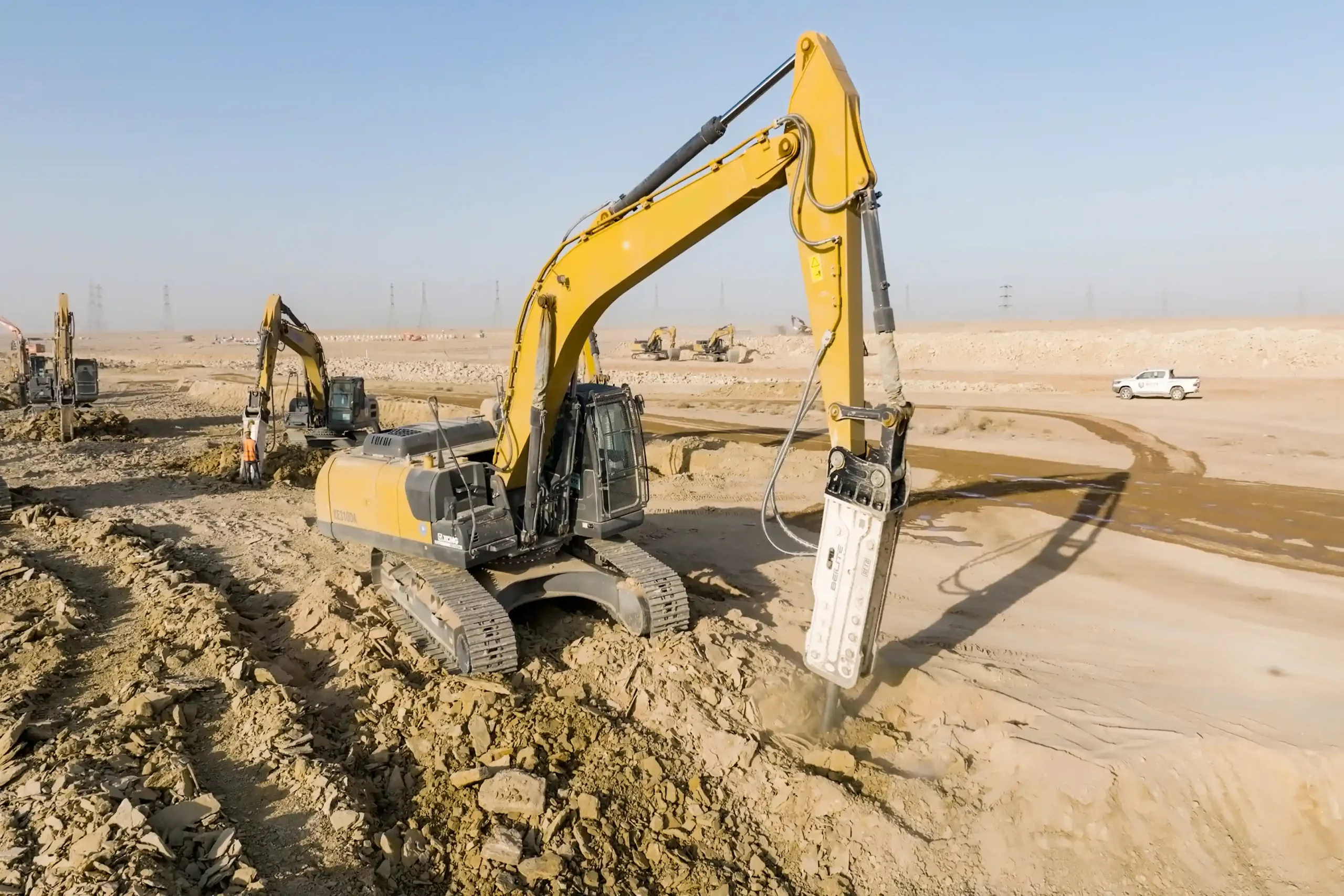
For mass concrete demolition—thick slabs, foundations, or structures with minimal reinforcement—hydraulic breakers typically deliver faster results. The impact force fractures large volumes quickly, and the lack of embedded steel means the breaker can work continuously without interruption.
Reinforced concrete shifts the calculation. Dense rebar grids slow breaker progress significantly because the steel absorbs impact energy without fracturing. Operators end up spending excessive time trying to break concrete away from reinforcement that refuses to separate. Demolition shears cut through both materials simultaneously, severing rebar cleanly and crushing concrete in a single operation. For heavily reinforced structures, shears often complete the job faster despite their slower per-cycle operation.
The concrete’s composition and the project’s downstream requirements both matter. If demolished material needs to be recycled, shears produce cleaner separation between concrete and steel. If the material is simply going to landfill and reinforcement is minimal, breakers may be more efficient.
Steel Cutting Capabilities
Demolition shears are purpose-built for cutting steel. The hardened blades and hydraulic force can sever structural beams, thick plate, and dense rebar configurations that would completely defeat a hydraulic breaker. This capability makes shears essential for any project involving significant steel content.
Hydraulic breakers have essentially zero steel-cutting ability. They can bend thin rebar through repeated impact, but they cannot sever it. Structural steel simply absorbs the impact energy and remains intact. Attempting to use a breaker on steel structures wastes time, damages equipment, and accomplishes nothing productive.
Operating Cost Structures
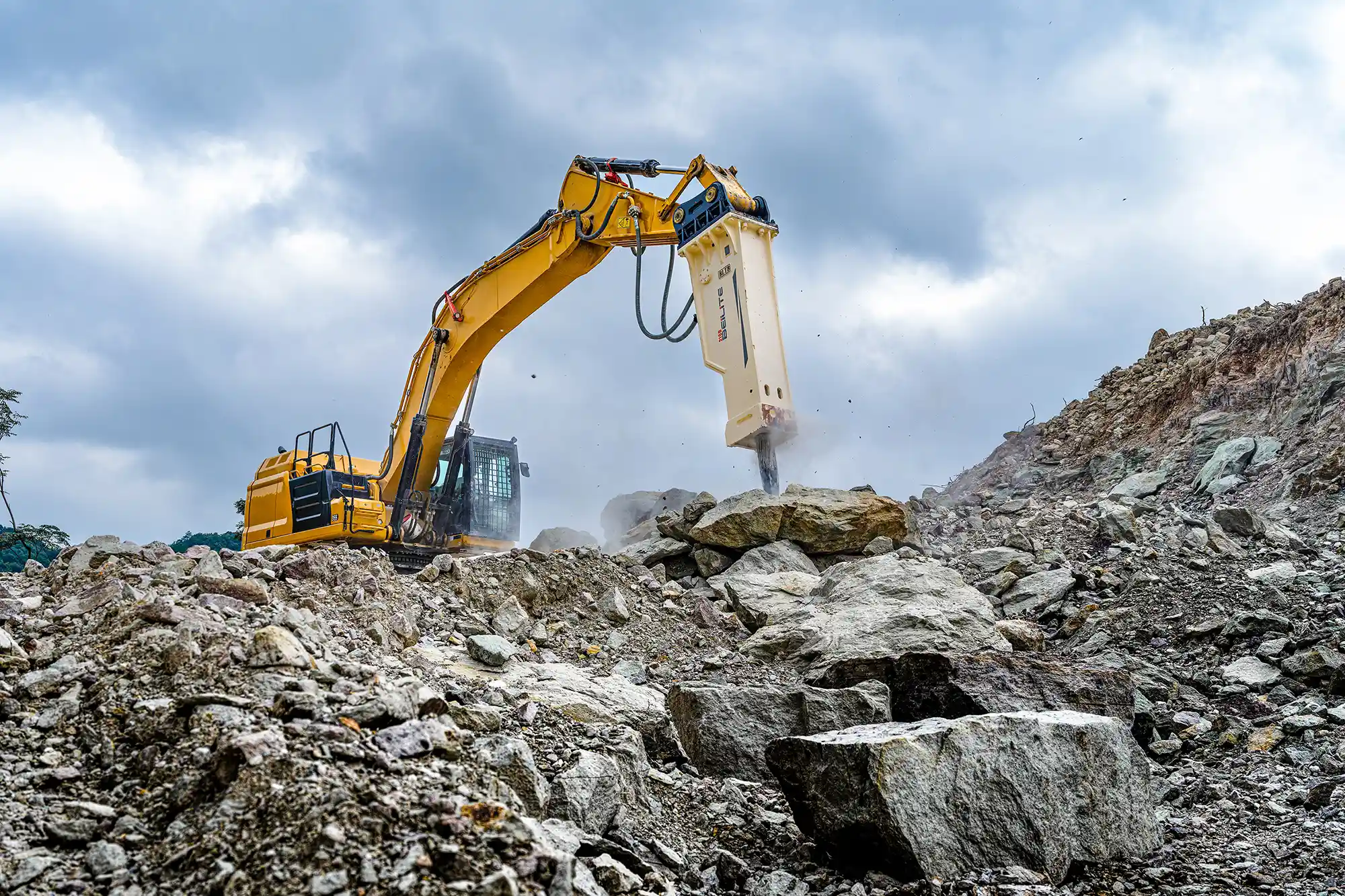
Hydraulic breaker costs center on consumables and energy. Chisels wear down through constant impact and require regular replacement—sometimes daily on hard rock jobs. Fuel consumption runs high because the breaker demands continuous hydraulic flow at maximum pressure. Nitrogen chamber maintenance adds periodic expense, and seal replacement becomes necessary as the intense cycling degrades internal components.
Demolition shear costs follow a different pattern. Blade wear is the primary consumable expense, with sharpening or replacement intervals depending on the materials being cut. Abrasive materials like concrete accelerate blade wear, while cleaner steel cutting extends blade life. Jaw alignment requires periodic adjustment to maintain cutting efficiency. Hydraulic system maintenance matters for both attachments, but shears may demand more attention to cylinder seals given the extreme pressures involved in cutting operations.
Labor efficiency affects both cost structures. Skilled operators extract more productivity from either attachment, but the learning curve differs. Breaker operation is relatively straightforward—position and apply. Shear operation requires more judgment about cut sequencing, jaw positioning, and material handling. Projects that factor in operator skill levels may find one attachment more cost-effective than the other based on available personnel.
Making the Right Selection for Your Project
Equipment selection deserves more analysis than it typically receives. The decision between hydraulic breaker and demolition shear affects not just productivity but also safety, environmental compliance, and ultimate profitability. Several factors beyond simple material type should inform the choice.
Critical Selection Factors
Material composition remains the starting point. Hard, non-metallic materials—rock, unreinforced concrete, asphalt—favor hydraulic breakers. Steel structures, reinforced concrete, and mixed materials favor demolition shears. But material type alone doesn’t complete the analysis.
Site constraints often override material considerations. Urban locations with noise ordinances may prohibit breaker operation during certain hours or entirely. Vibration limits near sensitive structures—historic buildings, underground utilities, adjacent occupied spaces—can rule out impact demolition regardless of material type. Dust control requirements may favor shears’ cleaner cutting action over breakers’ dust-generating fragmentation.
Project timeline and phasing matter as well. A job that requires both mass concrete removal and structural steel dismantling may need both attachments at different stages. Quick coupler systems allow a single excavator to switch between tools efficiently, but the project plan needs to account for the transition time and ensure both attachments are available when needed.
A Hammer for Demolition&Rock Breaking handles the initial mass breaking phase effectively, while selective demolition of remaining structural elements calls for shear precision. Matching attachment to phase prevents the common mistake of forcing one tool to handle tasks better suited to the other.
BEILITE’s Approach to Hydraulic Breaker Engineering
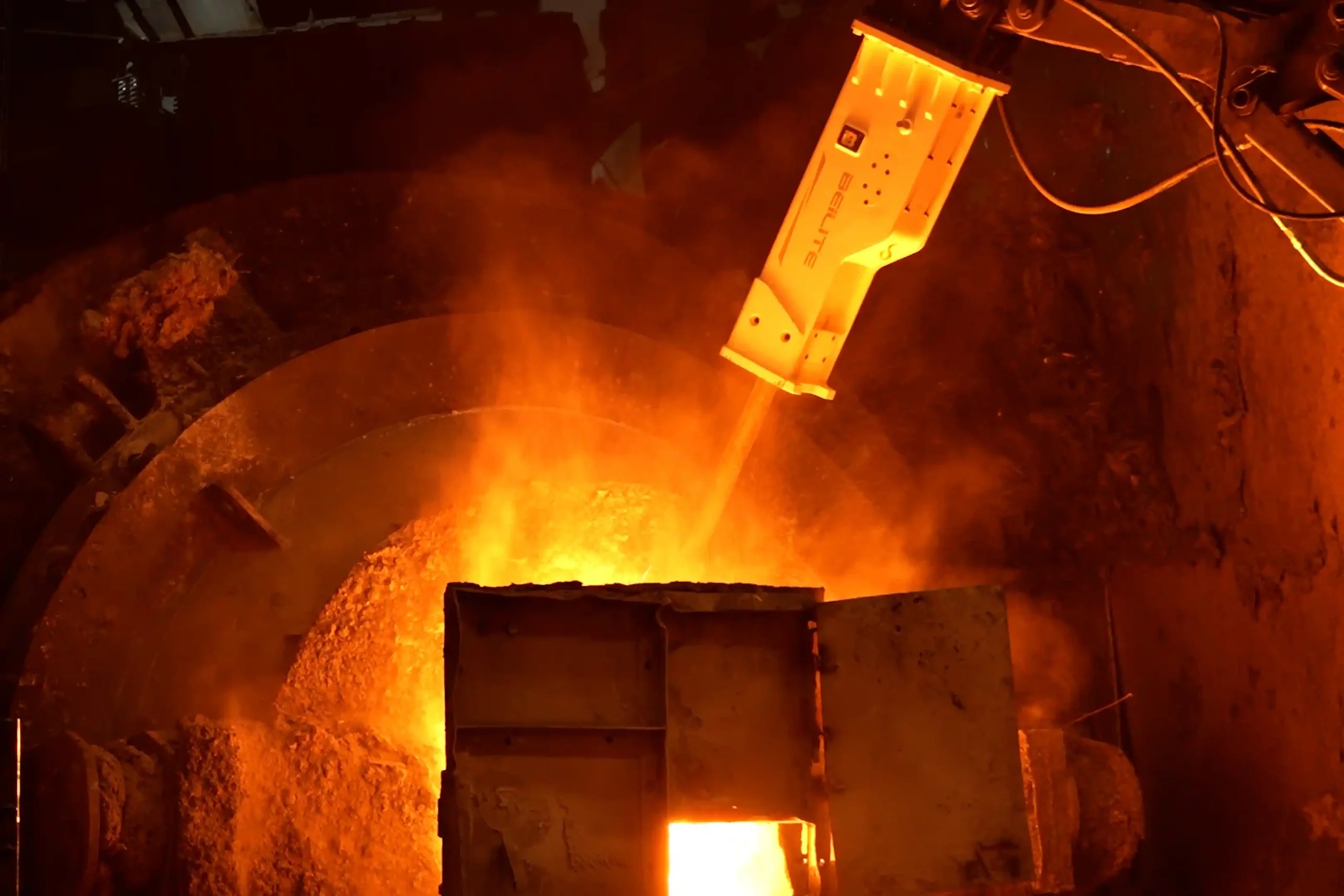
BEILITE Machinery has manufactured hydraulic breakers since 2002, accumulating two decades of field experience and engineering refinement. The company holds national high-tech enterprise designation in China and participated in developing Chinese national standards for hydraulic breakers. Hundreds of patents cover the core technologies embedded in BEILITE products.
The BLT and BLTB product lines span the full excavator weight range. Compact models like the BLT-40 mount on mini excavators from 0.5 to 1.2 tons, handling light-duty breaking tasks where larger equipment can’t access. Heavy-duty units like the BLT-165 pair with 33 to 38-ton excavators for demanding applications in quarrying, mining, and large-scale demolition.
Specialized configurations address specific operational environments. The Marteau piqueur hydraulique pour mini-pelle,Marteau piqueur pour mini-pelle serves confined-space applications where full-size equipment can’t operate. Mining and quarrying operations benefit from the Marteau brise-roche hydraulique pour les mines et les carrières, engineered for continuous hard-rock duty cycles. Marine and waterfront projects use the Marteau brise-roche hydraulique pour la construction sous-marine, designed to withstand submersion and saltwater exposure.
These products operate in over 100 countries, with the global distribution reflecting both manufacturing quality and after-sales support capabilities. The engineering focus remains on consistent energy delivery, extended service intervals, and reliable performance across varied operating conditions.
Partner with BEILITE for Superior Demolition Solutions
Elevate your demolition projects with unparalleled performance and reliability. As a national high-tech enterprise, BEILITE Machinery Co., LTD leads the industry in advanced hydraulic breaker technology. Explore our BLT and BLTB series, trusted in over 100 countries, or contact our experts at [email protected] or 40008-40008 for tailored solutions that meet your specific operational demands and enhance your project’s efficiency and safety.
Frequently Asked Questions on Demolition Equipment
What safety protocols apply specifically to heavy demolition attachments?
Operating hydraulic breakers and demolition shears safely requires layered precautions. Operator training must cover not just equipment controls but also material behavior—how concrete fractures, how steel fails under cutting pressure, and how to recognize unstable structural conditions. Equipment maintenance schedules need strict adherence because worn components fail unpredictably under the extreme forces involved. Site protocols should establish exclusion zones around operating equipment, with distances appropriate to the attachment type and material being processed. Personal protective equipment requirements include hearing protection (especially for breaker operations), eye protection against flying debris, and high-visibility clothing. Selecting well-engineered attachments from manufacturers like BEILITE reduces mechanical failure risk, but operator vigilance remains the primary safety factor.
How should material composition guide attachment selection?
Material composition determines which attachment physics will actually work. Dense, unreinforced concrete and natural rock respond well to hydraulic breaker impact because they’re brittle—they crack and fragment under repeated blows. Steel and reinforced concrete require demolition shears because steel absorbs impact energy without fracturing. The cutting and crushing action of shear jaws severs steel cleanly and pulverizes concrete simultaneously. Mixed materials—common in industrial demolition—almost always favor shears because the steel content defeats breaker effectiveness. When material composition varies across a project site, having access to both attachment types prevents the productivity losses that come from forcing one tool to handle inappropriate materials.
What maintenance differences exist between hydraulic breakers and demolition shears?
Hydraulic breakers demand frequent attention to the chisel and nitrogen system. Chisel greasing should happen at regular intervals throughout each operating shift—the exact frequency depends on material hardness and impact rate. Nitrogen pressure checks are essential because low pressure reduces impact force and can damage internal components. Seal inspection and replacement follow manufacturer schedules, with accelerated intervals for high-duty-cycle applications. Demolition shears require different maintenance focus. Blade condition determines cutting efficiency, so regular inspection for wear, chipping, and alignment is critical. Blade sharpening or replacement intervals depend heavily on materials processed—abrasive concrete wears blades faster than clean steel cutting. Jaw alignment affects both cutting performance and blade wear patterns, requiring periodic adjustment. Both attachment types need hydraulic system attention, but the specific failure modes and inspection points differ based on their operating principles.
Can one excavator run both a hydraulic breaker and a demolition shear effectively?
Modern excavators handle multiple attachments well when properly configured. Quick coupler systems allow operators to switch between hydraulic breaker and demolition shear in minutes rather than hours, making single-machine versatility practical for projects that require both capabilities. The key requirement is hydraulic compatibility—flow rate and pressure specifications must match both attachments’ requirements. Some excavators need auxiliary hydraulic circuits or flow control adjustments to optimize performance when switching between attachment types. Operators should verify that the excavator’s hydraulic capacity meets the demands of whichever attachment draws more flow, and that control systems can adjust appropriately for each tool’s operating characteristics. With proper setup, a single well-equipped excavator can handle diverse demolition tasks across multiple project phases.