 Anglais
 Français
Hydraulic Breaker Toolbox Use: Maximize Performance & Safety
Operating a hydraulic breaker well means knowing what you’re working with, how to run it properly, and keeping up with maintenance before small issues turn into expensive ones. This piece draws from Beilite Machinery’s engineering background to walk through the practices that actually matter for performance, equipment life, and site safety across all hydraulic breaker Hammer models.
What Each Tool in Your Breaker Kit Actually Does
A complete tool kit keeps your breaker running right and lasting longer. Beilite ships comprehensive kits with the BLT and BLTB series, and each item serves a specific purpose worth understanding.
| Tool Kit Item | Fonction |
|---|---|
| Ciseau | Breaks concrete, rock, and stone. Different profiles handle different materials and tasks. Conical points work well on harder rock, flat chisels spread force across softer surfaces, and cross patterns help with controlled fracturing. |
| Point Moil | Concentrates impact energy for demolition work on concrete and rock. The focused strike pattern makes it effective for precision breaking. |
| Outil émoussé | Handles softer materials or initial demolition phases where you want broader fragmentation rather than concentrated penetration. |
Mastering Hydraulic Breaker Operations
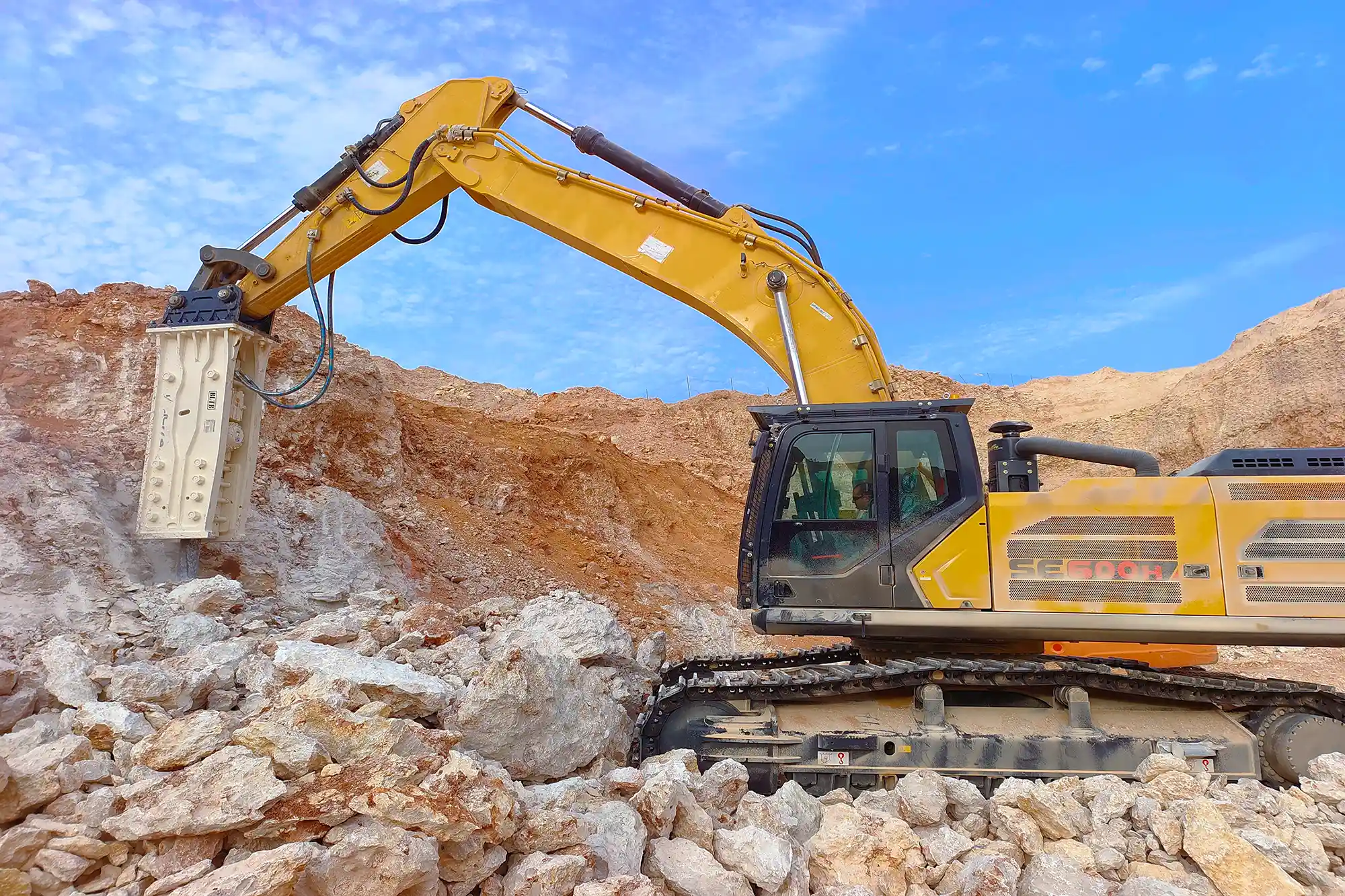
Effective hydraulic breaker operation involves understanding the relationship between the carrier machine and the attachment. Proper technique directly affects both productivity and equipment longevity.
Carrier Machine Compatibility
The excavator or carrier must match the breaker’s specifications. Weight class, hydraulic flow rates, and pressure settings all need to align. Running a breaker outside its designed parameters causes premature wear on seals, pistons, and the carrier’s hydraulic system.
Check the manufacturer’s compatibility charts before mounting. Beilite provides detailed specifications for each model, including minimum and maximum carrier weights, required oil flow (measured in liters per minute), and operating pressure ranges.
Positioning and Angle
Hold the breaker perpendicular to the work surface whenever possible. Angled strikes cause side loading on the tool, which accelerates wear on bushings and can crack the tool shank. The impact energy transfers most efficiently when the tool meets the material straight on.
Avoid prying or using the breaker as a lever. The tool is designed for vertical impact, not lateral force. Attempting to move material sideways with an engaged tool damages internal components and voids most warranties.
Operating Pressure and Flow
Hydraulic breakers operate within specific pressure and flow windows. Too little flow starves the breaker, reducing impact frequency and power. Too much pressure overheats the system and stresses seals.
Monitor the carrier’s hydraulic gauges during operation. Pressure spikes or erratic readings indicate problems that need immediate attention. Many modern carriers allow flow adjustment from the cab, which helps optimize performance across different materials.
Blank Firing Prevention
Never operate the breaker without the tool pressed firmly against the work surface. Blank firing occurs when the piston strikes without resistance, sending shock waves back through the breaker body. This damages internal components rapidly and can crack the cylinder housing.
If the tool breaks through material suddenly, release the trigger immediately. Train operators to anticipate breakthrough points, especially when working on concrete slabs or layered rock formations.
Greasing and Lubrication Protocols
Proper lubrication prevents metal-to-metal contact in high-wear areas. The tool shank and bushings require regular greasing, typically every two hours of operation under normal conditions.
Grease Type and Application
Use only manufacturer-approved grease. Beilite specifies a lithium-based grease with specific viscosity ratings for its breakers. Substituting automotive grease or general-purpose lubricants leads to inadequate protection and accelerated wear.
Apply grease through the designated fittings until fresh grease appears at the tool collar. Over-greasing wastes material but causes no harm. Under-greasing destroys bushings within days of heavy use.
Tool Shank Inspection
Remove the tool periodically to inspect the shank for scoring, mushrooming, or cracks. A damaged shank transmits shock unevenly and accelerates wear on the lower bushing. Replace tools showing visible damage rather than continuing operation.
The tool should slide freely in the bushing when properly greased. Binding or resistance indicates either insufficient lubrication or bushing wear that requires attention.
Hydraulic System Maintenance
The hydraulic system forms the heart of breaker operation. Contaminated oil, worn seals, and improper pressure settings cause most breaker failures.
Oil Quality and Filtration
Hydraulic oil degrades over time, losing viscosity and accumulating contaminants. Follow the carrier manufacturer’s oil change intervals, and consider more frequent changes when operating in dusty or dirty environments.
The breaker’s internal passages have tight tolerances. Particles that pass through the carrier’s filters can still damage breaker components. Some operators add secondary filtration specifically for breaker circuits, which extends service life noticeably.
Seal Inspection and Replacement
Seals wear gradually, often leaking internally before showing external signs. Reduced impact power or slower cycling frequently indicates seal degradation rather than more serious problems.
Inspect external seals during daily walkarounds. Oil weeping around the cylinder body or tool area signals the need for seal replacement. Catching seal failures early prevents contamination of internal components and reduces repair costs.
Accumulator Pressure
The nitrogen accumulator cushions hydraulic pulses and stores energy between strikes. Incorrect accumulator pressure affects impact frequency and power while increasing stress on other components.
Check accumulator pressure according to the maintenance schedule, typically every 500 operating hours. The procedure requires specific gauges and should follow manufacturer instructions precisely. Low pressure causes harsh operation and accelerated wear. High pressure reduces impact energy and can damage the accumulator diaphragm.
Dépannage des problèmes courants
Even well-maintained breakers occasionally develop problems. Recognizing symptoms early prevents minor issues from becoming major repairs.
Puissance d'impact réduite
When striking force drops noticeably, check hydraulic pressure and flow first. If carrier settings are correct, inspect the accumulator charge. Low nitrogen pressure is the most common cause of weak impacts.
Worn seals also reduce power by allowing internal bypass. If accumulator pressure checks out, seal replacement usually restores performance.
Fonctionnement erratique
Inconsistent cycling often indicates air in the hydraulic system. Bleed the circuit according to manufacturer procedures. Persistent air intrusion suggests a suction-side leak that needs repair.
Contaminated oil can also cause erratic behavior by interfering with valve operation. If bleeding doesn’t resolve the issue, consider an oil change and filter replacement.
Excessive Heat
Hydraulic breakers generate heat during normal operation, but excessive temperatures indicate problems. Check oil flow rates first. Restricted flow forces the system to work harder, generating additional heat.
Verify that the carrier’s hydraulic cooler functions properly. Blocked cooling fins or failed fans allow temperatures to climb beyond safe limits. Operating an overheated breaker damages seals and accelerates oil degradation.
Safety Considerations
Hydraulic breakers present specific hazards that require attention beyond standard excavator safety practices.
Flying Debris
Material fragments travel unpredictably during breaking operations. Establish exclusion zones around the work area and ensure all personnel wear appropriate eye protection. Hard hats protect against falling fragments when working near vertical surfaces.
Noise Exposure
Impact noise from hydraulic breakers exceeds safe exposure limits within seconds. Operators benefit from the cab’s sound insulation, but ground personnel need hearing protection whenever breakers operate nearby.
Hydraulic Hazards
High-pressure hydraulic fluid can penetrate skin and cause serious injury. Never check for leaks with bare hands. Use cardboard or paper to detect spray patterns, and treat any hydraulic injection injury as a medical emergency.
Extending Equipment Life
Several practices significantly extend breaker service life beyond minimum maintenance requirements.
Matching Tool to Material
Using the correct tool for the material reduces stress on the entire system. Moil points excel on hard rock but waste energy on soft concrete. Flat chisels work efficiently on slabs but struggle with boulders. Selecting appropriately improves productivity while reducing wear.
Avoiding Continuous Operation
Hydraulic breakers benefit from brief pauses during extended use. Running continuously for hours generates excessive heat and accelerates wear. Short breaks every 15-20 minutes of heavy operation allow temperatures to stabilize.
Proper Storage
Store breakers with the tool retracted and the cylinder protected from weather. Moisture entering the cylinder bore causes corrosion that damages seals and scoring that requires expensive repairs. Indoor storage or weatherproof covers protect the investment.
Questions fréquemment posées
How often should I grease my hydraulic breaker during operation?
Every two hours of active breaking under normal conditions. Increase frequency when working in wet, muddy, or dusty environments. The tool shank and bushings need consistent lubrication to prevent accelerated wear.
What causes a hydraulic breaker to lose impact power gradually?
The most common cause is low nitrogen pressure in the accumulator, which typically needs checking every 500 hours. Worn internal seals also reduce power by allowing hydraulic bypass. Start with the accumulator check since it’s simpler and often resolves the issue.
Can I use any grease for my breaker’s lubrication points?
No. Manufacturers specify grease types for good reasons. Beilite breakers require lithium-based grease with specific viscosity characteristics. General-purpose or automotive greases may not provide adequate protection under the extreme pressures and temperatures inside a working breaker.
Why does my breaker cycle erratically even when hydraulic settings are correct?
Air in the hydraulic circuit is the usual culprit. Bleed the system following manufacturer procedures. If erratic operation continues, contaminated oil may be affecting valve function, requiring an oil change and filter replacement.
How do I know when bushings need replacement?
The tool should slide freely when properly greased. Binding, excessive play, or visible scoring on the tool shank indicate bushing wear. Catching this early prevents damage to more expensive components.