 Anglais
 Français
Hydraulic Breaker Tool Bits: A Performance Comparison Guide
Getting the right hydraulic breaker tool bit makes a real difference in how a job unfolds. I’ve watched crews lose hours swapping out bits that weren’t suited to the material, and I’ve seen the opposite—smooth shifts where the right geometry matched the rock and everything just worked. The choice comes down to understanding what each bit shape actually does, what the steel is made of, and how those factors play out against specific ground conditions. This piece walks through the main bit types, the material science that keeps them working, and the metrics that matter when you’re trying to get more done with less downtime.
How Different Tool Bit Shapes Handle Different Materials
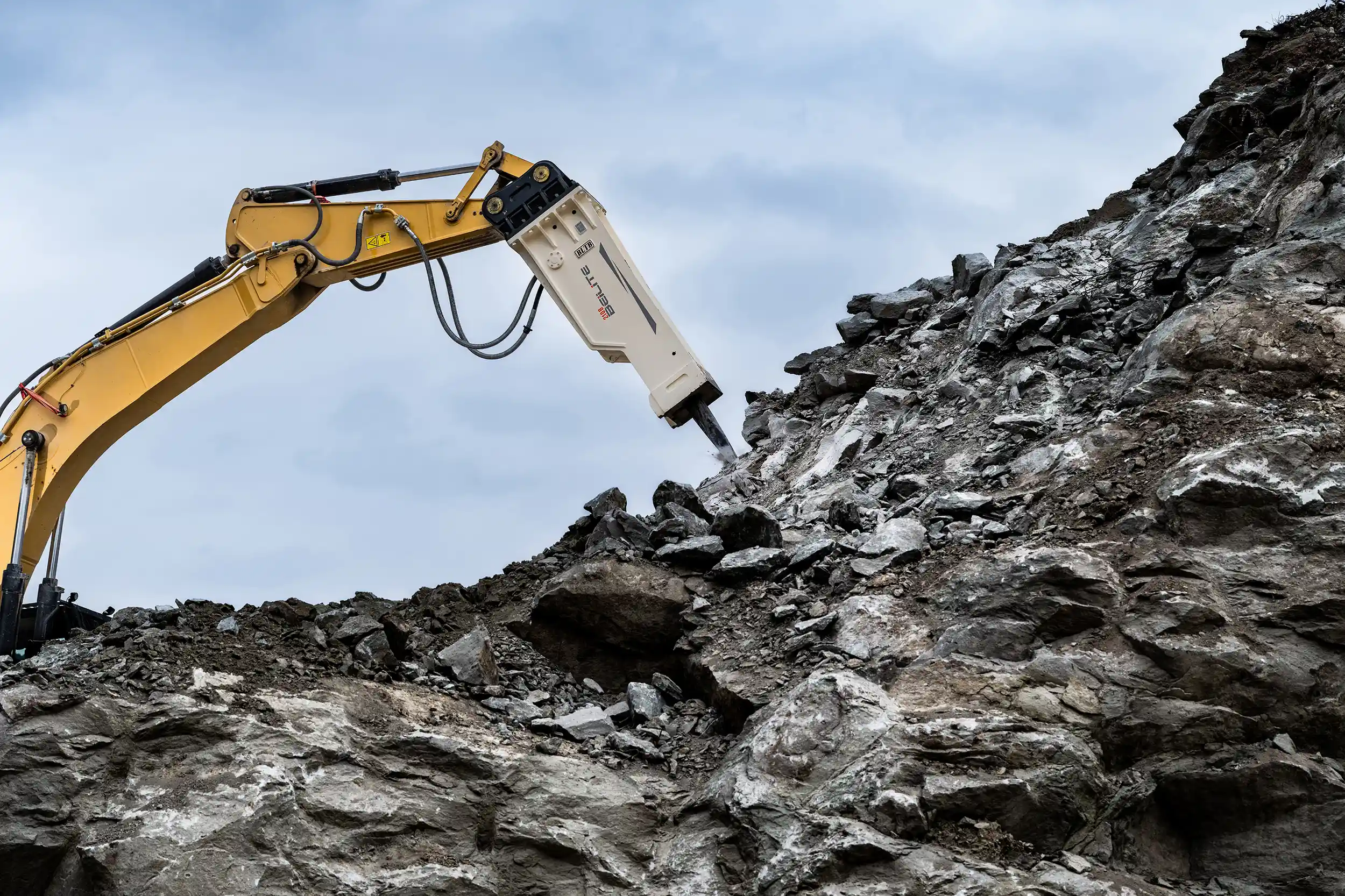
Tool bits are where the breaker meets the ground. Their geometry controls how impact energy transfers into the material, which directly affects how fast you break and how quickly the bit wears down. Each shape exists for a reason.
Chisel bits have a wedge-shaped tip that works well for cutting and prying. They handle concrete, asphalt, and soft to medium-hard rock formations effectively. The wedge design lets them penetrate and separate material in a controlled way.
Moil points, sometimes called conical bits or pointed tools, concentrate impact energy into a small contact area. This makes them effective for initial penetration and for breaking hard, brittle materials like granite or reinforced concrete. Quarrying operations and rock breaking work often rely on these.
Blunt tools have a flat or slightly rounded end. They spread impact energy across a broader surface, which maximizes crushing force rather than penetration. Softer rock, oversized boulders, and secondary breaking in mining are where these shine.
Pyramidal bits sit somewhere between moil points and chisel bits. Their four-sided pyramid shape provides multiple cutting edges, giving them versatility across various rock types and concrete demolition tasks.
Conical bits resemble moil points but often taper more gradually. They’re designed for deep penetration into tough materials and work well in hard rock and certain mining applications where precise fracturing matters.
Matching bit geometry to the material prevents premature wear and keeps production moving. The bit must also fit the breaker’s shank size—a basic compatibility check that still gets overlooked.
 ;
;
Tool Bit Shapes and Their Best Uses
| Type d'embout | Application primaire | Matériau Dureté | Key Action |
|---|---|---|---|
| Embout biseauté | Concrete, Asphalt, Soft Rock | Soft to Medium | Cutting, Prying |
| Point Moil | Hard Rock, Reinforced Concrete | Hard, Brittle | Penetration |
| Outil émoussé | Oversized Boulders, Secondary Breaking | Medium to Soft | Crushing |
| Pyramidal Bit | Versatile Rock, Concrete | Medium to Hard | Fracturing |
| Conical Bit | Deep Penetration, Hard Rock | Hard | Deep Breaking |
What are the key factors in choosing hydraulic breaker tool bits?
The right hydraulic breaker tool bit depends on what you’re breaking, what you’re breaking it with, and how hard the ground pushes back. Application suitability comes first—rock breaking, concrete demolition, and asphalt cutting each demand different tip geometries. Ground conditions and material hardness determine whether you need a penetrating point or a crushing face. Operational efficiency depends on choosing a bit that optimizes penetration rate without wasting energy. Getting these factors right extends tool life and keeps material moving.
What Makes Some Tool Bits Last Longer Than Others
The performance gap between tool bits comes down to what they’re made of and how they’re made. Beilite Machinery Co., LTD. builds its BLT/BLTB brand products around advanced material science. The tool steel alloys incorporate chromium, molybdenum, and vanadium to achieve the right balance of material hardness and toughness. This combination provides wear resistance while maintaining the ability to absorb repeated impact energy without cracking.
Heat treatment is where the real differentiation happens. Multi-stage thermal cycling refines the steel’s microstructure, creating a hard outer surface that resists abrasive wear and a tough core that absorbs shock loads. Precise control over heating and cooling rates, along with specific quenching and tempering protocols, determines how well a bit holds up under continuous operation. These processes extend service life significantly, even in extreme working conditions. Ongoing R&D investment pushes tool steel performance further, and participation in national standards formulation reflects the technical depth behind these products.
How do different tool bit materials impact performance and lifespan?
Material quality shows up in how long a bit stays sharp and how well it holds together under repeated impact. High-grade steel alloys engineered for impact applications resist both wear and fracture better than standard materials. Optimized metallurgical properties maintain structural integrity longer, which improves operational efficiency and lowers cost per hour. Lower quality materials wear faster and fail sooner, increasing downtime and replacement costs. Premium materials deliver better long-term value even when the initial price is higher.
Measuring What Actually Matters in Tool Bit Performance
Evaluating hydraulic breaker tool bits requires looking at numbers, not just impressions. These metrics provide a basis for comparison and help justify equipment decisions.
Impact energy, measured in Joules, represents the force delivered by each blow. Breaking dense or hard materials requires higher impact energy. The breaker’s hydraulic pressure and machine weight influence this directly.
Penetration rate quantifies how quickly the tool bit moves into the target material. It’s a direct productivity indicator, shaped by bit geometry, material hardness, and impact energy.
Wear rate measures how fast the tool bit material degrades during operation. Lower wear rates mean longer bit lifespan and fewer replacements.
Operational efficiency captures the overall effectiveness of the breaking process, including fuel consumption, operator fatigue, and material output per hour.
Cost per hour (CPH) factors in initial purchase cost, wear rate, and downtime for replacements. Lower CPH indicates better economics over the bit’s service life.
Tool retention refers to the system securing the tool bit within the breaker housing. A robust retention mechanism prevents premature bit ejection and minimizes wear on internal components. The shank size must match the breaker’s specifications.
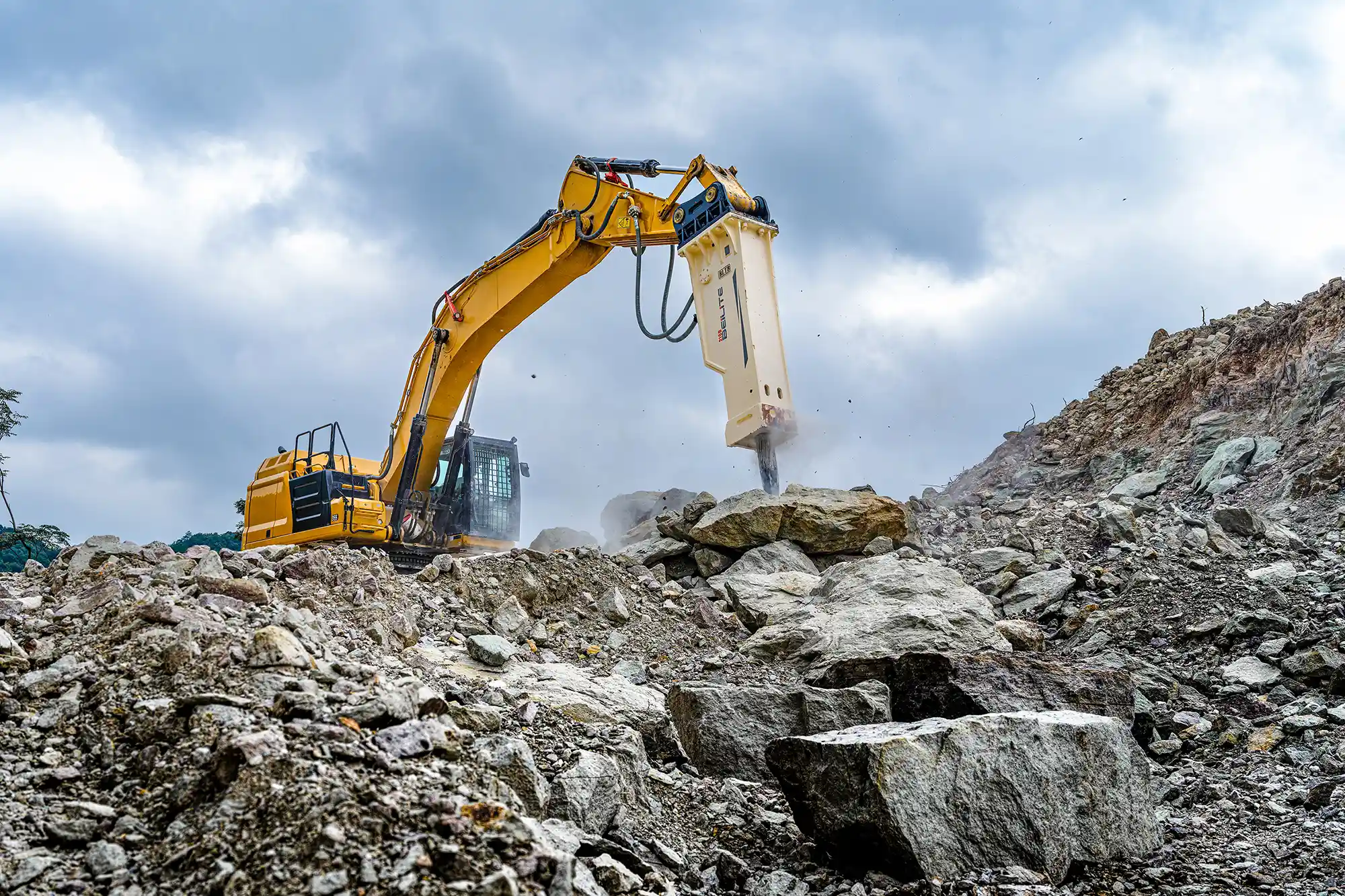
Beilite’s BLT and BLTB series breakers deliver consistent impact energy across their range. The BLT-100, designed for 10-14 ton excavators, features a 100 mm shank diameter and operates at 150–170 bar, delivering 350–700 bpm. This engineering translates to reliable penetration rates and controlled wear in demanding applications.
Beilite Hydraulic Breaker Specifications
| Modèle | Excavateur applicable (t) | Shank Diameter (mm) | Pression de service (bar) | Strike Frequency (bpm) |
|---|---|---|---|---|
| BLT-45 | 0.8-1.5 | 45 | 90-120 | 700-1200 |
| BLT-75 | 6-8.5 | 75 | 120-150 | 400-800 |
| BLT-125 | 14-18 | 125 | 150-170 | 350-650 |
| BLT-155 | 27-33 | 155 | 200-220 | 200-300 |
 ;
;
What is the best tool bit shape for breaking hard rock?
For breaking hard rock, such as granite or basalt in quarrying and mining, blunt tools or pyramidal bits generally perform best. Blunt tools deliver maximum impact force over a larger area, crushing the rock rather than trying to penetrate it. Pyramidal bits combine penetration with robust breaking power, fracturing hard materials efficiently. Moil points also work well for initial penetration into extremely hard, brittle rock. The specific rock type and desired fragmentation size influence the final choice.
Looking Beyond Purchase Price to True Cost
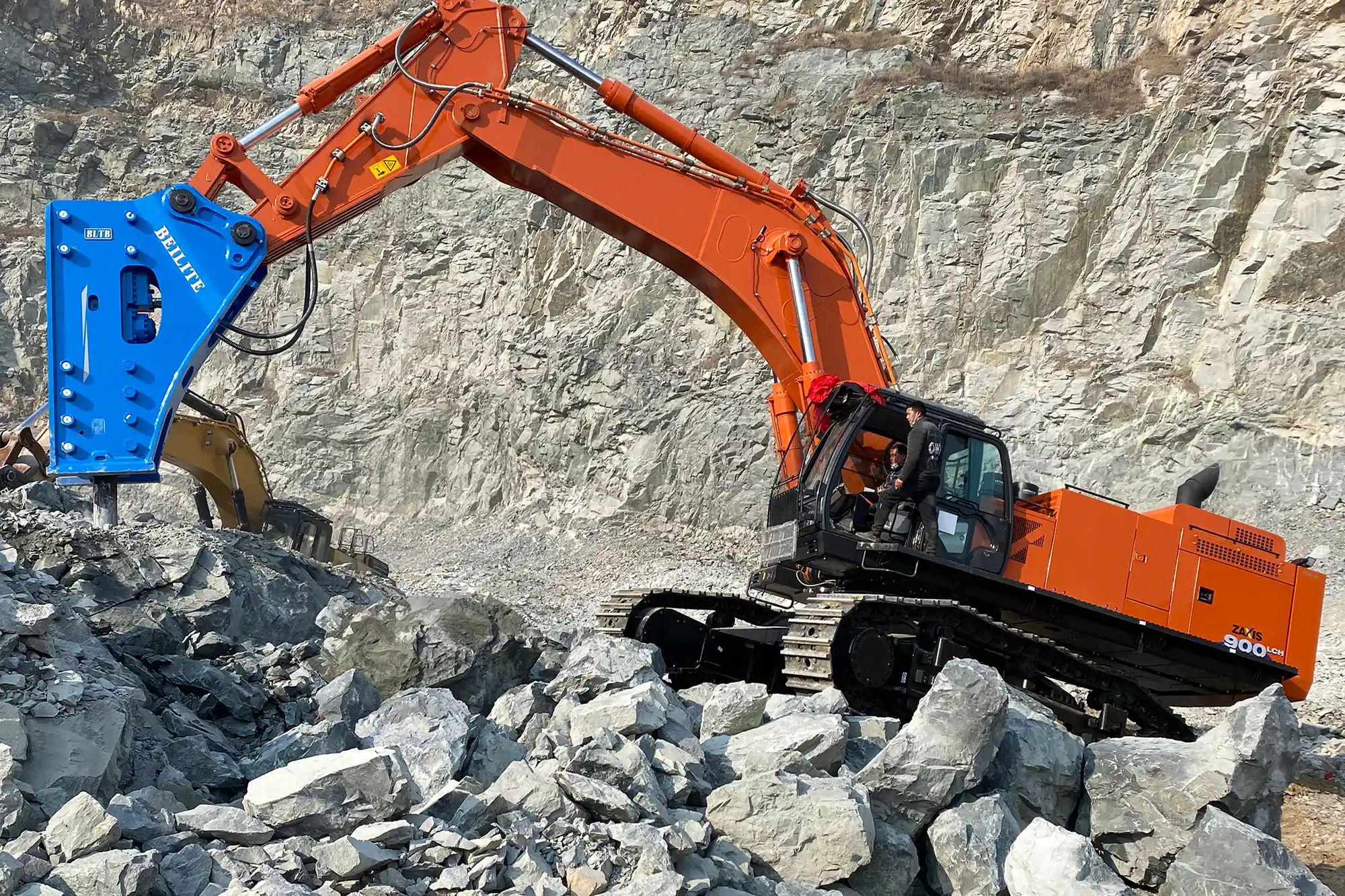
The real economic value of hydraulic breaker tool bits extends well past the initial purchase. Operations managers need to consider total cost of ownership (TCO) to assess long-term profitability accurately. TCO includes the purchase price, but it also factors in maintenance costs, re-sharpening expenses, and the financial impact of downtime from bit failure or replacement.
High-quality tool bits often cost more upfront. Their superior material hardness, wear resistance, and extended bit lifespan lead to a significantly lower cost per hour over time. Reduced wear rates mean fewer replacements, which cuts material procurement and labor costs. The durability of premium bits also translates directly into downtime reduction, keeping equipment operational and projects on schedule. This contributes to higher return on investment (ROI). A robust warranty and a strong brand reputation for reliability add to the long-term value proposition.
Beilite engineers BLT/BLTB tool bits to deliver consistent performance and extended service intervals, maximizing operational uptime and profitability. Calculating TCO involves summing initial purchase, operational (fuel, labor), maintenance, and replacement costs over the asset’s lifespan.
 ;
;
Keeping Tool Bits Working Longer and Safer
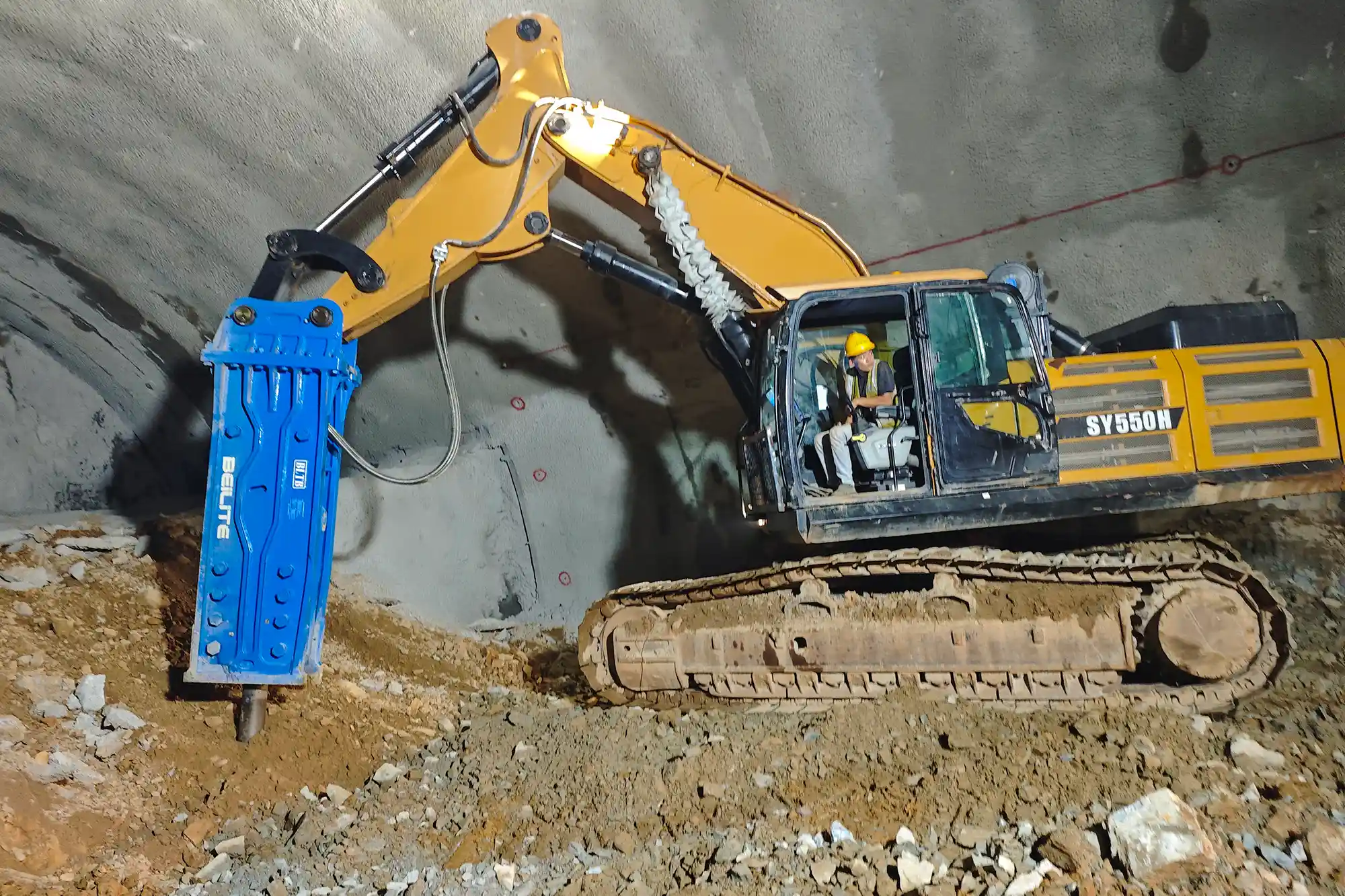
Maximizing service life and ensuring safe operation of hydraulic breaker tool bits requires consistent maintenance protocols. Proper maintenance is proactive, not reactive—it prevents failures rather than just responding to them.
Daily tool bit inspection should happen before each shift. Look for excessive wear, cracks, chipping, or deformation. Pay close attention to the shank area and tip.
Lubrification of the tool bit shank reduces friction and heat build-up between the bit and the breaker’s lower bushing. This prevents premature wear of both components. Use manufacturer-recommended grease at specified intervals.
Correct operating angles matter more than many operators realize. Avoid blank hammering or operating the breaker at extreme angles. This induces bending stresses on the tool bit that lead to fatigue failure. Maintain a perpendicular angle to the material whenever possible.
Respect wear limits and replace tool bits once they reach specified thresholds. Operating with excessively worn bits compromises performance and can damage the breaker.
Re-grinding and re-sharpening can extend life for certain bit types. Follow manufacturer guidelines for proper techniques to restore cutting edges without compromising material integrity.
Proper storage in a dry, protected environment prevents corrosion and damage to spare tool bits.
Operator training on proper breaking techniques, bit selection, and daily maintenance routines promotes longevity and safety standards.
These preventative measures extend bit lifespan, reduce unscheduled downtime, and enhance operational safety. A daily inspection checklist should include visual checks for damage, verification of proper lubrication, and confirmation of tool retention pin integrity.
 ;
;
Why is proper tool bit maintenance crucial for hydraulic breaker Hammer?
Proper tool bit maintenance directly contributes to extended lifespan of both the bit and the hydraulic breaker itself. It reduces wear and stress on internal components. Diligent maintenance also minimizes operational costs by decreasing replacement frequency and preventing costly repairs. Adherence to maintenance schedules enhances operational safety, mitigating risks associated with bit failure during heavy-duty applications.
How often should hydraulic breaker bits be inspected or replaced?
Hydraulic breaker bits should undergo daily inspection, ideally before each shift, to identify signs of wear or damage. Replacement timing depends on specific wear indicators outlined by the manufacturer, such as excessive blunting, cracking, or reduction in length. A preventative maintenance schedule based on operational hours and material type can optimize replacement timing, ensuring peak performance and preventing unexpected failures.
Partner with Beilite for Superior Tool Bit Performance
As a national high-tech enterprise with decades of R&D in high-end hydraulic breakers, Beilite Machinery Co., LTD offers expertly engineered tool bits designed for superior durability and performance across diverse applications. Partner with us for reliable solutions that enhance your operational efficiency. Contact [email protected] or call 40008-40008 for a consultation.
Questions fréquemment posées sur les embouts de brise-roche hydrauliques
Are aftermarket hydraulic breaker bits as good as OEM?
Aftermarket hydraulic breaker bits vary significantly in quality. Some offer a lower initial cost, but many lack the rigorous R&D, advanced material quality, and adherence to national standards found in OEM or reputable manufacturers like Beilite. Beilite’s commitment to high-end manufacturing and extensive testing ensures BLT/BLTB brand products deliver consistent, reliable performance and superior lifespan, often surpassing generic aftermarket alternatives.
What factors contribute to premature wear of hydraulic breaker bits?
Premature wear often stems from incorrect bit selection for the material, improper operating angles causing excessive side loading, and insufficient lubrication of the shank. Excessive idle hammering generates unnecessary heat and stress. Poor material quality or inadequate heat treatment during manufacturing also contributes. A lack of consistent preventative maintenance accelerates the problem. Addressing these issues can significantly extend bit lifespan.
How does Beilite ensure the quality and durability of its BLT/BLTB tool bits?
Beilite ensures quality and durability through a multi-faceted approach. R&D focus and participation in national standards formulation drive continuous innovation. High-quality steel alloys and advanced manufacturing processes, including proprietary heat treatments, optimize metallurgical properties. Hundreds of patents underscore the technological leadership. Rigorous testing protocols ensure every BLT/BLTB tool bit meets stringent performance and reliability standards for global markets.