 Anglais
 Français

Hydraulic Breaker Through Bolts: Essential for Peak Performance
Every time I watch a hydraulic breaker pound through reinforced concrete, I find myself thinking about what’s actually holding that machine together. The piston hammers away at thousands of cycles per hour, the whole assembly shakes with each blow, and somewhere inside, a handful of bolts are quietly absorbing forces that would tear apart most fasteners in minutes. Hydraulic breaker through bolts rarely get the attention they deserve, but they’re doing some of the hardest work on any demolition site.
These fasteners connect the back head, cylinder, and front head into a single rigid unit. They manage the stress of repeated impacts, keep internal components aligned, and prevent the kind of structural fatigue that leads to catastrophic failures. Beilite Machinery Co., LTD has been engineering these components since 2002, and our experience with hundreds of patents has taught us exactly what separates a bolt that lasts from one that fails mid-job.
What Through Bolts Actually Do During Operation
Hydraulic breakers generate tremendous force with every strike. That energy travels from the piston through the chisel and into whatever material needs breaking. But the reaction forces—the ones pushing back through the machine—have to go somewhere too.
Through bolts handle that load. They clamp the major housing components together tightly enough that the assembly acts as a single unit rather than three separate pieces trying to shake apart. During each impact cycle, these bolts absorb stress, distribute it across the joint surfaces, and maintain the precise alignment that keeps the piston moving in a straight line.
The vibration alone would loosen ordinary fasteners within hours. The cyclical loading would fatigue standard steel in weeks. Hydraulic breaker through bolts face both challenges simultaneously, which explains why material selection and manufacturing precision matter so much. When they fail, impact power drops immediately. Internal components start wearing against each other. In severe cases, the housing can separate entirely—a dangerous situation for anyone nearby.
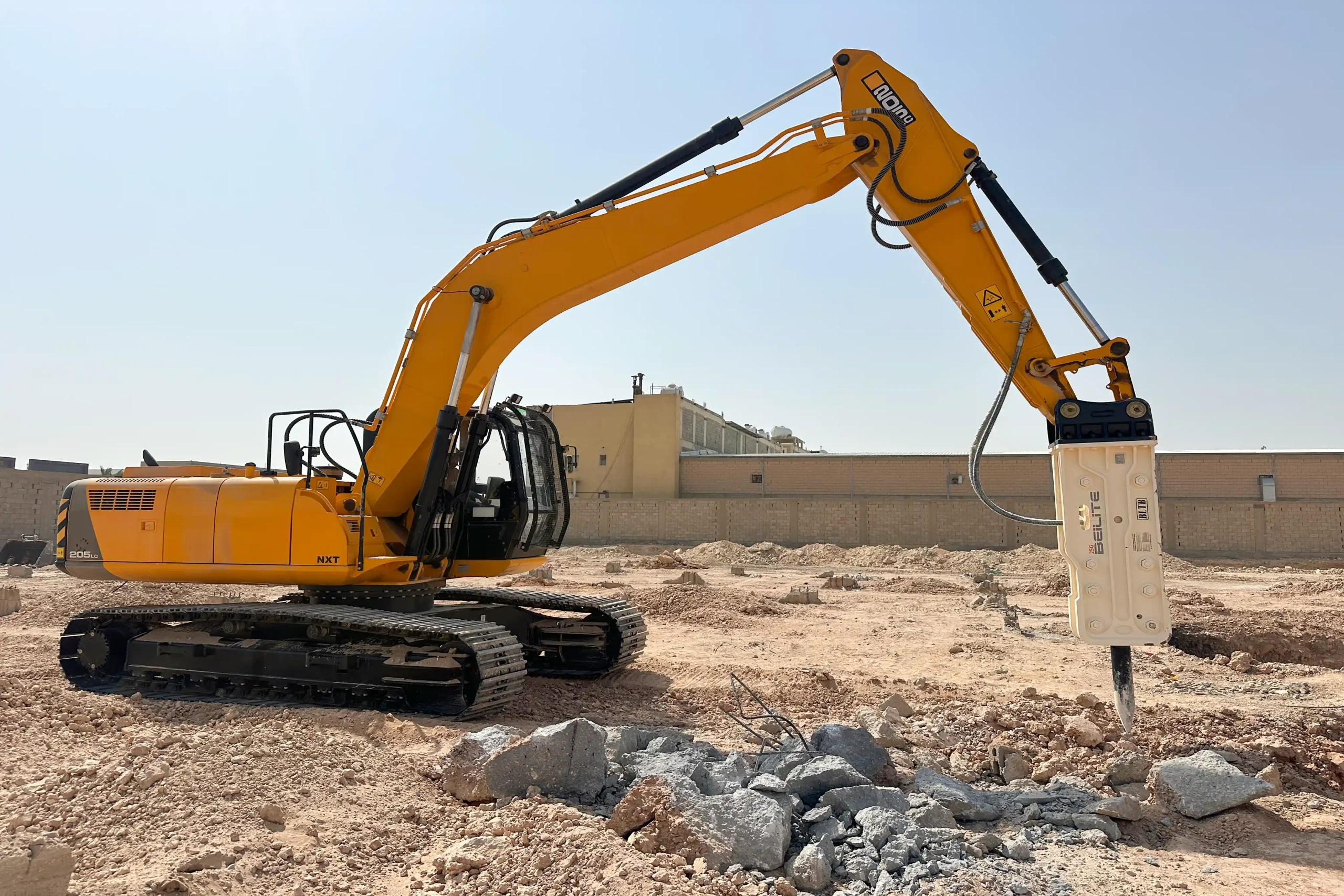
We engineer our through bolts to manage these forces across applications ranging from light demolition to heavy Hydraulic Breaker Hammer for Demolition&Rock Breaking::. The goal is always the same: maximum uptime and predictable performance.
Materials and Manufacturing That Determine Bolt Performance
Getting through bolt performance right requires attention at every stage, from alloy selection through final machining. The wrong choice anywhere in that chain produces a bolt that looks identical but fails under real-world conditions.
We use chromium-molybdenum steel for most of our hydraulic breaker through bolts. This alloy delivers high tensile strength without becoming brittle—a combination that matters when the bolt experiences both static pre-load and dynamic impact forces. The chromium content improves hardenability and corrosion resistance, while molybdenum enhances high-temperature strength and reduces temper brittleness.
Heat treatment transforms the raw material into something that can actually survive in a hydraulic breaker. Our process involves precise quenching to create a hardened microstructure, followed by tempering that restores ductility without sacrificing strength. The temperatures, timing, and cooling rates all affect the final properties. Get any of them wrong, and you end up with a bolt that’s either too brittle or too soft.
Surface hardening adds another layer of protection. The outer layer resists wear from repeated contact with mating surfaces, while the core retains the toughness needed to absorb impact energy without cracking.
Why Alloy Selection Matters More Than Most People Realize
Standard carbon steel would be cheaper. It would also fail faster. The difference comes down to how the material responds to repeated stress cycles.
Chromium-molybdenum steel maintains its properties through millions of load cycles. The alloy’s microstructure resists the crack initiation that leads to fatigue failure. When we examine bolts that have been in service for extended periods, we consistently see that quality alloys show minimal degradation compared to generic alternatives that develop micro-cracks within months.
The heat treatment process enhances these inherent material advantages. Quenching creates a hard martensitic structure, but that structure is too brittle for impact applications. Tempering reduces hardness slightly while dramatically improving toughness. The result is a bolt that can absorb repeated shocks without fracturing.
Design Features That Prevent Premature Failure
Material alone doesn’t guarantee performance. The geometry of the bolt—shank diameter, thread profile, fillet radii at stress concentration points—determines how loads distribute through the fastener.
We optimize thread profiles to maximize engagement with the mating components. More thread engagement means lower stress per thread, which extends fatigue life. The transition between the shank and head receives particular attention because that’s where stress concentrations tend to cause failures.
Anti-loosening features address the vibration challenge. Standard bolts rely on friction to stay tight, but hydraulic breaker vibration can overcome that friction within hours. Our designs incorporate mechanical features that maintain clamping force even under severe dynamic loading.
| Type de matériau | Résistance à la traction | Résistance à la fatigue | Application typique |
|---|---|---|---|
| Standard Carbon Steel | Modéré | Faible | Light-duty fasteners |
| High-Tensile Steel | Good | Modéré | General construction |
| Chromium-Molybdenum Steel (Beilite) | Excellent | Superior | Heavy-duty impact tools |
The Real Cost of Through Bolt Failure
When a hydraulic breaker through bolt fails, the immediate problem is obvious: the machine stops working. But the actual costs extend far beyond the price of a replacement bolt.
Impact power drops before complete failure occurs. A loosening bolt allows slight movement between housing components, which absorbs energy that should be going into the work. Operators often compensate by increasing hydraulic pressure, which accelerates wear on other components and increases fuel consumption.
Internal wear accelerates when alignment shifts. The piston starts contacting the cylinder wall at angles it wasn’t designed for. Seals wear unevenly. The chisel retainer takes loads from unexpected directions. Each of these secondary problems adds repair costs and reduces the time until the next breakdown.
Safety risks are the most serious concern. A bolt that shears completely can allow housing components to separate under load. I’ve seen the aftermath of these failures, and they’re not something anyone wants to experience firsthand.
One demolition contractor I spoke with calculated that a single day of unexpected downtime cost his operation roughly $15,000 in lost productivity, equipment rental fees for a replacement machine, and rescheduled subcontractor work. The through bolt that failed had cost perhaps $50 as an aftermarket part. The math on quality components becomes obvious pretty quickly.
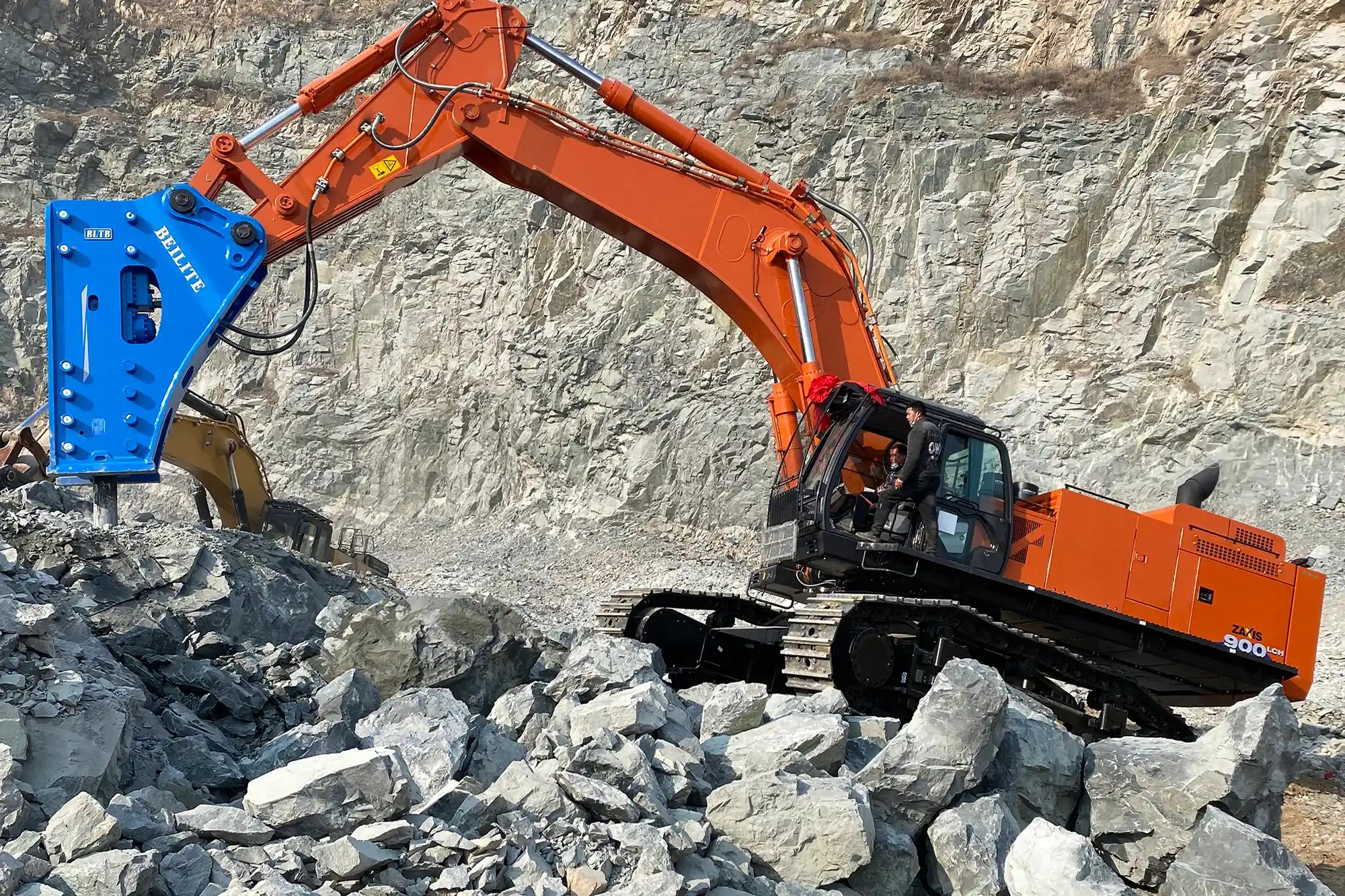
Our through bolts work across the full range of hydraulic breaker Hammer:: sizes, from compact units on mini excavators to heavy-duty breakers on 50-ton machines.
| Modèle | Excavateur applicable (t) | Poids du disjoncteur (kg) | Diamètre du ciseau (mm) |
|---|---|---|---|
| BLT-40 | 0.5-1.2 | 86 | 40 |
| BLT-85 | 7-11 | 666 | 85 |
| BLT-155 | 27-33 | 2610 | 155 |
 |
Installation and Maintenance Practices That Extend Bolt Life
The best-engineered hydraulic breaker through bolt will fail prematurely if installation or maintenance practices are poor. The reverse is also true: proper procedures can extend service life significantly beyond minimum expectations.
Torque specification compliance is non-negotiable. Under-torqued bolts don’t develop enough clamping force to prevent joint separation under load. Over-torqued bolts are already stressed close to their yield point before the breaker even starts operating, leaving no margin for the additional dynamic loads that follow.
The tightening sequence matters as much as the final torque value. Hydraulic breaker housings have multiple through bolts, and tightening them in the wrong order creates uneven pre-load distribution. Some bolts end up carrying more than their share of the load, while others contribute less than they should. Following the manufacturer’s specified sequence ensures uniform clamping force across the entire joint.
Lubrication affects the relationship between applied torque and actual bolt tension. Dry threads create higher friction, which means more of the applied torque goes into overcoming that friction rather than stretching the bolt. A consistent lubricant—typically an anti-seize compound—ensures that the torque wrench reading accurately reflects the clamping force being developed.
Getting Torque Right Every Time
Calibrated torque wrenches are essential. A wrench that reads 10% high produces bolts that are 10% over-stressed. That margin might seem small, but it compounds with every other factor affecting bolt life.
The multi-pass tightening approach prevents the distortion that occurs when bolts are tightened to full torque in a single step. First pass might be 50% of final torque, second pass 75%, final pass 100%. Each pass allows the joint to settle and stress to redistribute before adding more load.
Thread condition affects everything. Damaged threads increase friction unpredictably, making torque readings meaningless. Inspect threads before installation and replace any bolt showing damage.
Recognizing Failure Modes Before They Become Emergencies
Through bolt failures rarely happen without warning. Understanding what to look for during inspections allows problems to be caught early, when replacement is a scheduled maintenance activity rather than an emergency repair.
Fatigue fractures develop gradually. They typically start at stress concentration points—thread roots, the head-to-shank transition, or surface defects—and propagate slowly through the cross-section. Early-stage fatigue cracks may be invisible to the naked eye but can be detected with dye penetrant or magnetic particle inspection.
Loosening shows up as visible gaps between housing components or as witness marks where surfaces have been moving against each other. By the time loosening is visible, the bolt has already been experiencing reduced pre-load for some time.
Corrosion weakens bolts progressively. Surface rust is obvious, but pitting corrosion can create stress concentrations that initiate fatigue cracks. Applications involving water exposure—like Hydraulic Breaker Hammer for Underwater Construction:: or Hydraulic Breaker Hammer for Mining and Quarrying:: in wet conditions—require more frequent inspection.
The root cause of most failures traces back to one of three factors: inadequate pre-load from improper installation, material defects that escaped quality control, or operating conditions that exceeded design limits. Quality through bolts from manufacturers with rigorous quality control eliminate the second factor. Proper installation procedures address the first. Understanding application limits prevents the third.
Working with Beilite on Your Through Bolt Requirements
Decades of hydraulic breaker development have taught us that component quality determines machine reliability. Our BLT and BLTB brand through bolts reflect that understanding—engineered for the actual conditions these fasteners face, manufactured to tolerances that ensure consistent performance, and backed by technical support from people who understand the applications.
Contact us to discuss your specific requirements or to learn more about our hydraulic breaker component solutions.
Courriel : [email protected]
Téléphone : 40008-40008
Frequently Asked Questions About Hydraulic Breaker Through Bolts
What determines how long hydraulic breaker through bolts last?
Service life depends on the interaction between bolt quality, operating conditions, and maintenance practices. A quality chromium-molybdenum bolt in a well-maintained breaker operating within design limits might last thousands of hours. The same bolt in a machine that’s poorly maintained or consistently overloaded might fail in a fraction of that time. Material properties establish the upper limit of potential life, but actual life depends on how the bolt is treated in service.
What inspection schedule makes sense for through bolts?
Visual checks for obvious loosening or damage should happen daily or at shift changes. More thorough inspections—checking torque, looking for crack indications, examining thread condition—make sense every 100 to 200 operating hours. Many operators also follow time-based replacement intervals, swapping bolts at predetermined hours regardless of apparent condition. This approach acknowledges that fatigue damage isn’t always visible and that the cost of a new bolt is trivial compared to the cost of an unexpected failure.
Are aftermarket through bolts acceptable substitutes for OEM parts?
The short answer is that it depends on the aftermarket source, but the risk often isn’t worth the savings. Through bolts that look identical can have completely different material compositions, heat treatment histories, and dimensional tolerances. A bolt that’s slightly softer than specification will stretch more under load, losing pre-load faster. A bolt that’s slightly harder might be more brittle, failing suddenly rather than showing warning signs. We’ve seen aftermarket bolts that met visual inspection but failed metallurgical analysis. For a component this critical, genuine parts from manufacturers who control the entire production process eliminate uncertainty that cheaper alternatives introduce.