 Anglais
 Français
Hydraulic Breaker Solutions for Efficient Bridge Demolition
Tearing down a bridge is one of those jobs where everything has to work together or nothing works at all. The structure fights back—rebar-laced concrete, steel beams that have weathered decades, foundations sunk deep into riverbeds or urban bedrock. I’ve watched crews struggle with underpowered equipment, burning through hours and budgets while barely scratching the surface. Hydraulic breakers changed that equation. The right breaker, matched to the right carrier and operated by someone who understands the material, turns a grinding ordeal into a methodical process. What follows covers the practical side of making that happen: selecting equipment that fits the job, running it effectively, and keeping it running long after the project wraps.
What Makes Bridge Demolition Different From Standard Concrete Work
Bridge structures throw complications at demolition crews that typical building teardowns rarely present. The materials alone create challenges—reinforced concrete with dense rebar grids, structural steel connections, and masonry elements all appear in a single structure. Location compounds everything. Urban bridges mean tight working spaces, noise restrictions, and pedestrians who need protection. Water crossings add logistics nightmares and environmental scrutiny.
Progressive demolition demands constant attention to structural integrity. Remove the wrong section too early and the remaining structure becomes unpredictable. Debris control matters more when you’re working over traffic lanes or waterways. Dust and noise regulations carry real teeth in most jurisdictions.
Hydraulic breakers earn their place on these sites because they deliver consistent power with controllable precision. Unlike wrecking balls or explosives, a breaker lets operators work section by section, responding to what the material reveals as work progresses. Infrastructure removal at this scale requires equipment that handles varied material compositions without constant swapping or adjustment.
!Rock Breaker for Infrastructure Construction
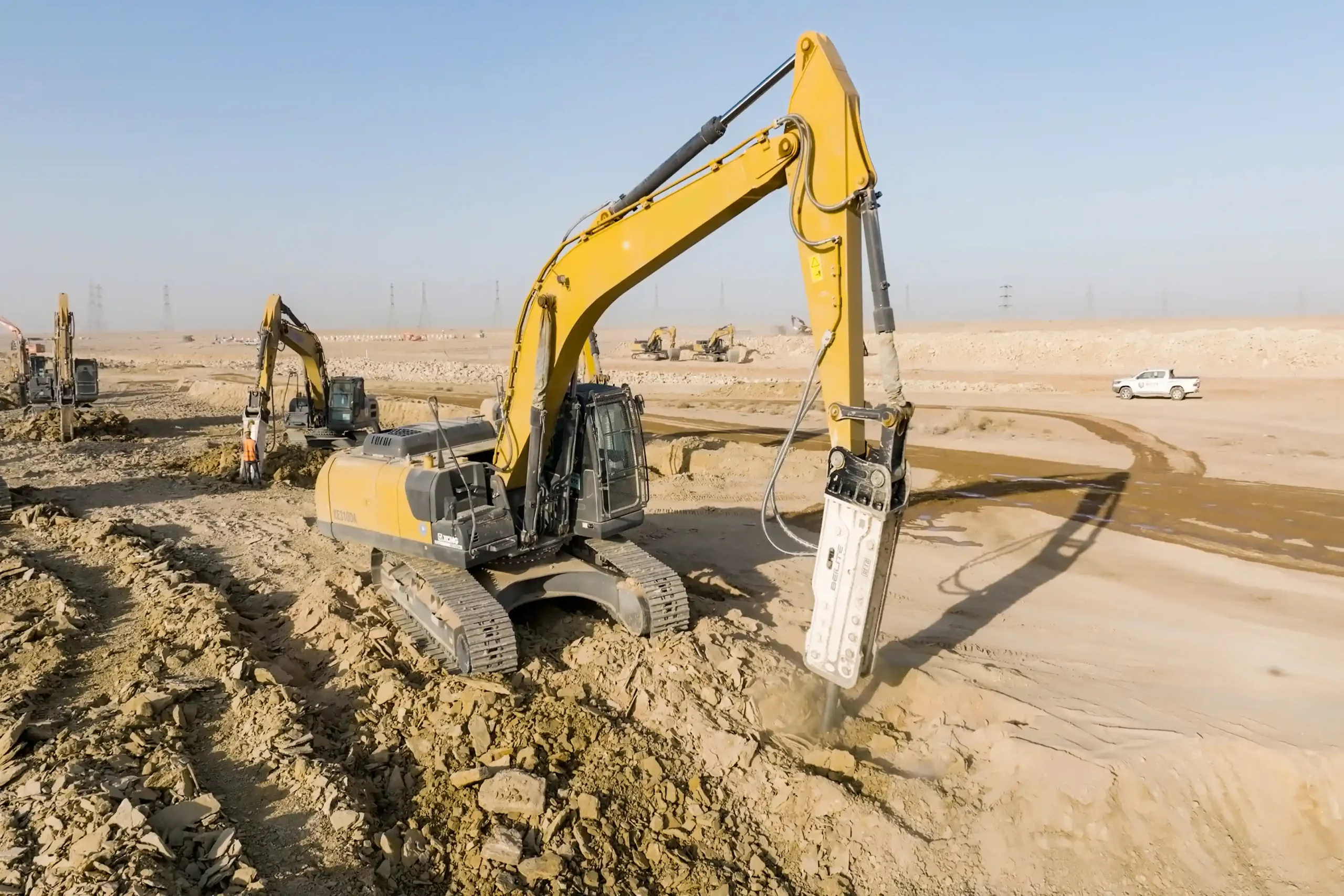
Selecting Hydraulic Breakers That Match Bridge Demolition Requirements
Getting the breaker selection wrong costs time and money in equal measure. The decision involves more than just picking the biggest unit available—it requires matching the tool to the specific structure and the carrier machine that will run it.
Material composition drives the initial assessment. A post-tensioned concrete deck behaves differently under impact than a conventionally reinforced pier. Structural steel connections need different approaches than mass concrete. The carrier excavator’s hydraulic capacity sets hard limits on what breaker sizes will function properly.
Impact energy, operating weight, and chisel configuration all influence how effectively the breaker breaks down bridge components. Noise and vibration characteristics matter increasingly as regulations tighten. Dust suppression integration has moved from optional to expected on most urban bridge demolition projects.
| Modèle | Poids du disjoncteur (kg) | Diamètre du ciseau (mm) | Excavateur applicable (t) | Pression de service (bar) | Fréquence d'impact (bpm) |
|---|---|---|---|---|---|
| BLT-125 | 1357 | 125 | 14-18 | 150-170 | 350-650 |
| BLT-135 | 1736 | 135 | 18-22 | 160-180 | 350-500 |
| BLT-140 | 1910 | 140 | 20-24 | 160-180 | 350-500 |
| BLT-150 | 2310 | 150 | 24-27 | 180-200 | 200-300 |
| BLT-155 | 2610 | 155 | 27-33 | 200-220 | 200-300 |
Impact Energy and Material Density
The relationship between impact energy and demolition efficiency becomes obvious when you watch a properly matched breaker work versus an undersized one. Impact energy, measured in joules, determines the force actually delivered to the material with each blow. Dense concrete with heavy rebar reinforcement absorbs energy that would shatter lighter materials.
Calculating the right impact energy prevents two problems: equipment that can’t overcome material resistance (leading to slow progress and excessive wear) and overpowered units that waste fuel and create unnecessary vibration. The BLT-155, built for 27–33t excavators, delivers working pressure between 200–220 bar—enough to handle heavily reinforced bridge sections without the operator fighting the machine.
Chisel Selection for Reinforced Concrete
Chisel geometry determines how energy transfers into the material. A moil point concentrates force on a small area, initiating cracks in intact concrete. Wedge chisels split material along those initial fractures, working efficiently on slabs and deck sections. Blunt chisels crush rather than penetrate, useful for reducing larger pieces or working through sections where rebar density makes penetration difficult.
Bridge deck removal typically moves through these chisel types as the work progresses. Starting with moil points to break through the surface, switching to wedges for slab separation, then using blunt tools for secondary breaking. BEILITE manufactures chisels engineered for the sustained punishment bridge demolition delivers, with metallurgy designed for both concrete penetration and rebar cutting.
Running Hydraulic Breakers Effectively on Bridge Structures
Equipment selection only sets the stage. Actual productivity depends on how operators run the breakers and how supervisors manage the work sequence.
Operator training separates efficient crews from those that burn hours making minimal progress. The fundamentals matter: maintaining perpendicular contact with the material surface maximizes energy transfer. Angled strikes waste force and accelerate wear on both chisel and housing.
Dwelling in one spot creates problems. After several blows without breakthrough, the material beneath the chisel compacts and resists further penetration. Repositioning the chisel to a fresh point often produces better results than continued hammering. Heat buildup from sustained operation in a single location also degrades performance.
Secondary breaking and material handling deserve as much planning as primary demolition. Reducing debris to manageable sizes speeds removal and keeps the work area clear for continued operations. Noise reduction techniques and vibration dampening systems protect both workers and surrounding structures while maintaining compliance with site regulations.
Brise-roche hydraulique à haut rendement
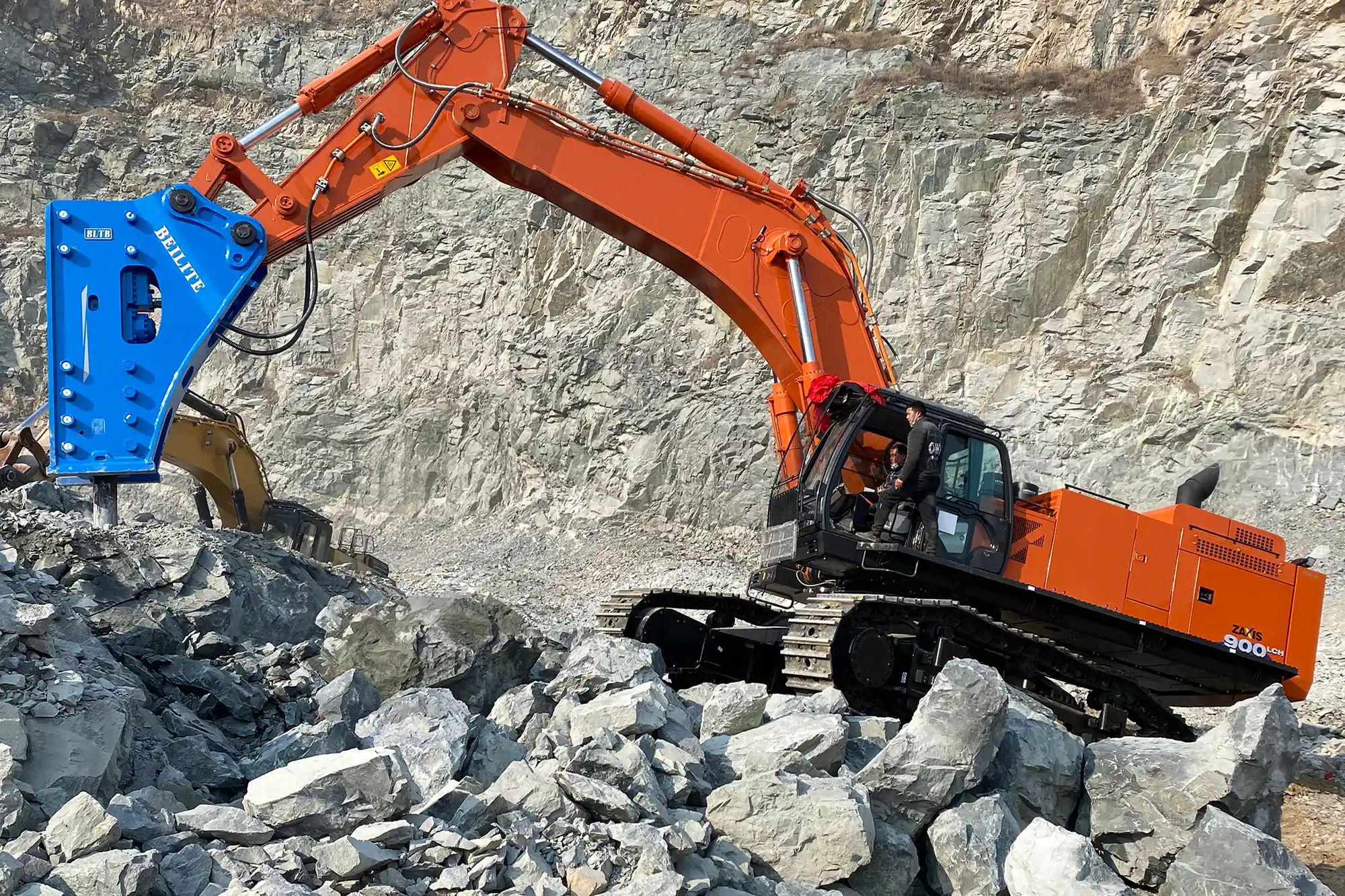
Safety and Regulatory Requirements for Bridge Demolition
Bridge demolition operates under scrutiny that general construction rarely faces. The consequences of failures—structural collapses, debris striking traffic or pedestrians, environmental contamination—make regulators and insurers particularly attentive.
Comprehensive safety planning starts before equipment arrives on site. Hazard assessments identify risks specific to the structure and location. Exclusion zones establish clear boundaries between active demolition and protected areas. PPE requirements go beyond hard hats to include hearing protection, respiratory equipment, and high-visibility clothing.
Environmental regulations govern dust control (typically requiring water suppression systems), noise limits (often with specific decibel thresholds and time-of-day restrictions), and vibration monitoring to protect adjacent structures and underground utilities. Structural assessments continue throughout demolition, not just at the start. Conditions change as material comes down, and what seemed stable yesterday may need reassessment today.
Remote operation capabilities increasingly appear on bridge demolition sites, keeping operators at safe distances from immediate hazards while maintaining precise control. BEILITE hydraulic breakers incorporate design features that support these safety and environmental standards.
Specific Safety Measures for Breaker Operations
Hydraulic breaker operation on bridge structures demands particular attention to several risk areas. Structural stability checks must happen before each work session and continue as conditions change. The structure’s behavior under demolition loads can shift as material is removed.
Exclusion zones require strict enforcement. Falling debris and equipment movement create hazards that extend well beyond the immediate work area. Clear marking and active monitoring prevent unauthorized entry.
Operator training must cover equipment limitations—what the breaker can and cannot do safely—along with recognition of warning signs that indicate structural instability or equipment problems. Emergency response plans need clear communication protocols and defined responsibilities. When something goes wrong on a bridge demolition site, confusion costs time that may not be available.
!Large Rock Breaker
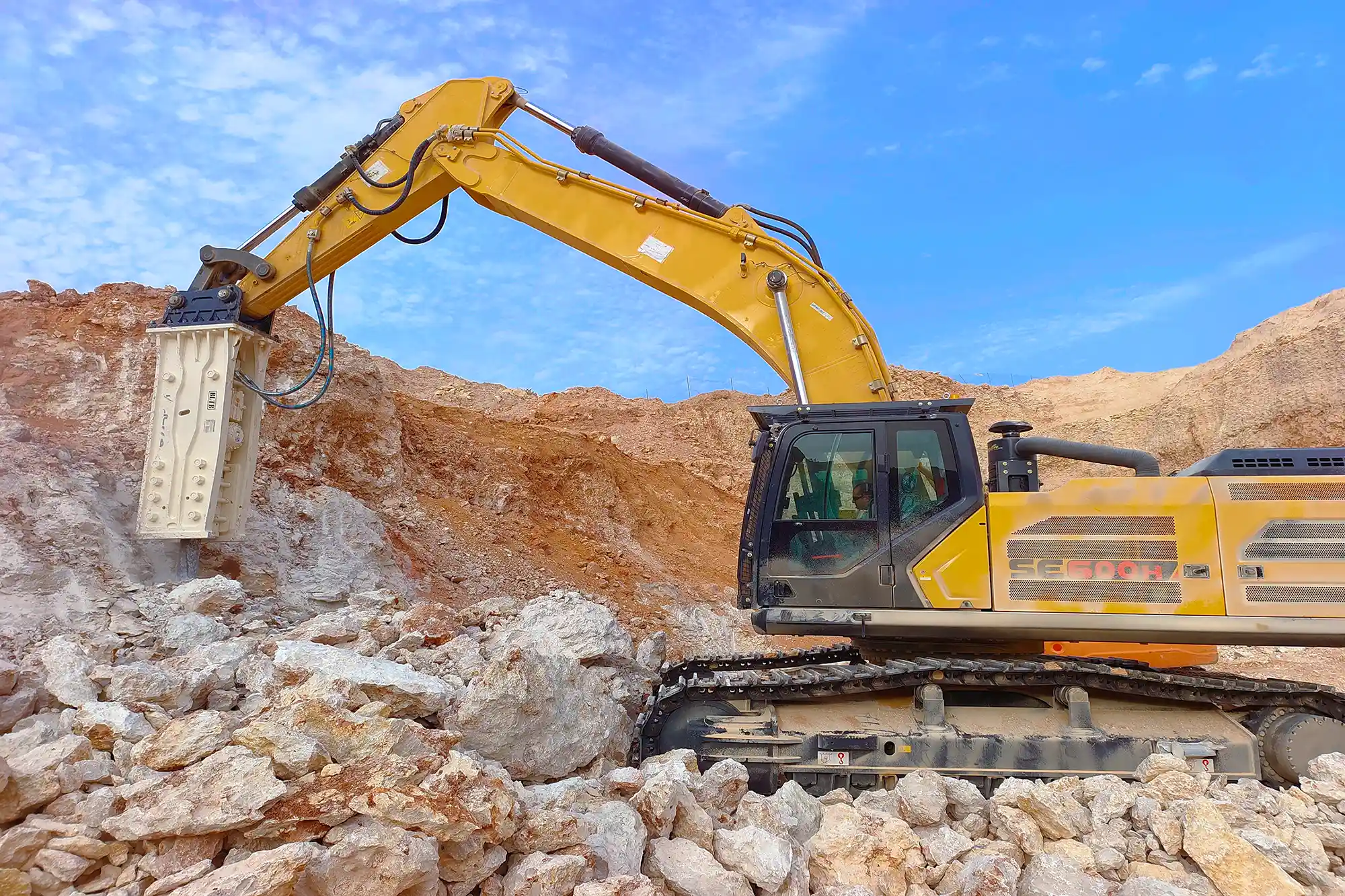
Maintenance Practices That Protect Equipment Investment
Hydraulic breakers represent significant capital investment. Protecting that investment requires consistent maintenance rather than reactive repairs after problems develop.
Regular inspections catch wear before it becomes failure. Lubrication schedules exist for reasons—skipping them accelerates deterioration of bushings, seals, and moving components. Wear parts like chisels and thrust rings have predictable service lives; replacing them on schedule prevents cascading damage to more expensive components.
Genuine spare parts matter more than many operators realize. Aftermarket components may fit physically but often lack the metallurgical properties or dimensional precision that original parts provide. The short-term savings rarely justify the accelerated wear and potential failures that follow.
BEILITE’s approach to equipment longevity includes comprehensive technical support and troubleshooting assistance. Warranty programs provide protection, but the real value lies in keeping equipment running productively rather than waiting for warranty claims to process. Proactive maintenance minimizes operational costs and maximizes the hours available for revenue-generating work.
!Mining Rock Hammer
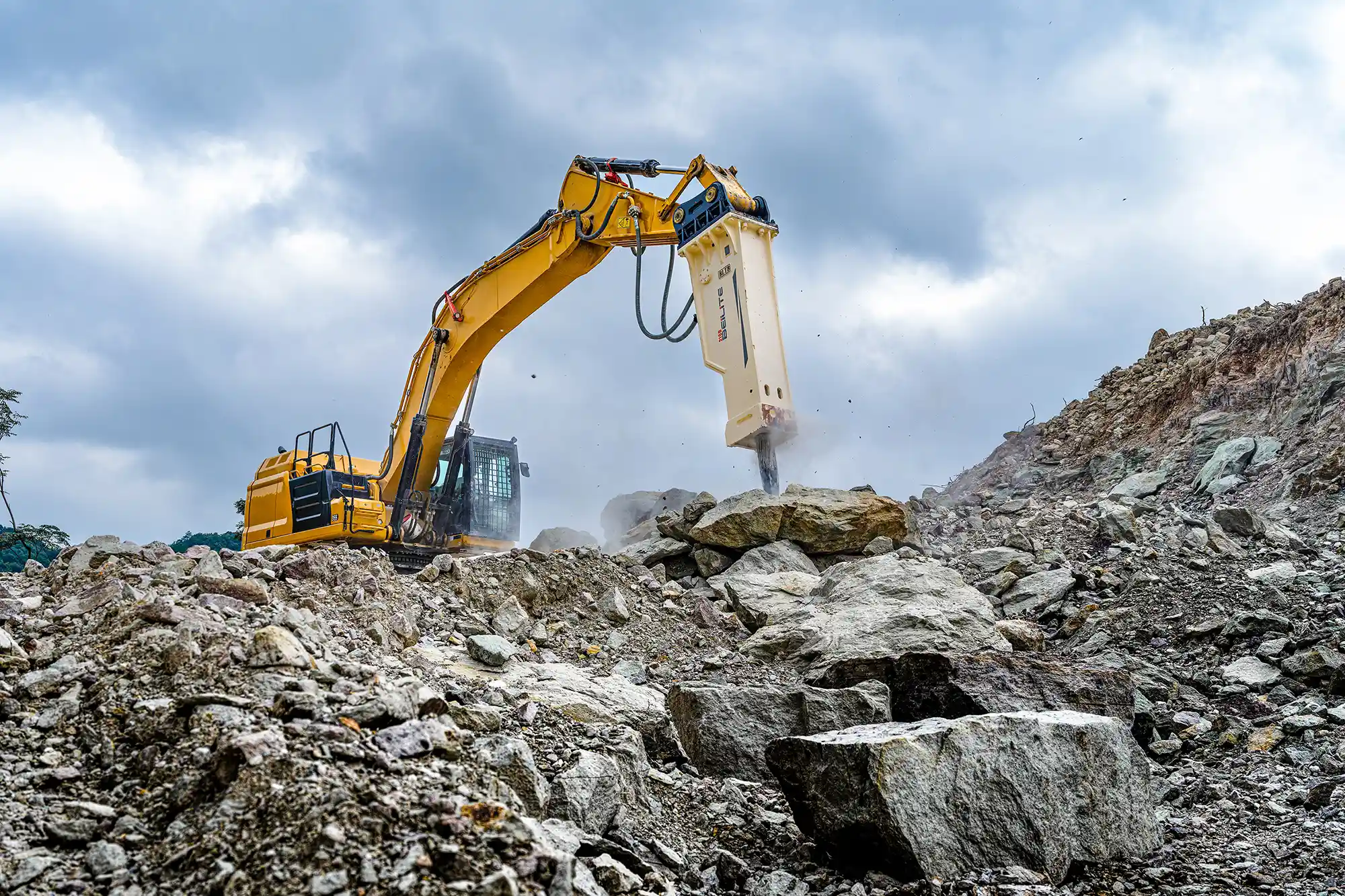
Working With BEILITE on Bridge Demolition Projects
Bridge demolition projects that demand reliable performance benefit from equipment backed by genuine engineering expertise. BEILITE Machinery Co., Ltd. brings decades of hydraulic breaker development, participation in national standards creation, and global deployment experience to every project consultation.
BLT and BLTB hydraulic breakers deliver the power and precision that bridge demolition requires. Contact our team for project-specific recommendations tailored to your structure’s characteristics and your operational requirements.
Email: [email protected] | Phone: 40008-40008
Frequently Asked Questions About Hydraulic Breakers for Bridge Demolition
What is the typical lifespan of a hydraulic breaker used for bridge demolition?
Operating hours rather than calendar time determine breaker lifespan. Well-maintained units from quality manufacturers commonly deliver several thousand hours of productive service. The variables that matter most include usage intensity, maintenance consistency, and operating conditions. Bridge demolition subjects equipment to sustained heavy use, making maintenance discipline particularly important. Regular servicing and genuine replacement parts extend operational life significantly compared to deferred maintenance approaches.
How does BEILITE ensure its hydraulic breakers are suitable for diverse bridge demolition conditions?
Continuous research and development drives BEILITE’s product evolution. Our patent portfolio reflects ongoing engineering investment in addressing real-world demolition challenges. BLT and BLTB breakers cover working conditions ranging from heavily reinforced concrete to structural steel applications. Participation in national standards formulation ensures our products meet documented performance and quality criteria rather than just internal specifications.
Are there specific environmental considerations when using hydraulic breakers for bridge removal?
Environmental compliance has become central to bridge demolition planning. Noise management requires dampening systems and often operational timing restrictions. Dust control typically mandates water suppression throughout active breaking operations. Vibration monitoring protects adjacent structures and underground utilities from damage that could trigger liability and project delays. Local regulations vary significantly, making early consultation with environmental authorities worthwhile. BEILITE designs hydraulic breakers with features that support these environmental requirements.
What kind of after-sales support does BEILITE offer for its hydraulic breakers?
Support extends well beyond the initial sale. Genuine spare parts remain available through our distribution network, eliminating the delays that plague operators dependent on aftermarket sources. Technical assistance addresses operational questions and troubleshooting needs. Our global service presence means support reaches projects regardless of location. The goal is keeping equipment productive rather than waiting for problems to escalate into project delays.