 Anglais
 Français

Hydraulic Breaker Selection: Optimizing Performance & ROI
Getting the right hydraulic breaker isn’t just about matching specs on paper. It’s about understanding how the machine will actually perform under your specific conditions—the material you’re hitting, the carrier you’re running, and the kind of output you need day after day. I’ve seen projects stall because someone grabbed a breaker that looked right on the surface but couldn’t handle the real-world demands. The selection process matters more than most people realize, and getting it wrong costs time, money, and equipment life.
Project Conditions Shape Everything
Before looking at any breaker specifications, you need a clear picture of what you’re actually dealing with on site. Project scope sets the baseline—light demolition work requires a completely different approach than heavy quarrying or large-scale site preparation. But material type is where the real decisions happen. Rock density, concrete compressive strength, and whether you’re dealing with rebar all change what kind of impact energy and chisel geometry will actually get the job done.
Breaking reinforced concrete, for example, demands tool configurations that differ significantly from fracturing soft shale. The steel reinforcement absorbs and redirects energy in ways that unreinforced material doesn’t, which means you need both the power to penetrate and the chisel design to handle the interruptions.
Environmental factors add another layer. Urban demolition often comes with noise restrictions that push you toward breakers with sound dampening features. Dust control matters in sensitive areas or anywhere worker health is a concern. These aren’t optional considerations—they’re constraints that affect which equipment actually works for your situation.
| Matériau Dureté | Application typique | Recommended Breaker Type |
|---|---|---|
| Soft | Soil, Shale, Asphalt | Light-Duty |
| Medium | Concrete, Limestone | Medium-Duty |
| Hard | Granite, Basalt | Heavy-Duty |
| Very Hard | Reinforced Concrete | Heavy-Duty (Specialized) |
Skipping this assessment phase leads to predictable problems: suboptimal breaking rates, accelerated wear, and operating costs that climb higher than they should. Matching breaker capability to material resistance is the single biggest factor in productivity.
Carrier Compatibility Determines Real-World Performance
The hydraulic breaker doesn’t operate in isolation. It’s part of a system, and that system includes your carrier machine. Getting this relationship wrong creates problems that range from reduced power output to actual safety hazards.
Excavator weight class sets the upper limit on attachment weight. Push past the boom’s rated capacity and you compromise both stability and structural integrity. The hydraulic system compatibility piece is equally critical—oil flow rates and working pressure from the carrier’s auxiliary circuit need to match what the breaker requires. An undersized hydraulic system starves the breaker of power. An oversized system generates excess heat and accelerates component wear.
Pressure relief valve settings on the excavator must align with the breaker’s operating parameters. Misalignment here causes pressure spikes that damage internal components over time. Physical mounting considerations matter too—quick couplers, pin configurations, and bracket dimensions all need to match.
Whether you’re running a backhoe loader, skid steer, or mini excavator, each platform has specific limitations and optimal breaker ranges. Proper integration means the carrier supplies adequate power without strain, which protects both the hydraulic breaker and the carrier itself.
What size hydraulic breaker do I need for my excavator?
The excavator’s operating weight provides the starting point. A reliable guideline puts the breaker’s service weight at roughly 8-12% of the excavator’s operating weight. This ratio maintains stability and prevents excessive stress on the boom structure and hydraulic system.
Weight matching alone isn’t enough, though. You need to verify that the excavator’s auxiliary hydraulic output—specifically oil flow in liters per minute and working pressure in bar—falls within the breaker’s requirements. When hydraulic power doesn’t match, you either lose breaking efficiency or risk damaging components.
| Excavator Operating Weight | Recommended BLT Breaker Class | Diamètre du ciseau | Oil Flow (L/min) |
|---|---|---|---|
| 0.5 – 1.2 t | BLT-40 | 40 mm | 15 - 30 |
| 6 – 8.5 t | BLT-75 | 75 mm | 50 – 90 |
| 10 – 14 t | BLT-100 | 100 mm | 80 - 110 |
| 24 – 27 t | BLT-150 | 150 mm | 150 – 210 |
| 33 – 38 t | BLT-165 | 165 mm | 200 - 260 |
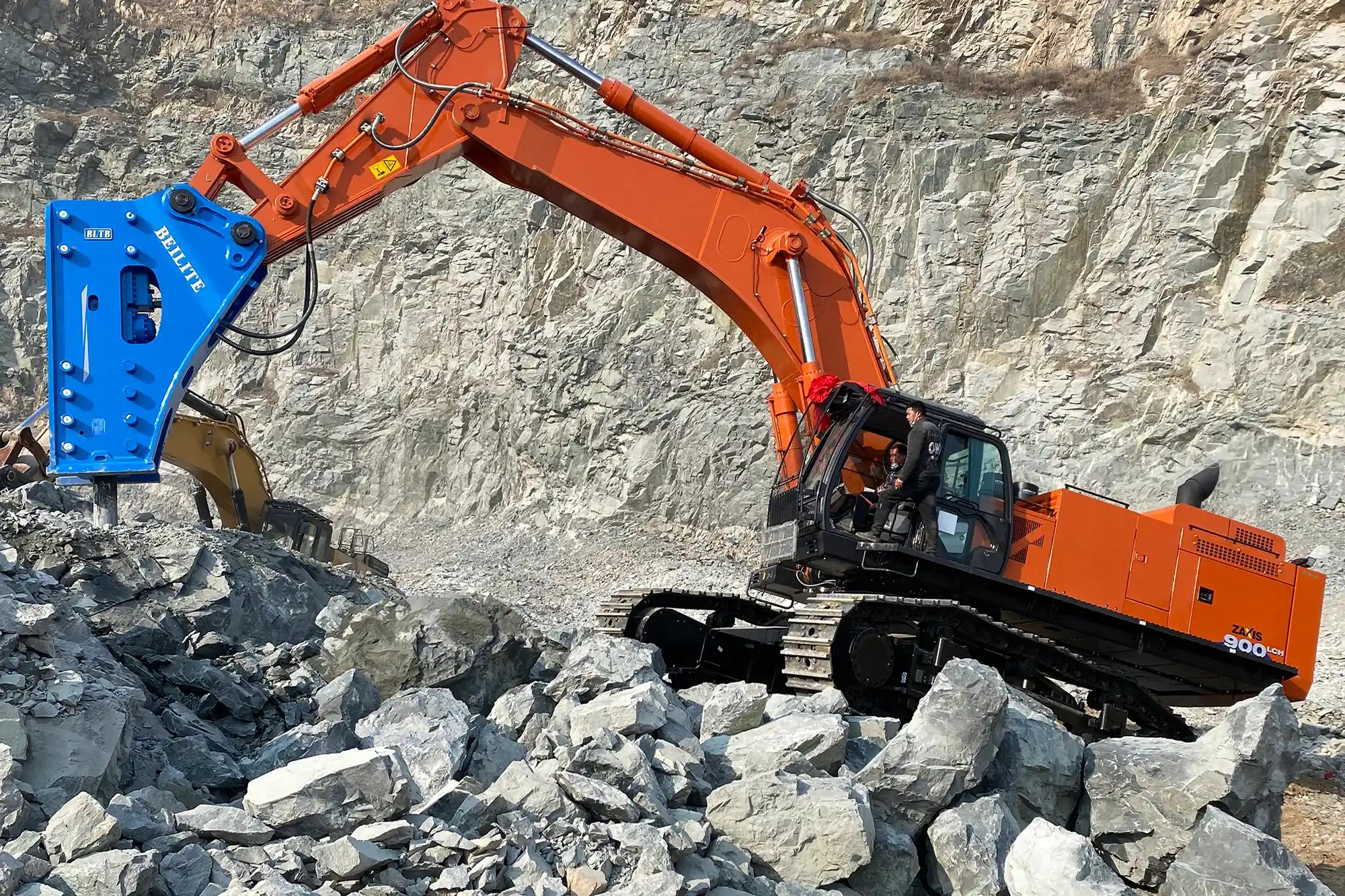
Des indicateurs de performance qui comptent vraiment
Impact energy, measured in Joules, tells you how much force each blow delivers. Blow frequency, measured in blows per minute, tells you how often that force gets applied. The relationship between these two numbers determines how a hydraulic breaker performs against different materials.
High impact energy with lower frequency works well for hard, dense materials where you need maximum force per strike. Higher frequency with moderate impact energy suits softer materials where rapid repetition breaks things up faster. Chisel diameter affects penetration depth and contact area—larger diameters move more material per blow, while smaller diameters concentrate force for precision work.
Modern breakers incorporate technologies that extend beyond raw power numbers. Accumulators store hydraulic energy and release it consistently, which smooths out power delivery and protects the carrier’s hydraulic system from pressure spikes. Noise reduction and vibration damping systems address both operator comfort and regulatory compliance.
Auto-lube systems maintain continuous chisel lubrication without operator intervention. Anti-blank firing mechanisms prevent damage when the chisel loses contact with material—a common cause of accelerated wear in field conditions. BEILITE Machinery participates in national standards formulation, which means our products meet established requirements for energy class and sound power levels.
How do I match a hydraulic breaker to specific demolition tasks?
The task defines the tool selection. Heavy concrete demolition or hard rock quarrying calls for a large breaker with high impact energy and a wedge chisel designed to maximize fracture propagation. Lighter concrete work or asphalt breaking responds better to a medium-duty breaker with a moil point chisel that penetrates efficiently and breaks material into manageable pieces.
Reinforced concrete presents its own challenges. A blunt chisel can crush concrete effectively, while specialized chisel geometries handle rebar encounters. Understanding what you’re actually trying to accomplish—bulk removal versus precision breaking versus cutting through reinforcement—guides the selection toward the right breaker and chisel combination.
Durability and Maintenance Drive Long-Term Value
The purchase price is just the beginning. Total cost of ownership includes maintenance, spare parts, downtime, and eventual replacement. A hydraulic breaker built from high-grade steel with proper heat treatment on critical components like the piston and cylinder will outlast cheaper alternatives by a significant margin.
Manufacturing quality shows up in service life. Heat treatment processes that harden wear surfaces without making them brittle, precision machining that maintains tight tolerances, and material selection that balances hardness with toughness—these factors determine how many hours you get before major repairs become necessary.
Warranty terms signal manufacturer confidence. A comprehensive warranty backed by accessible service support means you’re not on your own when problems arise. Spare parts availability matters too—waiting weeks for components keeps equipment idle and projects behind schedule.
Preventative maintenance prevents most major failures. Daily chisel inspections, regular lubrication, hydraulic fluid monitoring, and seal checks catch problems before they become expensive. Establishing a maintenance schedule and actually following it protects the investment over time.
What are the common maintenance tips for hydraulic breakers?
Start with daily checks. Inspect the chisel for wear patterns or damage. Verify that all pins and bolts remain tight. These take minutes and catch problems early.
Lubrication is non-negotiable. Manual greasing should happen every 2-4 hours of operation. If your breaker has an auto-lube system, confirm it’s functioning and the grease supply is adequate. Use the correct chisel paste—it’s formulated to handle the pressures and temperatures involved.
Monitor hydraulic fluid condition and level. Contaminated fluid causes internal damage that’s expensive to repair. Low fluid levels create air pockets that reduce power and accelerate wear.
Check seals regularly for leaks. Hydraulic integrity depends on seals doing their job. Replace them at the first sign of degradation rather than waiting for failure.
Store the breaker properly when not in use. Protection from weather and contamination extends service life.
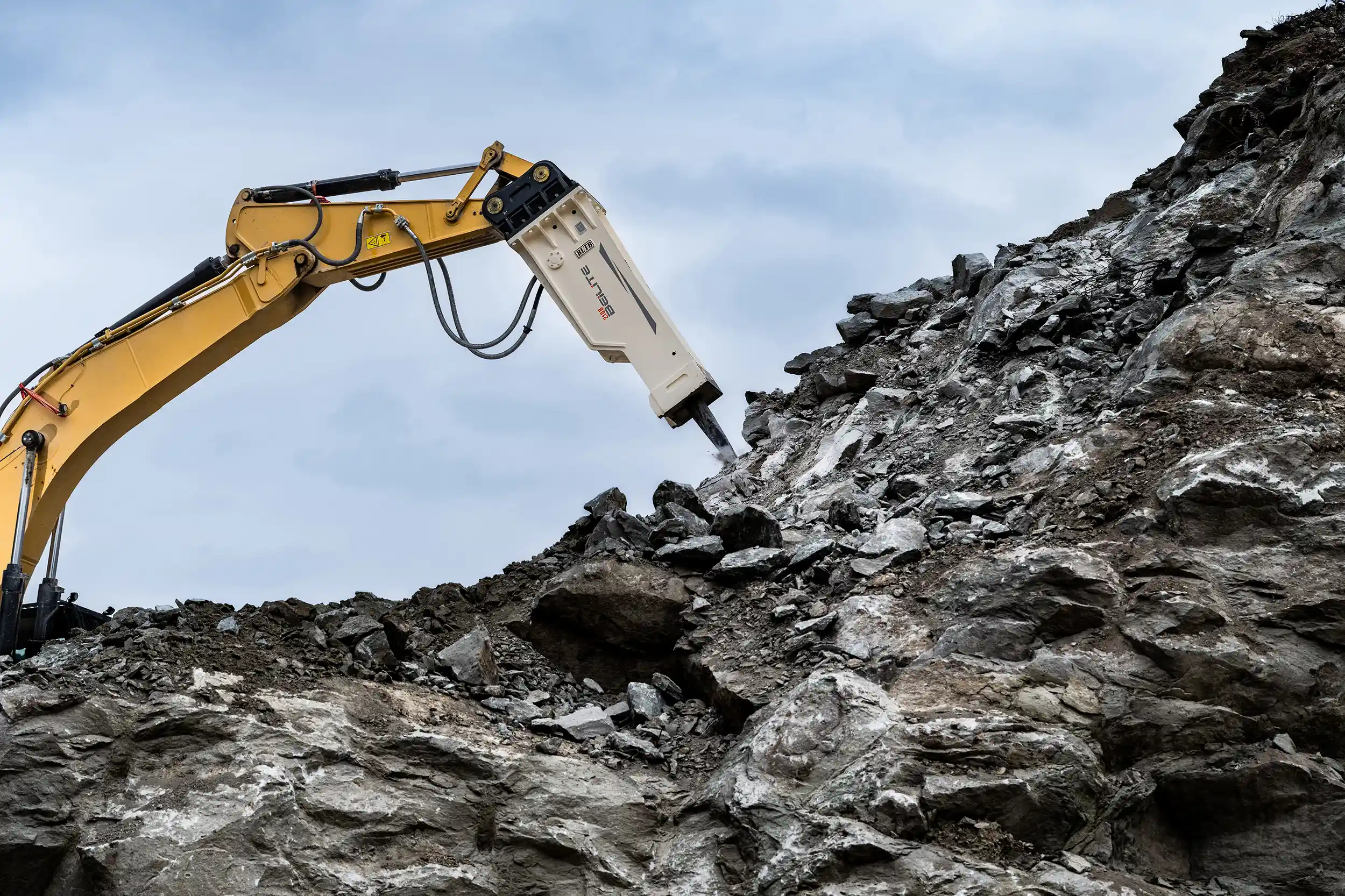
Manufacturer Reputation Reflects Real-World Support
The company behind the hydraulic breaker matters as much as the specifications. A manufacturer’s track record tells you what to expect when you need technical support, spare parts, or warranty service.
BEILITE Machinery Co., LTD has operated since 2002 as a national high-tech enterprise with substantial R&D investment. Breakthroughs in core technologies, hundreds of patents, and active participation in national standards formulation for hydraulic breakers in China demonstrate engineering commitment. BLT and BLTB brand products reflect that ongoing development work.
Global distribution across more than 100 countries indicates that the products perform under diverse conditions and that support infrastructure exists in multiple regions. Certifications like CE and ISO validate that manufacturing processes meet international quality and safety standards.
After-sales support availability separates manufacturers who stand behind their products from those who don’t. Access to spare parts, technical expertise, and service centers determines how quickly you can resolve problems when they occur.
Questions fréquemment posées sur les marteaux hydrauliques
What is the ideal operating temperature for a hydraulic breaker?
Hydraulic oil temperature should stay between 50-80°C (122-176°F) during operation. Below this range, oil viscosity increases and reduces system efficiency. Above it, oil degrades faster and seals suffer accelerated wear. Cold weather operation requires adequate warm-up time. Hot conditions demand monitoring to prevent overheating. Temperature management directly affects both performance and component longevity.
How often should I lubricate my hydraulic breaker?
Manual lubrication intervals typically fall between 2-4 hours of operation, though heavy-duty applications may require more frequent attention. Auto-lube systems need regular cartridge checks to ensure adequate grease supply. The chisel paste specification matters—manufacturer-recommended formulations handle the extreme pressures and temperatures at the chisel interface. Skipping lubrication accelerates wear on both the chisel and the internal bushing surfaces.
Can I use different brands of chisels with my hydraulic breaker?
Physical fit doesn’t guarantee compatibility. Aftermarket chisels may mount correctly but differ in material composition, hardness, or dimensional tolerances that affect performance and wear patterns. Using non-approved chisels can void warranty coverage and may cause accelerated wear on breaker internals. OEM chisels are engineered to work with the specific impact mechanism and energy levels of their matched breakers.
What are the signs that my hydraulic breaker needs servicing?
Reduced impact power is often the first indicator. Unusual noise or vibration patterns suggest internal wear or damage. Oil leaks indicate seal failure. Frequent blank firing—where the breaker operates without material contact—points to control system issues. Difficulty starting can signal hydraulic problems. Addressing these symptoms promptly through inspection and repair prevents minor issues from becoming major failures.
Partner with BEILITE for Unparalleled Hydraulic Breaker Performance
As a national high-tech enterprise with decades of innovation and hundreds of patents, BEILITE Machinery Co., LTD is dedicated to engineering high-end hydraulic breakers that meet the most demanding global standards. For expert consultation on selecting the optimal BLT or BLTB hydraulic breaker for your specific project, or to learn more about our advanced solutions trusted in over 100 countries, contact our specialists today. Let us help you achieve unparalleled efficiency and reliability. Reach us at [email protected] or call 40008-40008.