 Anglais
 Français
Hydraulic Breaker for Mini Excavator: Selection and Performance
Mini excavators become genuinely useful demolition machines once you mount a hydraulic breaker. I’ve watched operators struggle with undersized hammers that barely chip concrete, and I’ve seen what happens when someone bolts on a breaker that’s too heavy for the carrier. Neither situation ends well. The right compact excavator hammer matched to the right machine changes everything—trenching moves faster, rock breaks cleaner, and the equipment lasts longer. What follows covers the technical ground you need to make that match correctly.
Fonctionnement des brise-roche hydrauliques
A compact excavator hammer converts hydraulic flow into impact energy through a straightforward mechanical process. Pressurized hydraulic fluid drives a piston inside the breaker housing. That piston accelerates downward and strikes the working tool—whether that’s a chisel, moil point, blunt tool, or wedge tool. The impact energy transfers through the tool into whatever material you’re breaking.
The main components include the cylinder, piston, valve system, and the tool itself. Operating pressure and flow rate determine how much power the breaker delivers. Higher pressure means more force per strike. Higher flow rate means more strikes per minute.
Better hydraulic hammer technology now includes energy recovery systems. These capture the rebound energy when the piston bounces back after striking and feed it back into the next cycle. The result is improved efficiency and less strain on the excavator’s hydraulic system. Understanding these mechanics helps explain why specifications matter so much when selecting demolition tools.
Selecting the Right Hydraulic Breaker for Your Mini Excavator
Getting this wrong costs money. An undersized breaker wastes time because it lacks breaking force. An oversized breaker damages the excavator—structural stress, hydraulic system overload, premature wear on everything. The selection process requires matching breaker specifications to excavator capabilities and then aligning both with what you’re actually trying to accomplish.
Matching Breaker Weight to Excavator Class
The operating weight of your hydraulic breaker needs to correspond with your excavator weight class. Manufacturer guidelines exist for good reason. The BLT series demonstrates how this scaling works:
| Modèle | Poids du disjoncteur (kg) | Excavateur applicable (t) | Débit d'huile de travail (L/min) | Pression de service (bar) |
|---|---|---|---|---|
| BLT-40 | 86 | 0.5-1.2 | 15-30 | 90-120 |
| BLT-53 | 180 | 1.5-3.5 | 20-50 | 90-120 |
| BLT-70 | 362 | 4.5-6 | 40-70 | 110-140 |
| BLT-85 | 666 | 7-11 | 60-100 | 130–160 |
Notice the direct relationship between breaker weight and excavator tonnage. The hydraulic flow requirements scale accordingly. A 2-ton excavator putting out 25 L/min at 100 bar pairs naturally with the BLT-53. Trying to run a BLT-85 on that same machine would starve the breaker of flow and overwork the hydraulic pump.
Matching Tool Type to Material and Application
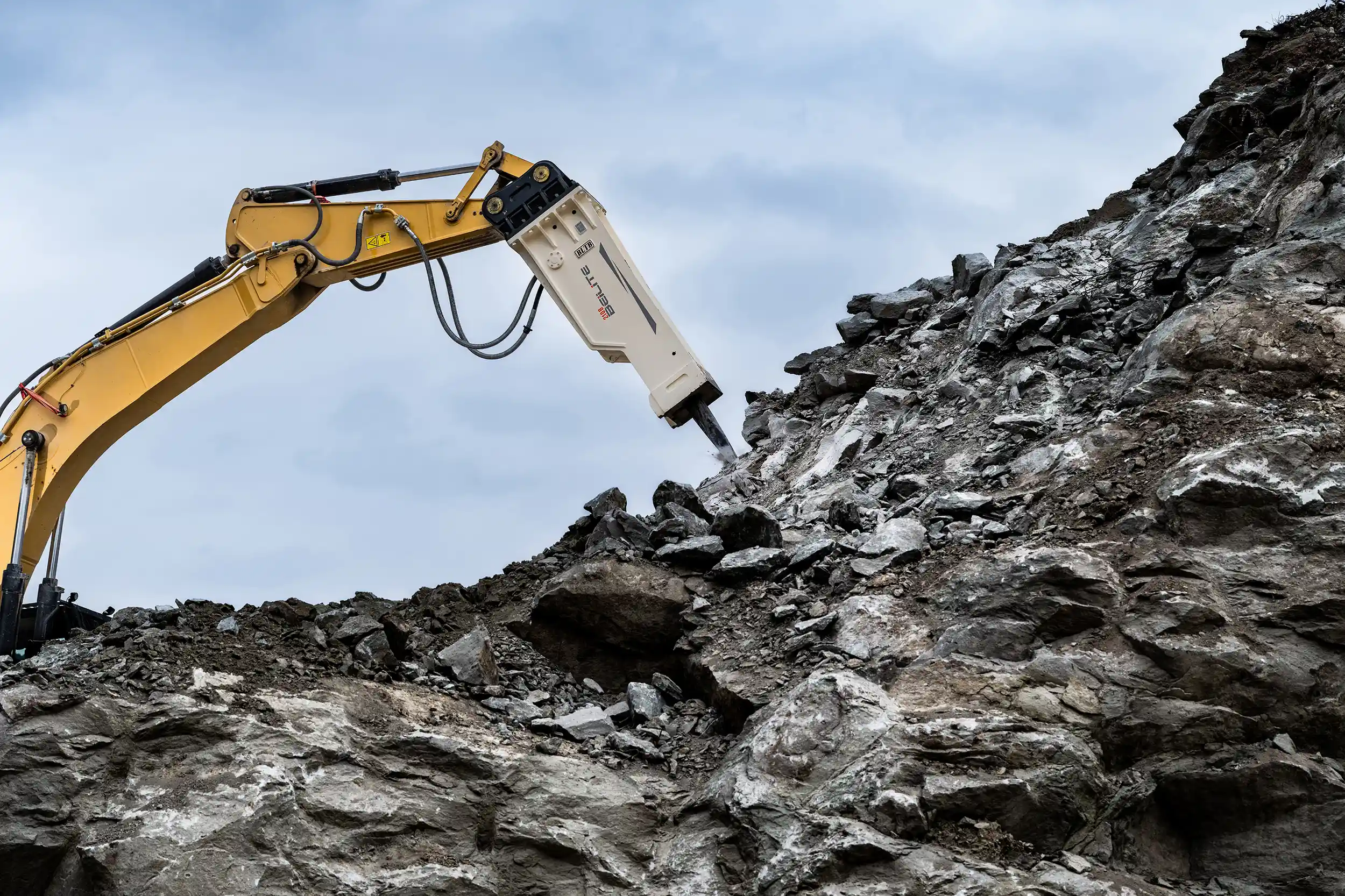
Different materials demand different approaches. Concrete breaking and asphalt removal typically work best with a chisel tool or blunt tool—these spread impact energy across a wider contact area. Rock breaking during trenching or road construction often requires a moil point or wedge tool for concentrated penetration into harder material.
Dense rock needs higher impact energy per strike. Softer materials respond better to higher strike frequency. A breaker that excels at demolishing reinforced concrete may not be the best choice for fracturing granite. Knowing what you’ll encounter on site determines which tool configuration makes sense.
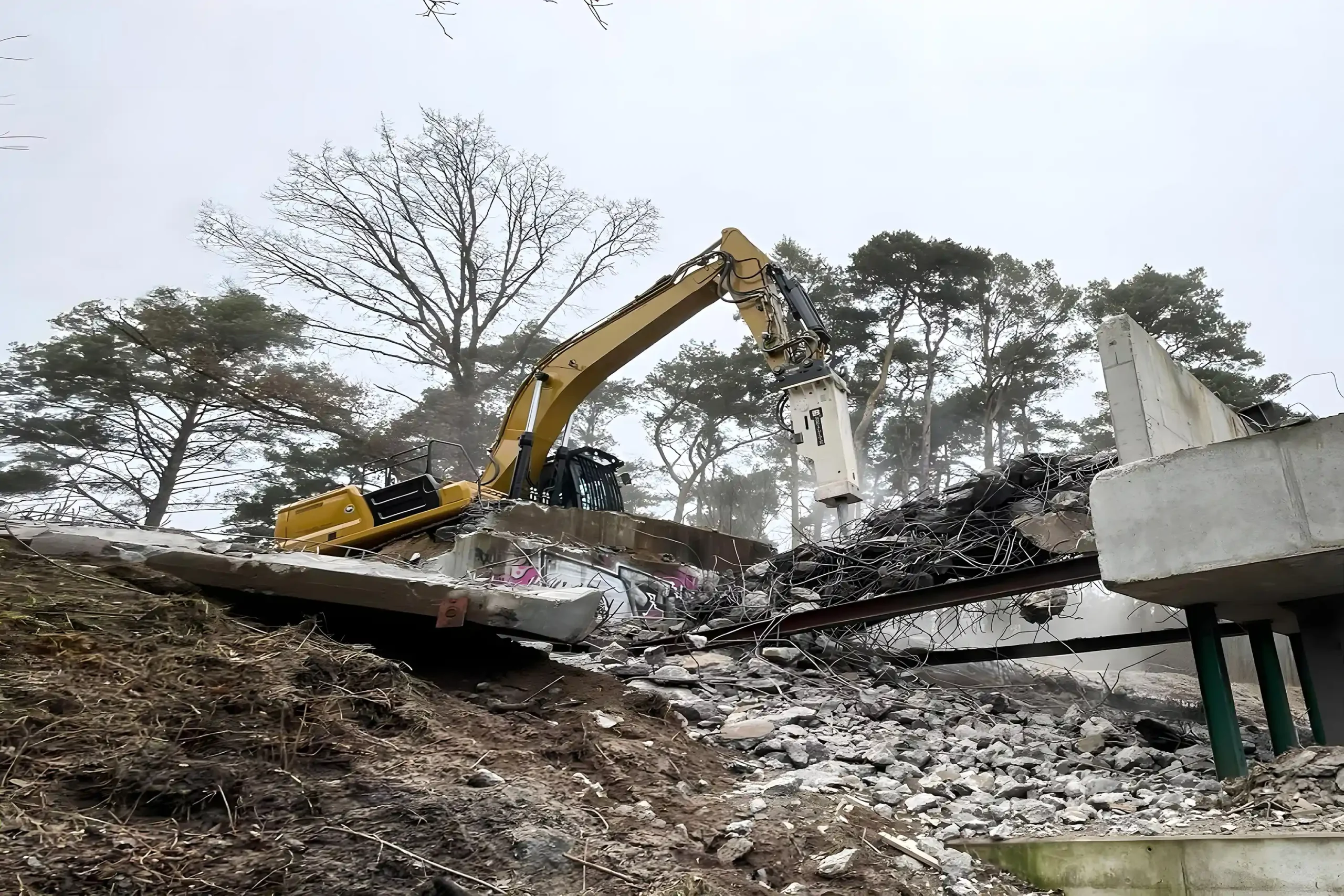
Features That Extend Service Life and Improve Performance
Modern hydraulic breakers include engineering refinements that pay off over thousands of operating hours. The BLT and BLTB series use high-tensile steel with specialized heat treatment. This material selection allows the breakers to handle extreme working conditions while reducing how often wear parts need replacement.
Noise reduction and vibration damping features address operator comfort and comply with evolving safety standards. Integrated dust suppression systems improve visibility and air quality—both matter when you’re working in enclosed spaces or near other crews. Auto-lube systems deliver continuous lubrication to critical components, extending their service life significantly.
These aren’t cosmetic additions. They translate into lower operating costs and better ROI through reduced downtime and longer intervals between major repairs.
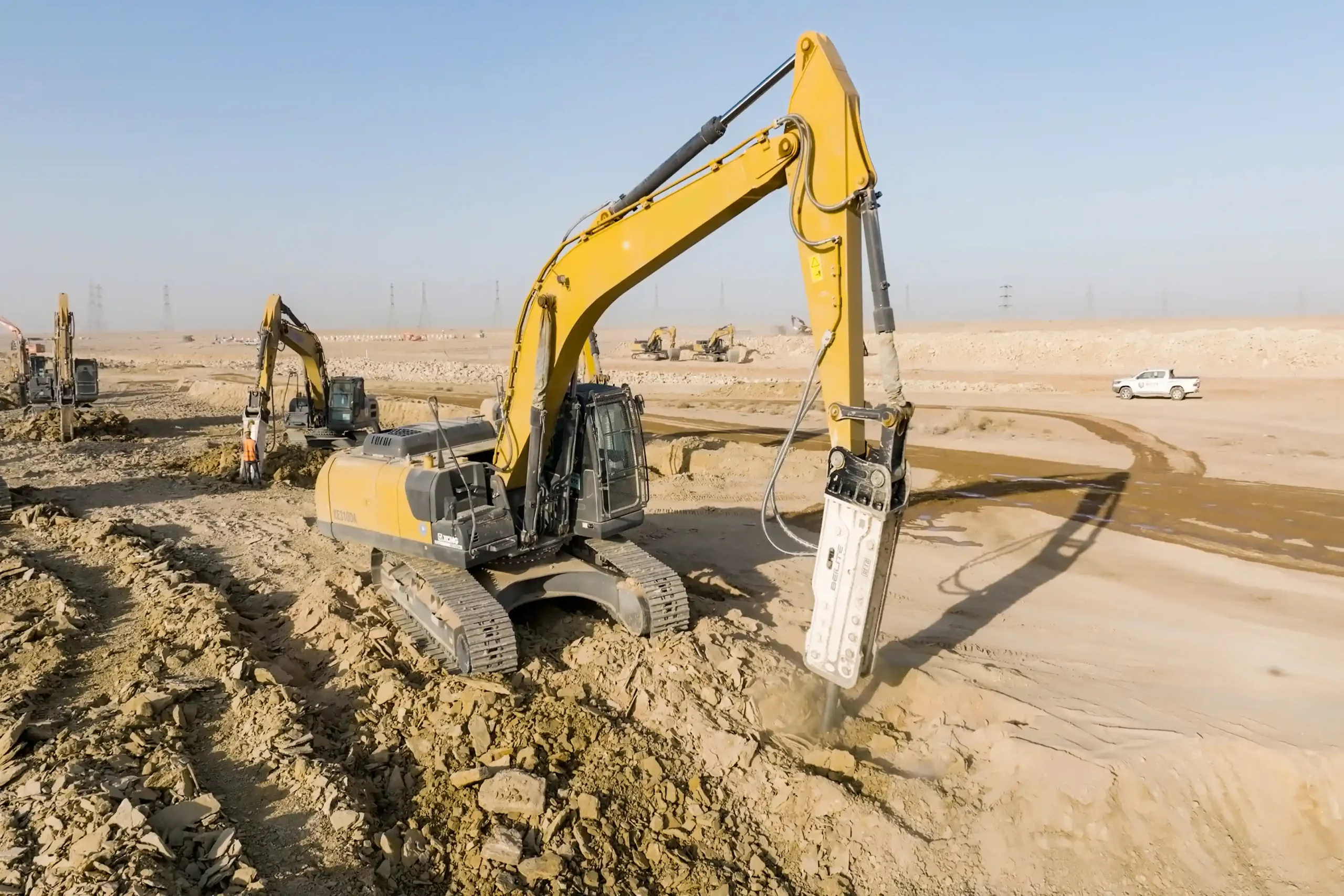
Why Attachment Compatibility Protects Your Investment
Running an incompatible hydraulic breaker creates problems that compound over time. Incorrect hydraulic flow causes the breaker to underperform or overheat. Wrong operating pressure strains seals and hoses. Mounting bracket mismatches create stress points that lead to structural fatigue.
Quick coupler systems and correct mounting brackets matter for secure attachment. Loose or improper mounting affects strike efficiency and accelerates wear on both the breaker and the excavator arm.
There’s also the warranty question. Using an incompatible attachment often voids coverage on both the excavator and the breaker. Verifying all technical specifications before integration protects equipment integrity and keeps warranty coverage intact.
Operating Techniques and Maintenance That Prevent Problems
How you run the breaker affects how long it lasts. Blank firing—operating the breaker without material contact—damages internal components. Holding pressure on the tool without material contact creates similar stress. Both habits shorten service life considerably.
Correct operating angle and consistent pressure during breaking maximize efficiency. Working at extreme angles forces the tool to absorb lateral stress it wasn’t designed for. Inconsistent pressure causes the piston to work harder than necessary.
Daily checks catch problems before they become expensive. Inspect the chisel for wear patterns. Check hydraulic lines for leaks or damage. Verify all mounting pins remain secure. Proper lubrication prevents premature component failure—this single practice probably saves more repair costs than any other.
A Maintenance Schedule That Actually Works
Preventative maintenance prevents breakdowns. Here’s what that looks like in practice:
Daily: Check lubrication points, tool condition, and hydraulic fluid levels. Lubricate the breaker tool and bushings every 2-4 hours of operation, adjusting frequency based on working intensity.
Weekly: Inspect all bolts and nuts for tightness. Check accumulator nitrogen pressure.
Monthly or every 100 operating hours: Perform thorough wear part inspection. Replace worn components before they fail. Check hydraulic fluid condition and replace filters as needed.
This schedule prevents the kind of cascading failures that take equipment out of service for extended periods.
Working with BEILITE Machinery
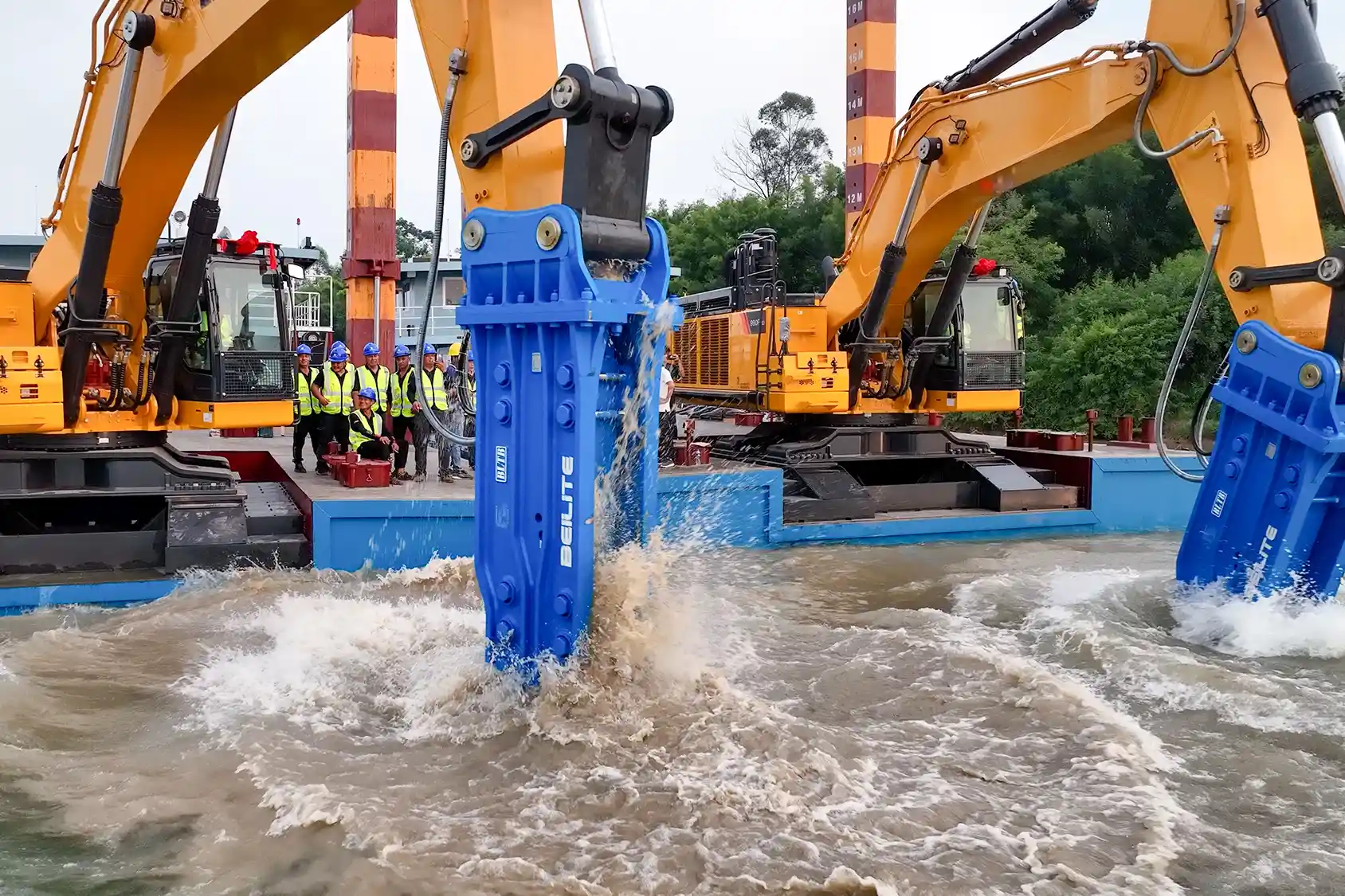
BEILITE Machinery has spent decades developing hydraulic breakers, accumulating hundreds of patents and participating in national standards formulation for hydraulic breakers in China. The BLT and BLTB series reflect that engineering depth. Contact our team at [email protected] or 40008-40008 to discuss which hydraulic breaker configuration fits your mini excavator and application requirements.
Frequently Asked Questions About Mini Excavator Hydraulic Breakers
What size hydraulic breaker do I need for a mini excavator?
Breaker weight should fall between 8-12% of your excavator’s operating weight. A 3-ton compact excavator typically needs a breaker weighing 240-360 kg. The material you’re breaking also factors in—harder materials may justify sizing toward the upper end of that range. Check both the excavator manufacturer’s recommendations and the breaker specifications before committing. Mismatched sizing causes performance problems and accelerates wear.
How often should I service my mini excavator hydraulic breaker?
Daily checks cover the breaker tool and lubrication points. Lubricate the tool and bushings every 2-4 operating hours depending on working intensity. Monthly or every 100 hours, perform a full inspection including hydraulic fluid condition and wear part assessment. Skipping this schedule leads to unplanned downtime that costs more than the maintenance would have.
Are hydraulic breakers interchangeable between different mini excavator brands?
Not automatically. Mounting bracket configurations vary between manufacturers. Hydraulic flow requirements and operating pressure ranges differ across excavator models. A breaker that works perfectly on one brand may not deliver adequate performance on another—or worse, may damage the carrier machine. Always verify attachment compatibility with your specific excavator make and model before purchase.