 Anglais
 Français
Hydraulic Breaker for High-Reach Demolition: Expert Solutions
Working at height changes everything about how you approach a demolition job. The margin for error shrinks, the stakes climb, and equipment that performs adequately at ground level suddenly reveals its limitations when you’re operating a boom extended 25 meters into the air. I’ve watched contractors learn this the hard way—selecting hydraulic breakers based on spec sheets alone, only to discover that real-world performance at elevation demands a different calculus entirely.
Why Hydraulic Breakers Define High-Reach Demolition Outcomes
Modern urban demolition projects increasingly involve tall structures, necessitating advanced methodologies beyond traditional implosion or wrecking ball techniques. High-reach excavators equipped with specialized hydraulic breakers have become indispensable for primary demolition, offering controlled dismantling from a safe distance. These tools handle reinforced concrete and steel structure demolition with the precision that dense urban environments demand.
The evolution of demolition efficiency relies heavily on these powerful attachments. Contractors facing stringent timelines and safety regulations in city centers need equipment that delivers consistent concrete breaking without compromising structural integrity during deconstruction. Robust hydraulic breakers aren’t optional for this work—they’re the foundation everything else builds on.
Matching Hydraulic Breakers to Your Specific Demolition Challenges
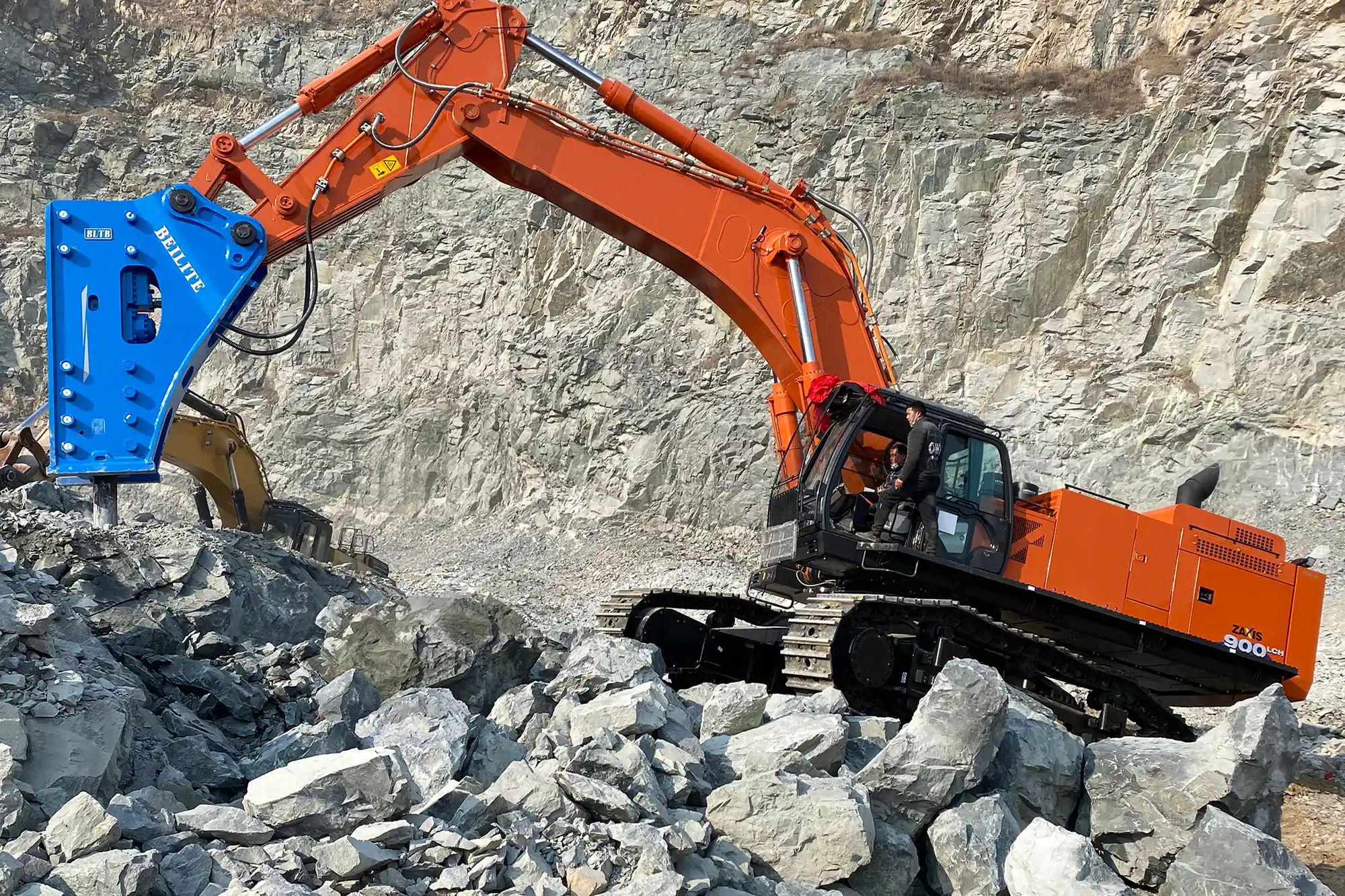
Selecting the correct hydraulic breaker is a decision that ripples through every aspect of a project—safety protocols, daily productivity, and total cost of ownership all hang in the balance. The process demands careful evaluation of target materials, high-reach excavator capabilities, and site-specific conditions that spec sheets can’t fully capture.
Key factors include breaker energy class, impact frequency, and compatibility with your carrier machine’s hydraulic power system. Attachment compatibility matters more than many contractors realize; seamless integration determines whether you’re getting optimal performance or fighting your equipment all day. For heavy-duty applications involving reinforced concrete or structural steel, specialized demolition attachments become essential. Machine stability requires particular attention when working with extended boom reach—the physics change dramatically at height.
| Modèle de disjoncteur | Weight (kg) | Diamètre du ciseau (mm) | Excavateur applicable (t) | Application clé |
|---|---|---|---|---|
| BLT-140 | 1910 | 140 | 20-24 | Large concrete structures |
| BLT-150 | 2310 | 150 | 24-27 | Heavy reinforced concrete |
| BLT-155 | 2610 | 155 | 27-33 | Industrial demolition |
| BLT-165 | 3149 | 165 | 33-38 | Extreme demolition |
Sizing a Hydraulic Breaker for 30-Meter High-Reach Excavators
For a 30-meter high-reach excavator—typically falling into the 30-40 ton carrier class—breaker selection requires balancing multiple competing demands. Models like the BLT-155 or BLT-165 offer the breaker weight and impact energy needed to tackle materials effectively at extended boom reach.
The critical considerations extend beyond raw power. Excavator capacity, counterweight requirements, and material density all factor into the equation. Proper sizing maintains optimal balance, prevents undue stress on the excavator’s structure, and maximizes breaking power where it counts. Undersizing leaves productivity on the table; oversizing creates stability risks that no schedule pressure justifies.
How Impact Energy Drives Demolition Speed
A hydraulic breaker’s impact energy directly shapes demolition speed through its effect on breaking force and material penetration. Impact energy, measured in joules, works in concert with impact frequency (blows per minute) to determine overall effectiveness against different materials.
Higher impact energy enables faster penetration and fracturing of hard materials like reinforced concrete. This reduces the blow count required per section—a difference that compounds across thousands of square meters of structure. When dealing with high material hardness, the relationship between impact energy, frequency, and project duration becomes stark. Getting this balance right separates projects that meet deadlines from those that spiral into extended timelines.
Building Safety and Efficiency Into Every Operation
Safety and operational efficiency in high-reach demolition aren’t competing priorities—they reinforce each other when protocols are designed correctly. Comprehensive operator training must cover both equipment specifics and site-specific hazards that generic certifications don’t address.
Effective site preparation forms the foundation. Structural assessments identify potential collapse patterns before work begins. Clear exclusion zones protect ground personnel from debris. Dust suppression systems and noise control measures address environmental regulations while reducing site impact on surrounding areas. Vibration reduction technologies serve double duty, enhancing operator comfort while extending equipment longevity.
Remote control demolition represents an advanced safety solution gaining traction on complex projects. Removing operators from direct exposure to falling debris changes the risk calculation fundamentally.
Non-Negotiable Safety Precautions for High-Reach Operations
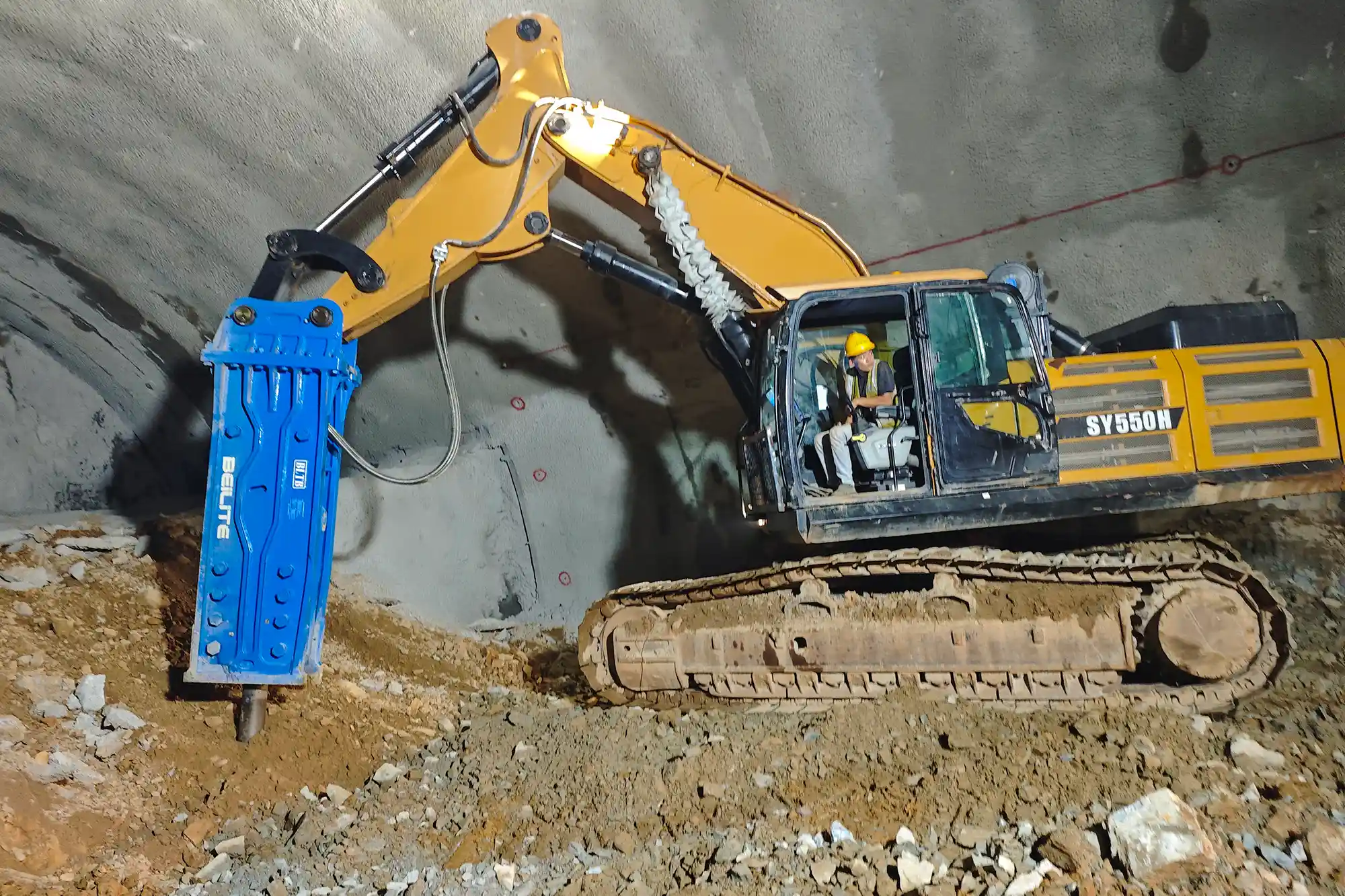
Essential safety precautions begin with thorough risk assessment and site preparation—steps that can’t be rushed regardless of schedule pressure. Operators need appropriate personal protective equipment: hard hats, safety glasses, hearing protection, and high-visibility clothing at minimum.
Exclusion zones around the demolition area require strict enforcement. Ground personnel injuries often trace back to zone violations that seemed minor at the time. Before operations commence, detailed structural integrity assessments must predict collapse patterns with reasonable confidence. Regular equipment inspections and adherence to manufacturer guidelines prevent mechanical failures during demanding tasks—failures that become exponentially more dangerous at height.
Maintenance Practices That Protect Your Investment
Consistent performance and extended lifespan depend on maintenance programs that treat prevention as the priority, not an afterthought. Preventative maintenance schedules reduce downtime and lower total cost of ownership over equipment life cycles measured in years.
Regular inspection of wear parts—chisels, bushings, pins—allows replacement before critical failures occur. The cost difference between scheduled replacement and emergency repair during active demolition is substantial. Proper lubrication using manufacturer-recommended greases minimizes friction and heat buildup within the hydraulic system. Daily checks for leaks, loose connections, and unusual noises catch potential issues while they’re still minor.
Adherence to operational parameters matters more than many operators realize. Running a hydraulic breaker outside its designed envelope accelerates wear in ways that void warranties and shorten service life dramatically.
| Tâche de maintenance | Fréquence | Key Checkpoints |
|---|---|---|
| Chisel Inspection | Quotidiennement | Wear, cracks, proper seating |
| Lubrification | Quotidiennement | Grease points, automatic greaser function |
| Hydraulic Hoses/Fittings | Quotidiennement | Leaks, damage, secure connections |
| Pression d'azote | Hebdomadaire | Accumulator and back head pressure |
| Bushing Wear | Hebdomadaire | Play in tool holder, signs of excessive wear |
| Fastener Torque | Mensuel | All bolts and nuts, especially housing fasteners |
Where High-Reach Demolition Technology Is Heading
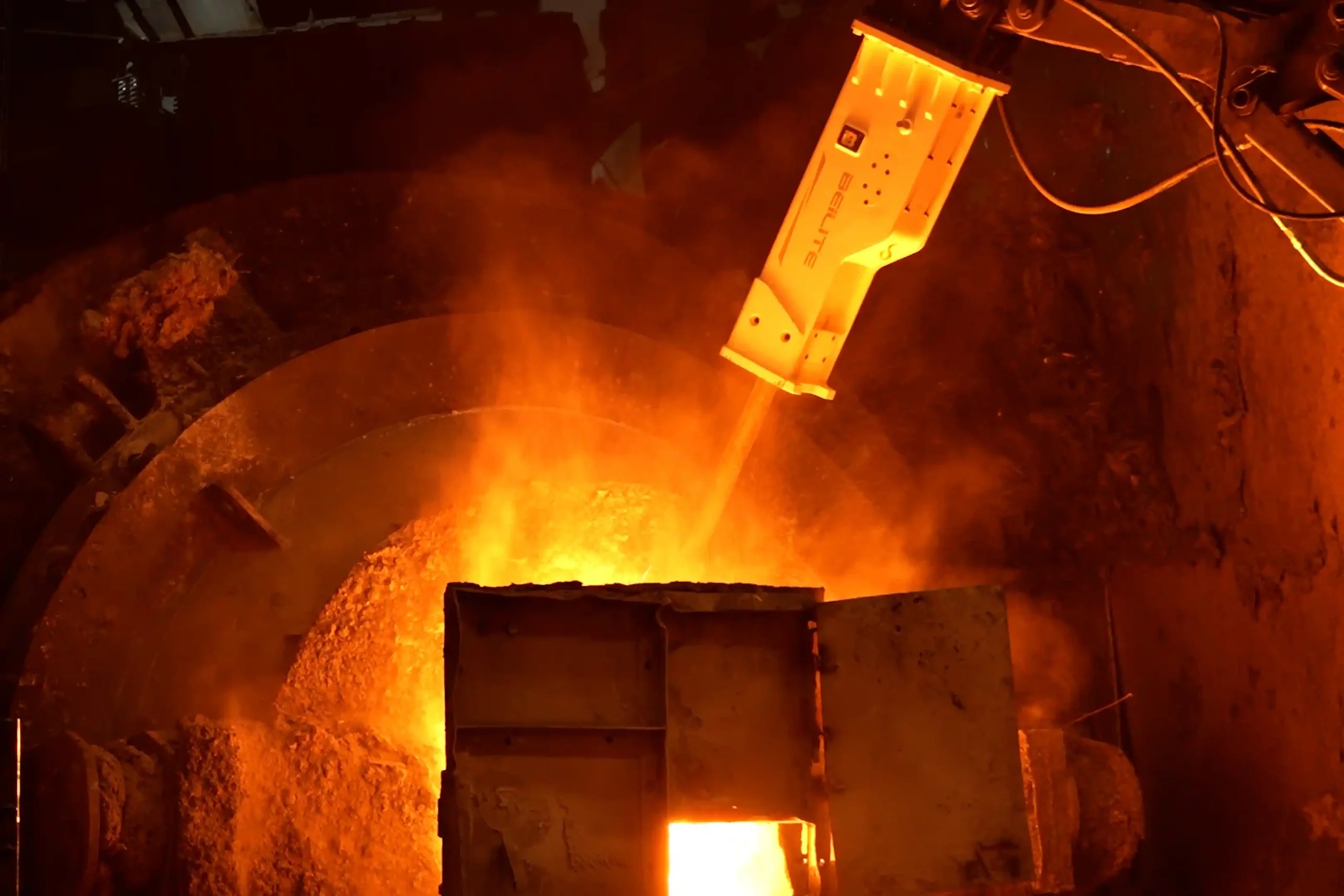
The high-reach demolition sector is evolving rapidly under pressure from efficiency demands, safety requirements, and environmental regulations. Advanced demolition technology now integrates smart attachments with telematics for real-time performance monitoring and predictive maintenance—catching problems before they become failures.
Electric excavators promise quieter operations and zero direct emissions, addressing sustainability goals that increasingly influence project approvals in urban areas. The industry is also focusing on improved recycling of demolished materials through more precise demolition techniques that facilitate material separation at the source.
These innovations aren’t theoretical. They’re shaping equipment development and project planning today, with implications for contractors who want to remain competitive over the next decade.
Frequently Asked Questions About High-Reach Demolition Breakers
What are the primary advantages of using a specialized hydraulic breaker for high-reach demolition?
Specialized hydraulic breakers deliver superior power, precision, and reach for safe dismantling of tall structures. They minimize manual labor at height, reduce noise and vibration compared to alternatives, and enable controlled demolition in urban environments where surrounding structures limit options. These advantages translate directly to enhanced safety and project efficiency, making them indispensable for complex high-rise deconstruction.
How does BEILITE ensure the durability of its hydraulic breakers in extreme demolition conditions?
BEILITE Machinery Co., LTD leverages advanced R&D and participates in national standard formulation, using high-grade materials and rigorous testing protocols. The BLT and BLTB series are engineered specifically for heavy-duty applications, delivering exceptional longevity and consistent performance in challenging high-reach demolition projects. This commitment to quality is backed by hundreds of patents and over two decades of focused innovation.
What maintenance practices extend the lifespan of a high-reach hydraulic breaker?
Regular preventative maintenance drives equipment longevity. Daily inspections, proper lubrication, correct chisel selection for the material being demolished, and timely replacement of wear parts form the core program. Adhering to manufacturer guidelines significantly reduces downtime and extends equipment life. This proactive approach ensures optimal performance and minimizes total cost of ownership over the equipment’s operational life.
Can BEILITE hydraulic breakers be adapted for various high-reach excavator models?
BEILITE offers a diverse range of hydraulic breakers compatible with various excavator classes and high-reach boom configurations. The team can assist in selecting the optimal BLT or BLTB model to ensure seamless integration and maximum performance for specific high-reach demolition equipment. This adaptability ensures solutions meet a broad spectrum of project requirements globally.
What environmental considerations should be taken into account when planning high-reach demolition with hydraulic breakers?
Key environmental considerations include dust suppression, noise control, and responsible waste management through concrete recycling and material separation. Modern hydraulic breakers, when properly operated, contribute to minimizing environmental impact by enabling precise, controlled demolition that facilitates material sorting. Adherence to local environmental regulations remains crucial for sustainable demolition practices and project approvals.
Partner with BEILITE for Your Demolition Success
As a national high-tech enterprise with over two decades of innovation and hundreds of patents, BEILITE Machinery Co., Ltd. is dedicated to engineering high-end hydraulic breakers that meet the most demanding high-reach demolition challenges. Our BLT and BLTB brand products are trusted globally for their superior quality, performance, and reliability. Contact us today at [email protected] or 40008-40008 to discuss your specific project requirements and discover how our expert solutions can optimize your demolition operations.