 Anglais
 Français
Compact Excavator Hydraulic Breaker: Unlocking Demolition Efficiency
When you watch a compact excavator fitted with a hydraulic breaker tear through reinforced concrete, the efficiency is hard to ignore. The machine that spent the morning digging trenches becomes a demolition tool in minutes, punching through material that would take a crew with handheld equipment half a day. That kind of flexibility changes how you plan a job site. The right hydraulic breaker turns a compact excavator into something far more capable than its size suggests, and understanding how to match, operate, and maintain these attachments makes the difference between a productive investment and an expensive headache.
How Hydraulic Breakers Convert Excavator Power Into Percussive Force
Hydraulic breaker technology works by channeling hydraulic flow from the excavator’s auxiliary circuit into concentrated impact energy. Inside the breaker housing, pressurized hydraulic fluid drives a piston in a rapid cycle. Each stroke sends the piston forward to strike the tool bit, transferring kinetic energy into the material being broken.
The key performance metrics are straightforward once you know what to look for. Impact energy, measured in joules, tells you how hard each blow hits. Operating pressure, expressed in bar, determines the force behind the piston stroke. Flow rate, measured in liters per minute, controls how many blows per minute the breaker delivers. Higher flow means faster cycling, but only if the excavator’s hydraulic system can supply it consistently.
Tool bit selection matters more than many operators realize. A moil point concentrates force for penetrating hard rock or breaking through concrete slabs. Blunt tools spread impact energy across a wider area, useful for secondary breaking or loosening compacted material. Standard chisels fall between these extremes, offering a balance for general demolition work. Matching the chisel type to the material prevents wasted energy and reduces wear on both the tool and the breaker mechanism.
This engineering precision allows compact excavators to handle tasks that once required larger machines or specialized equipment.

Matching a Hydraulic Breaker to Your Compact Excavator Fleet
Getting the breaker-excavator match right affects everything downstream: safety, performance, and how long both pieces of equipment last. An oversized hydraulic breaker puts excessive stress on the excavator’s boom and hydraulic system. An undersized one wastes time and fuel without delivering adequate breaking power.
The primary matching criteria involve weight class and hydraulic capacity. The breaker’s operating weight should fall within the excavator’s rated attachment capacity, and the hydraulic requirements must align with what the auxiliary circuit can deliver.
| Modèle de disjoncteur | Diamètre du ciseau | Pression de fonctionnement | Poids de la pelle applicable |
|---|---|---|---|
| BLT-40 | 40 mm | 90-120 bar | 0.5-1.2 t |
| BLT-45 | 45 mm | 90-120 bar | 0.8-1.5 t |
| BLT-53 | 53 mm | 90-120 bar | 1.5-3.5 t |
| BLT-60 | 60 mm | 100–130 bar | 3-5.5 t |
| BLT-70 | 70 mm | 110–140 bar | 4.5-6 t |
Quick coupler systems add operational flexibility by reducing attachment change time. When a single compact excavator needs to switch between digging, grading, and breaking throughout a shift, those saved minutes accumulate into meaningful productivity gains.
What size hydraulic breaker do I need for my compact excavator?
Start with your excavator’s operating weight and auxiliary hydraulic specifications. A 1-ton compact excavator pairs well with a lighter breaker like the BLT-40, designed for machines in the 0.5–1.2 ton range. The breaker’s weight should typically fall between 5% and 10% of the excavator’s operating weight, though this varies by manufacturer and application.
Running an oversized hydraulic breaker risks structural damage to the excavator’s arm and can overwhelm the hydraulic system. An undersized breaker forces the operator to compensate with longer cycle times, burning fuel and hours without proportional output. Manufacturer specifications exist for good reasons—following them protects both investments.
Breaker-Excavator Integration Beyond the Spec Sheet
Mechanical fit is the obvious starting point: pin diameter, mounting bracket dimensions, and coupler compatibility. But hydraulic integration requires closer attention. The excavator’s auxiliary circuit must supply the correct flow rate and pressure range for the breaker to function as designed.
If flow is too low, the breaker cycles slowly and loses impact frequency. If pressure exceeds the breaker’s rated range, internal components wear faster and seals fail prematurely. Some excavators require auxiliary hydraulic kits or pressure adjustments to accommodate breaker attachments. Verifying these parameters before purchase prevents performance problems and warranty disputes.
Productivity Gains From Hydraulic Breaker Integration
The productivity case for hydraulic breakers on compact excavators is clearest in applications where space constraints meet demolition requirements. Urban renovation projects, utility trenching through existing pavement, and site preparation in tight lots all benefit from this combination.
Consider a municipal water main repair. The crew needs to cut through asphalt and concrete to access buried infrastructure, then backfill and restore the surface. A compact excavator with a hydraulic breaker handles the initial breaking, removes the debris, and digs the trench—all without repositioning a separate machine or waiting for additional equipment. The same operator completes tasks that would otherwise require a dedicated breaker truck and a second piece of excavation equipment.
Rock breaking in landscaping and foundation work follows similar logic. The hydraulic breaker fractures boulders or ledge rock that would otherwise require blasting or removal by crane. The compact excavator then clears the broken material and continues with excavation.
This consolidation of capabilities reduces labor requirements, shortens project timelines, and keeps equipment utilization high. Machines earn their keep when they’re working, not when they’re parked waiting for the next task.
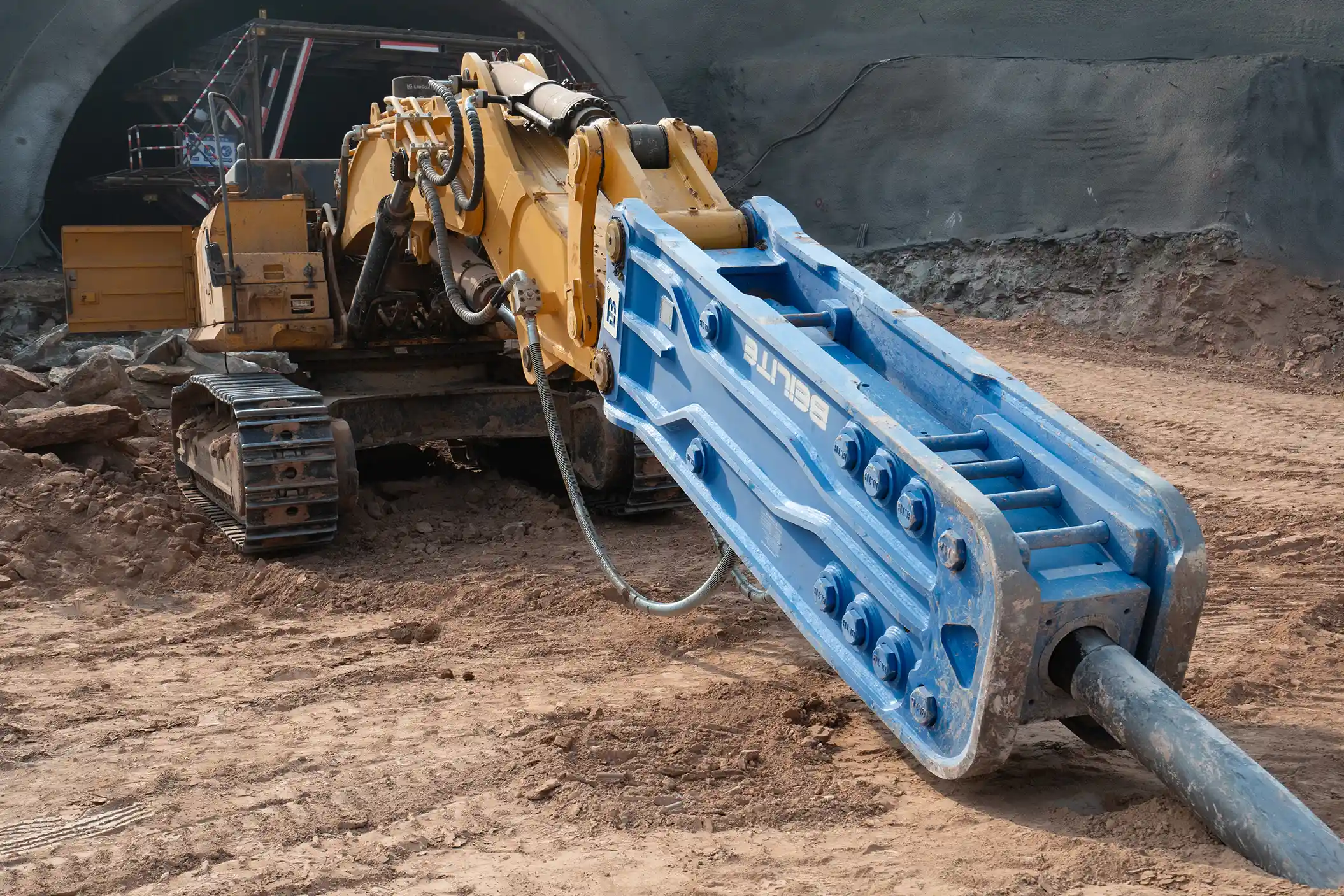
Maintenance Practices That Protect Your Hydraulic Breaker Investment
Hydraulic breakers operate under severe conditions. Each impact cycle subjects internal components to extreme forces, and the tool bit contacts abrasive materials thousands of times per hour. Without consistent maintenance, wear accumulates faster than necessary, and unexpected failures interrupt work.
Daily checks should cover the basics: inspect the tool bit for visible wear or damage, examine hydraulic hoses for leaks or abrasion, and verify that the breaker housing shows no cracks or loose fasteners. These inspections take minutes and catch problems before they escalate.
Weekly maintenance includes greasing the tool bit bushing and checking the nitrogen charge in the accumulator. The accumulator cushions the hydraulic system during each impact cycle. Low nitrogen pressure reduces impact energy and increases stress on internal seals. Most breakers have a charging port that allows pressure verification with a standard gauge.
Seal kits require periodic replacement based on operating hours and conditions. Dusty environments and frequent use accelerate seal wear. Replacing seals proactively costs far less than repairing hydraulic system contamination from a failed seal.
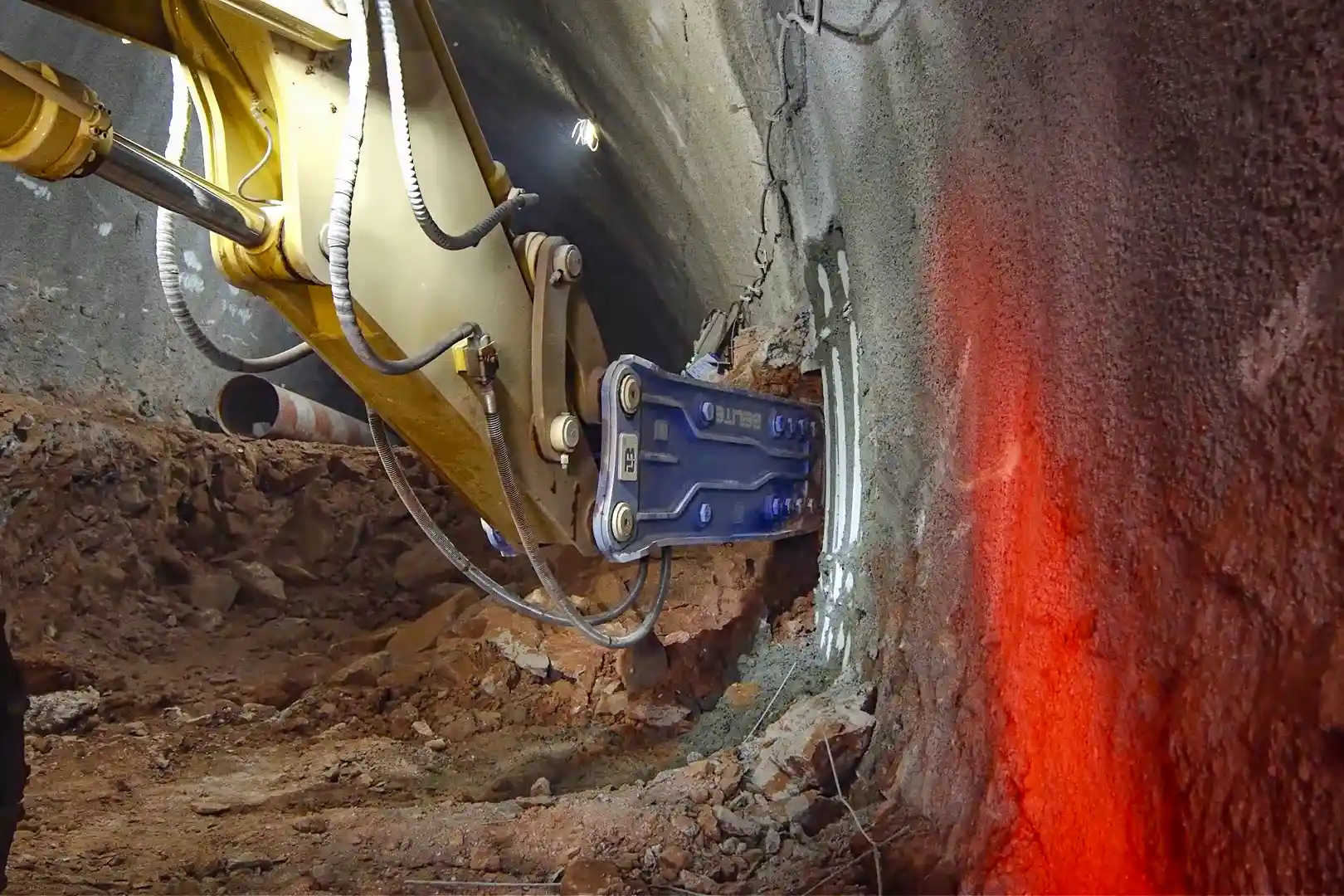
How often should hydraulic breakers be serviced?
Service intervals depend on usage intensity and operating conditions. Daily visual inspections are non-negotiable. Weekly or bi-weekly lubrication and nitrogen pressure checks maintain consistent performance. A comprehensive annual service, ideally performed by technicians familiar with the specific breaker model, should include complete disassembly, inspection of all wear components, and replacement of parts approaching end of life.
Operators who skip preventative maintenance often find themselves scheduling emergency repairs at the worst possible times. The cost difference between planned service and unplanned downtime is substantial.
Can I use a hydraulic breaker on any compact excavator model?
Not reliably. Each excavator model has specific hydraulic output characteristics and structural limits. The excavator’s operating weight determines the maximum attachment weight it can safely handle. The auxiliary hydraulic circuit must provide flow and pressure within the breaker’s operating range.
Some compact excavators leave the factory without auxiliary hydraulics configured for breaker operation. Others require pressure relief valve adjustments or flow control modifications. OEM documentation specifies these requirements, and ignoring them creates problems ranging from poor performance to equipment damage.
Before purchasing a hydraulic breaker, confirm compatibility with your specific excavator model. This verification step prevents expensive mismatches.
Engineering and Manufacturing Behind Beilite Hydraulic Breakers
BEILITE Machinery Co., Ltd. has manufactured hydraulic breakers since 2002, building a reputation through sustained investment in core technology development. The company holds national high-tech enterprise certification in China and maintains hundreds of patents covering breaker design and manufacturing processes.
BEILITE participates in formulating national standards for hydraulic breakers in China, contributing technical expertise to industry-wide quality benchmarks. This involvement reflects both manufacturing capability and engineering depth.
The BLT and BLTB product lines cover applications from light demolition to heavy mining and underwater operation. Each model undergoes testing to verify performance specifications before reaching customers. With distribution in over 100 countries, the company has accumulated field experience across diverse operating conditions, feeding that knowledge back into product development.
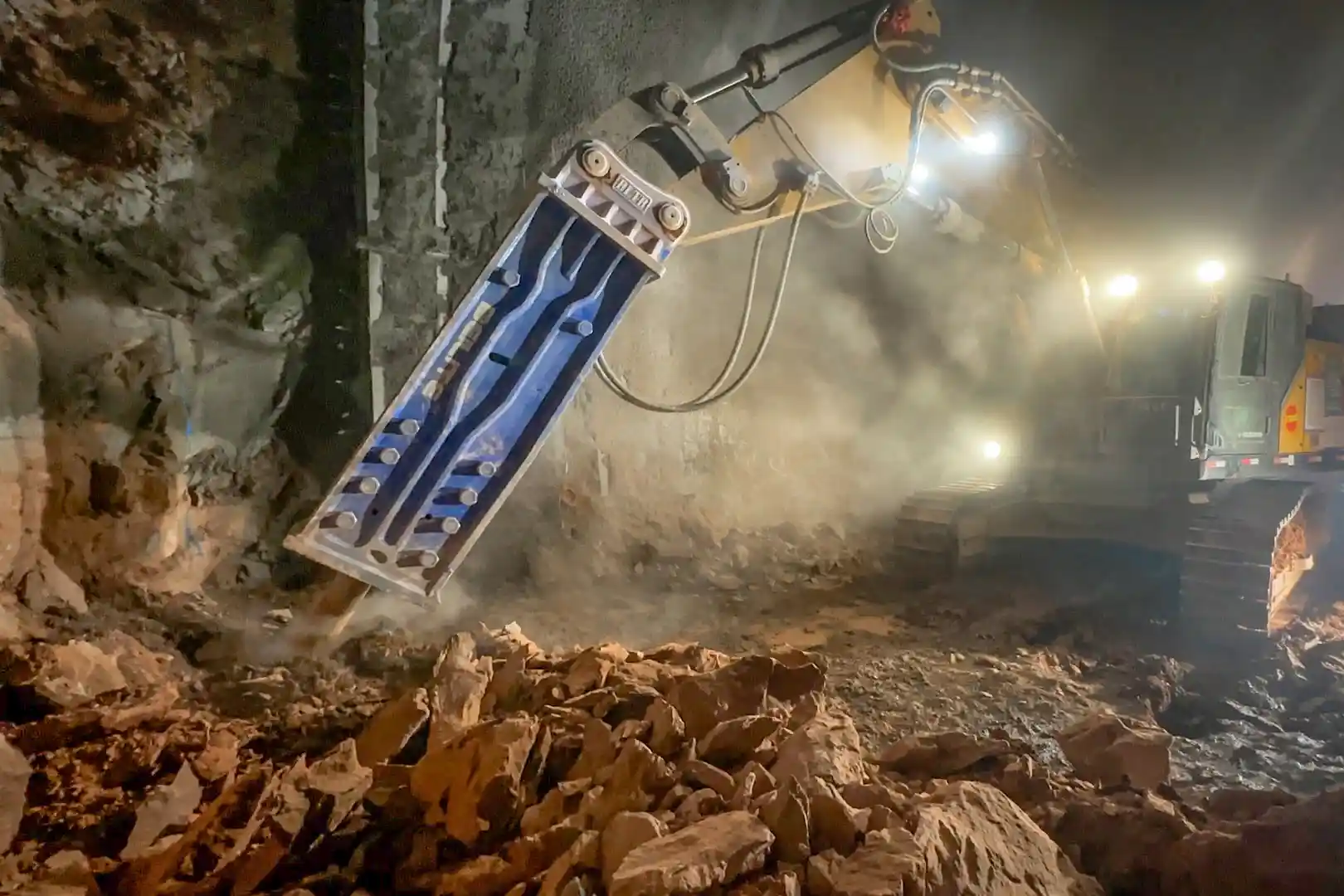
Upgrade Your Compact Excavator’s Demolition Capability
BEILITE’s hydraulic breakers deliver the impact energy, durability, and excavator compatibility that demanding applications require. Our engineering team can help you match the right breaker model to your specific equipment and project requirements.
Contact us for a consultation on optimizing your compact excavator fleet with BLT and BLTB breakers.
Courriel : [email protected]
Téléphone : 40008-40008
Frequently Asked Questions About Compact Excavator Hydraulic Breakers
What are the key benefits of using a hydraulic breaker on a mini excavator?
A hydraulic breaker expands a mini excavator’s capabilities beyond digging into demolition, concrete breaking, and rock fracturing. This consolidation reduces the need for separate equipment and additional operators. Projects move faster because one machine handles multiple tasks. The controlled impact energy also improves safety compared to manual breaking methods, which expose workers to vibration, flying debris, and repetitive strain.
How do I ensure the longevity and optimal performance of my hydraulic breaker?
Consistent maintenance is the foundation. Lubricate the tool bit bushing according to the manufacturer’s schedule. Select the correct tool bit for each material type—using a moil point on soft material wastes energy, while using a blunt tool on hard rock causes excessive wear. Never operate the breaker without material contact, as blank firing damages internal components. Follow the service schedule for seal replacement and nitrogen recharging, and address any performance changes promptly rather than waiting for complete failure.
What makes Beilite hydraulic breakers a reliable choice for compact excavators?
BEILITE combines two decades of specialized manufacturing experience with ongoing R&D investment. The company’s participation in national standards development reflects technical credibility beyond marketing claims. Patented technologies address common failure points in hydraulic breaker design, and the global distribution network provides parts and service access across markets. These factors contribute to equipment that performs consistently over its service life.