 Anglais
 Français
Choosing the Ideal Hydraulic Breaker for Wheeled Excavators
Wheeled excavators gain a different kind of presence once you mount a hydraulic breaker. The machine stops being just a loader or digger and becomes something that can punch through reinforced concrete, split quarry rock, or tear up old pavement with surprising precision. I’ve watched operators transform a routine site-clearing job into a methodical demolition sequence simply by choosing the right breaker for their rig. That match between breaker and excavator matters more than most equipment decisions on a jobsite. Get it wrong, and you’re fighting the machine all day. Get it right, and the work flows.
How Hydraulic Breakers Convert Excavator Power Into Breaking Force
Hydraulic breakers work on a straightforward principle that produces remarkable results. The excavator’s hydraulic system pressurizes fluid, which drives a piston inside the breaker housing. That piston accelerates downward and strikes a chisel or moil point with tremendous force. The energy transfers through the tool tip and into whatever material sits beneath it. Concrete fractures along stress lines. Rock splits at natural weak points. The cycle repeats dozens of times per minute.
Inside the breaker, you’ll find a piston, cylinder, and accumulator working together. The accumulator stores hydraulic energy between strokes, smoothing out the power delivery and allowing the piston to build momentum before each impact. This internal choreography determines how much energy reaches the chisel tip and how efficiently the breaker uses the excavator’s hydraulic output.
Two main designs dominate the market. Nitrogen-assisted breakers use a gas chamber to store and release energy, which amplifies the hydraulic impact. These units typically deliver higher impact energy and work well on demanding materials like hard rock or heavily reinforced concrete. Pure hydraulic breakers rely entirely on fluid pressure to drive the piston. They’re mechanically simpler, which often translates to easier maintenance and fewer potential failure points. The trade-off shows up in raw power output, though modern pure hydraulic designs have narrowed that gap considerably.
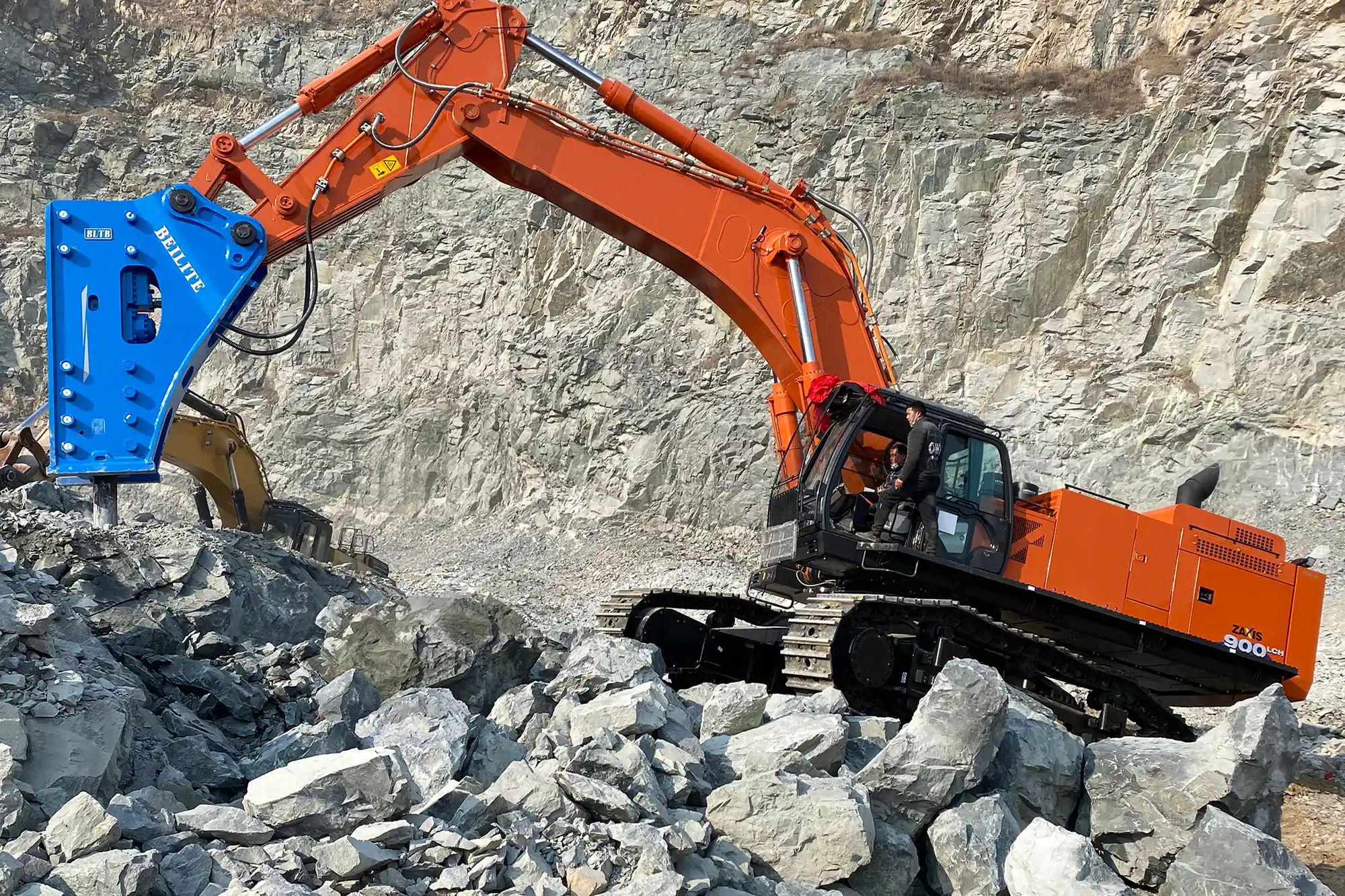
BEILITE Machinery has spent over two decades refining both approaches. Our engineering team contributed directly to China’s national standards for hydraulic breakers, which gave us deep insight into what separates adequate performance from exceptional durability. The patented technologies in our units focus on maximizing impact energy while keeping operating weight within practical limits. A breaker that hits hard but destabilizes the excavator creates more problems than it solves.
 ;
;
What Determines the Right Hydraulic Breaker for Your Wheeled Excavator
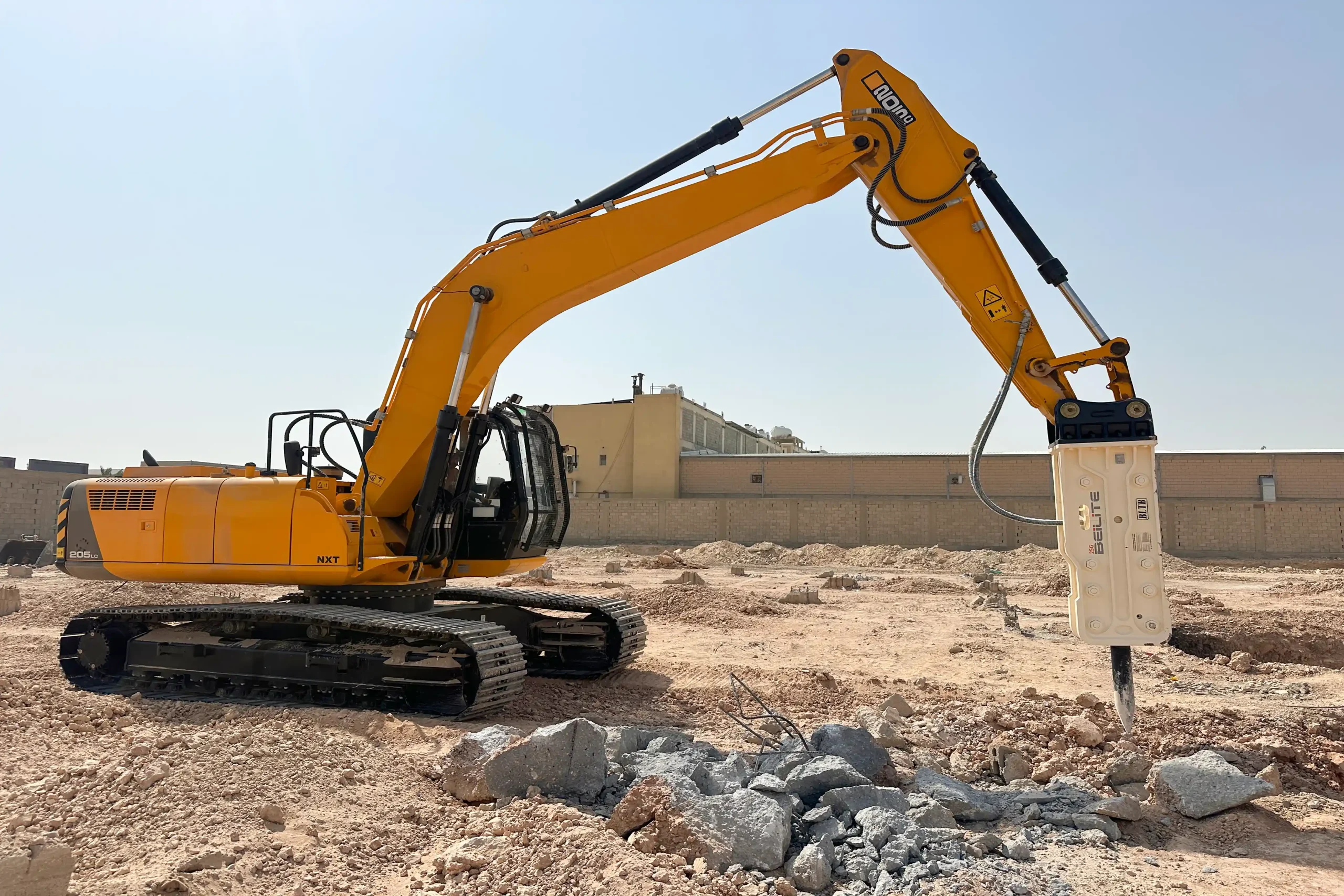
Selecting a hydraulic breaker for wheeled excavators involves balancing several competing factors. The breaker needs enough mass and impact energy to handle your target materials, but it can’t exceed what the excavator safely supports. Our BLT and BLTB product lines span this entire range, from compact units for mini excavators to heavy-duty breakers that handle large-scale quarry work.
Operating weight influences impact energy directly. Heavier breakers generally hit harder, which matters when you’re breaking dense materials. But weight also affects excavator stability, fuel consumption, and wear on the boom and stick. The sweet spot varies by application.
Chisel diameter determines both breaking force concentration and penetration depth. Smaller chisels focus energy into a tighter area, which helps with precise work or when breaking softer materials that benefit from deeper penetration. Larger chisels spread the impact across a wider surface, better suited for bulk breaking where you want to fracture large sections rather than punch through.
Impact frequency plays into productivity calculations. Higher frequency means more blows per minute, which can speed up work on materials that fracture progressively. Lower frequency with higher energy per blow often works better on materials that need substantial force to initiate cracks.
For specialized carriers like backhoes, specific models match their unique hydraulic characteristics. A Marteau brise-roche hydraulique pour pelleteuse,Prix direct d'usine requires different flow and pressure parameters than a standard wheeled excavator. Similarly, a Marteau piqueur hydraulique pour mini-pelle,Marteau piqueur pour mini-pelle needs careful sizing to avoid overwhelming the smaller machine’s hydraulic capacity.
 ;
;
Aligning Breaker Specifications With Excavator Hydraulics
The match between breaker requirements and excavator output determines whether you get full performance or constant frustration. Every hydraulic breaker for wheeled excavators needs a specific range of hydraulic flow and operating pressure. Fall below those minimums, and the breaker cycles slowly with weak impacts. Exceed the maximums, and you risk overheating, seal damage, and accelerated wear throughout the system.
Excavator tonnage provides a starting point, but the actual auxiliary hydraulic specifications matter more. Two excavators of similar weight can have significantly different auxiliary circuit capacities. Our BLT-40 fits 0.5-1.2 ton machines, while the BLT-125 matches 14-18 ton excavators. The difference isn’t just size; it’s the entire hydraulic demand profile.
| Tonnage de la pelle | Recommended Breaker Weight (kg) | Recommended Flow Rate (L/min) |
|---|---|---|
| 0.5 – 1.2 t | 80 – 140 | 15 – 30 |
| 1.5 – 3.5 t | 150 – 250 | 20 – 50 |
| 4.5 – 6 t | 350 – 450 | 40 – 70 |
| 7 – 11 t | 600 – 1000 | 60 – 110 |
| 14 – 18 t | 1300 – 1800 | 90 – 150 |
Matching Breaker Selection to Material and Application
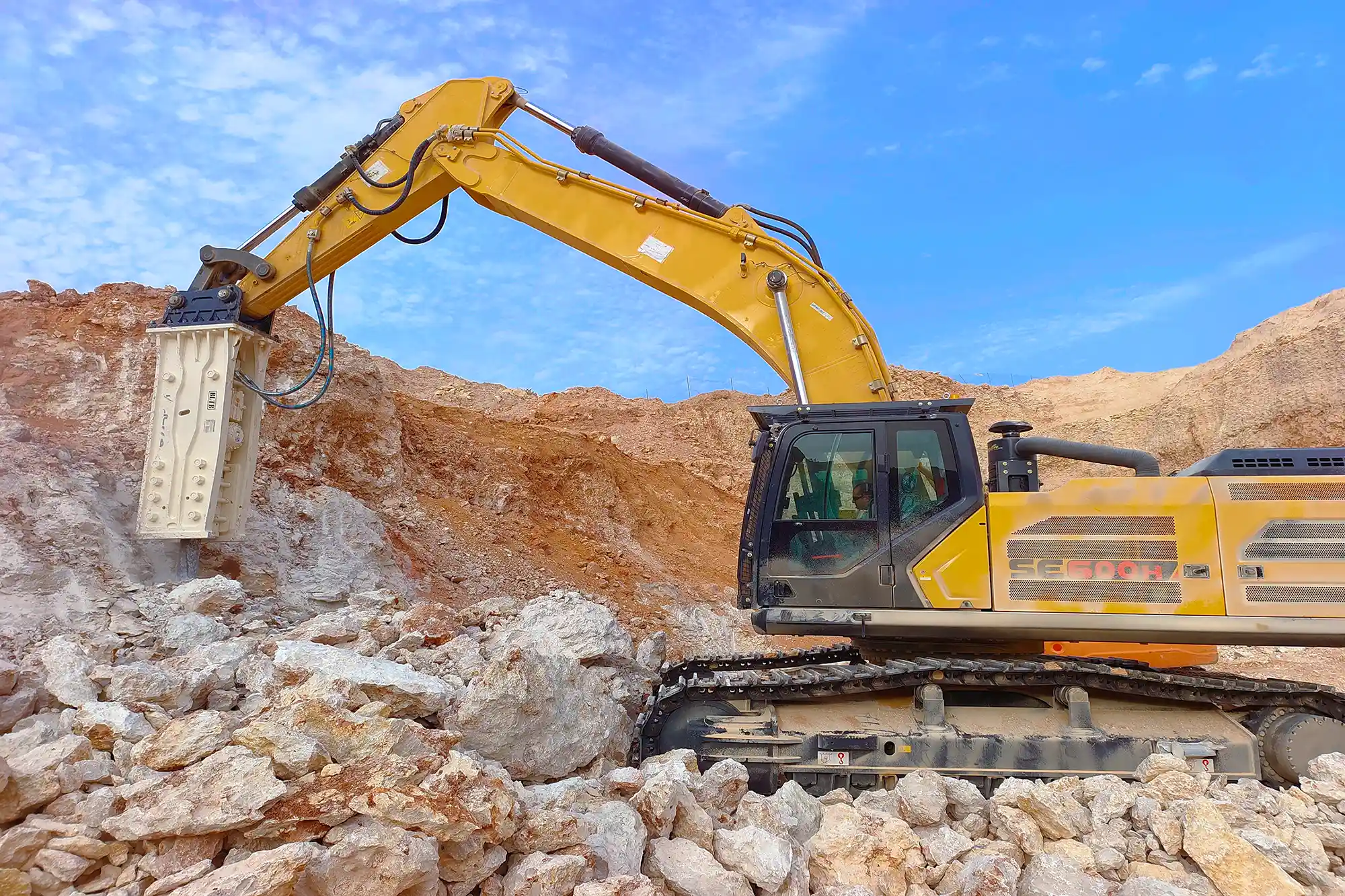
The material you’re breaking shapes every aspect of breaker selection. Hard rock in Marteau brise-roche hydraulique pour les mines et les carrières operations demands heavy-duty units with robust chisels designed for repeated high-energy impacts. The breaker needs to withstand constant stress without developing cracks or losing alignment.
Urban work presents different challenges. Brise-roche hydraulique pour le génie municipal, les routes urbaines et les travaux d'utilité publique often involves breaking concrete near underground utilities, existing structures, or sensitive infrastructure. Precision matters as much as power. Chisel selection shifts toward tools that allow controlled breaking rather than maximum destruction.
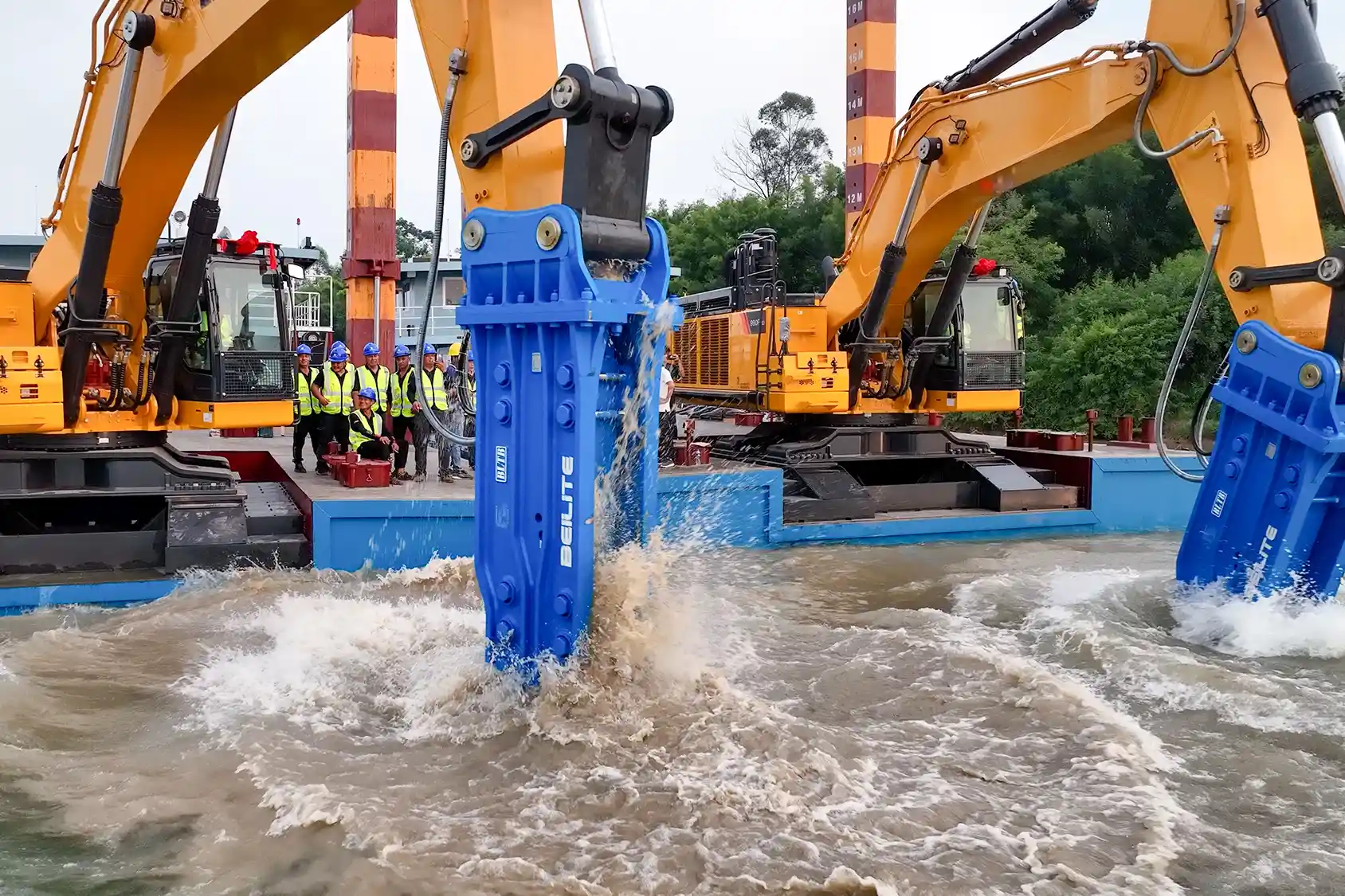
Marteau brise-roche hydraulique pour la construction sous-marine introduces environmental sealing requirements that standard units can’t meet. Water intrusion destroys hydraulic components quickly, so marine applications need breakers specifically engineered with enhanced seals and corrosion-resistant materials.
Material hardness, density, and internal structure all influence how efficiently a breaker works. Reinforced concrete behaves differently than plain concrete. Granite fractures differently than limestone. Understanding these characteristics helps predict which breaker specifications will deliver the best results.
 ;
;
Extending Service Life Through Proper Operation and Maintenance
A hydraulic breaker for wheeled excavators represents a significant investment that should deliver years of productive service. Reaching that potential requires consistent attention to maintenance and operating practices. The difference between a breaker that lasts 5,000 hours and one that reaches 10,000 hours often comes down to how well it’s cared for between jobs.
Modern breakers incorporate features that protect both the equipment and the operator. Noise reduction technology and vibration dampening systems reduce fatigue during long shifts while meeting increasingly strict environmental regulations. Dust suppression systems improve visibility and reduce wear on seals and bearings.
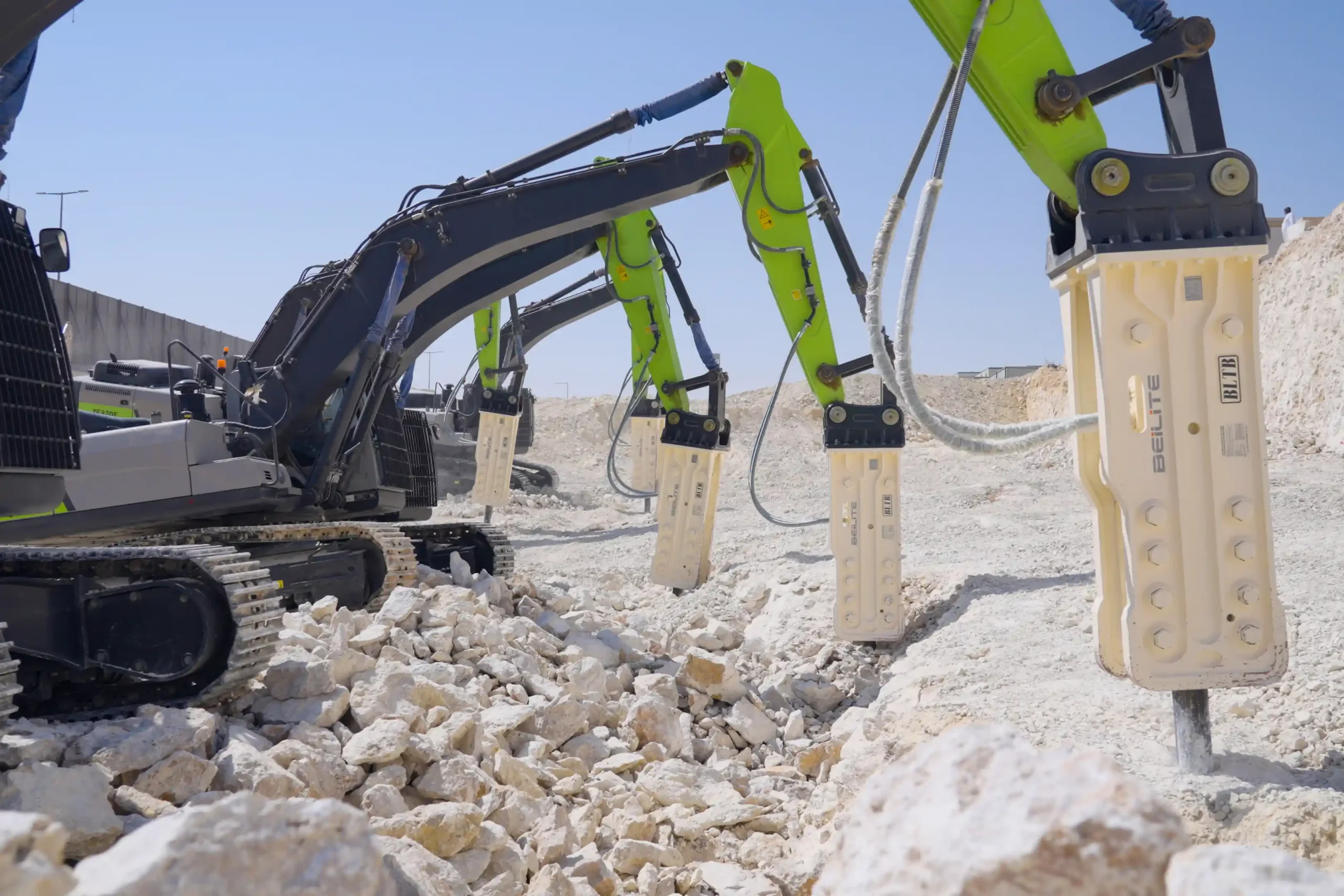
BEILITE engineers our breakers with durability as a primary design constraint. High-quality materials, precise manufacturing tolerances, and robust internal components create a foundation for long service life. But even the best-built breaker needs regular attention to maintain its performance.
Proactive maintenance catches small problems before they become expensive failures. A worn bushing replaced during scheduled service costs far less than the damage it causes if ignored. This approach protects your investment and keeps the equipment productive when you need it.
 ;
;
Daily, Weekly, and Monthly Maintenance Tasks
Consistent maintenance follows a predictable rhythm. Daily checks take only minutes but catch problems early. Inspect the chisel for wear patterns, cracks, or mushrooming at the struck end. Verify hydraulic fluid levels and check all visible connections for leaks. Look for loose bolts or unusual wear patterns on the housing.
Weekly tasks go deeper. Lubricate all grease points according to the manufacturer’s specifications. Insufficient lubrication accelerates wear on bushings and pins. Excessive lubrication wastes material and can attract debris. Check all mounting bolts and tighten any that have loosened during operation.
Monthly inspections address components that wear more slowly. Check the accumulator charge and nitrogen pressure. Inspect seals for signs of degradation or leakage. Examine wear parts like bushings and thrust rings for excessive play. Replace components before they fail rather than waiting for breakdown.
Where Wheeled Excavator Hydraulic Breakers Prove Their Value
The versatility of hydraulic breakers shows up across industries that have little else in common. Marteau brise-roche hydraulique pour la démolition et le cassage de roches work in urban environments requires precise control to bring down structures without damaging adjacent buildings. The same basic tool, sized appropriately, handles primary and secondary breaking in quarries where raw production tonnage matters most.
Road construction relies heavily on breakers for removing old pavement and breaking up concrete foundations. Infrastructure development projects use them for trenching through rock, preparing sites for foundations, and recycling concrete from demolished structures.
Specialized applications push breaker design in specific directions. Marteau brise-roche hydraulique pour la construction sous-marine for marine work needs sealing that standard units don’t provide. Extreme cold environments demand materials and lubricants that maintain performance when temperatures drop well below freezing.
Our BLT and BLTB product lines serve customers in over 100 countries, handling conditions that range from tropical humidity to arctic cold. This global experience feeds back into our engineering process, helping us identify and solve problems before they affect our customers.
 ;
;
Operating Safely and Meeting Regulatory Requirements
Hydraulic breaker operation carries inherent risks that demand respect and preparation. The forces involved can cause serious injury if safety procedures aren’t followed. Personal protective equipment isn’t optional. Helmets, safety glasses, hearing protection, and appropriate footwear form the baseline for anyone near an operating breaker.
Site assessment should happen before the breaker starts cycling. Underground utilities, unstable ground, and nearby structures all create hazards that proper planning can address. Knowing what’s beneath the surface prevents the kind of accidents that shut down projects and injure workers.
BEILITE incorporates safety features like anti-blank firing mechanisms that prevent the breaker from cycling when the chisel isn’t in contact with material. Blank firing stresses internal components and can cause the chisel to become a projectile. Preventing it protects both the equipment and nearby personnel.
Operator training matters as much as equipment design. Understanding proper technique, recognizing warning signs of equipment problems, and knowing emergency procedures all contribute to safer operations. Compliance with noise and dust regulations protects both workers and surrounding communities.
Making the Right Choice for Your Operation
The right hydraulic breaker for wheeled excavators matches your excavator’s capabilities, your typical materials, and your operational priorities. Technical specifications provide the framework, but experience with similar applications often reveals nuances that numbers alone can’t capture.
BEILITE Machinery brings over two decades of manufacturing experience and direct involvement in national standards development to every breaker we produce. Our engineering team understands what separates adequate performance from equipment that operators actually want to use day after day.
Common Questions About Hydraulic Breakers for Wheeled Excavators
How many operating hours should a hydraulic breaker last?
A well-maintained hydraulic breaker for wheeled excavators typically delivers 5,000 to 10,000 operating hours, though actual lifespan varies considerably based on usage patterns and material hardness. Breaking reinforced concrete all day stresses components differently than occasional light demolition work. Quality construction, proper sizing for the application, and consistent maintenance all push toward the higher end of that range. Genuine spare parts matter during repairs because aftermarket components often don’t match original tolerances.
What happens if the breaker’s hydraulic requirements don’t match my excavator?
Mismatched hydraulic specifications create problems in both directions. If the excavator can’t supply enough flow or pressure, the breaker cycles slowly and delivers weak impacts. Productivity drops, and operators often compensate by pressing harder, which stresses the boom and stick. If the excavator supplies more than the breaker can handle, excess heat builds up in the hydraulic system. Seals degrade faster, fluid breaks down, and components wear prematurely. Always verify that your auxiliary hydraulic output falls within the breaker’s specified range before mounting.
What safety measures matter most during hydraulic breaker operation?
Personal protective equipment forms the foundation. Helmets, safety glasses, and hearing protection should be non-negotiable for anyone in the work area. Beyond PPE, pre-operation inspection catches problems before they become dangerous. Check chisel condition, verify all connections, and confirm that safety systems like anti-blank firing mechanisms function properly. Clear the area of bystanders and verify underground utility locations before starting. Proper operator training ensures that everyone understands both normal procedures and emergency responses.
Work With BEILITE for Reliable Breaking Performance
BEILITE Machinery has spent over twenty years developing hydraulic breakers that perform under demanding conditions worldwide. Our participation in China’s national standards development reflects the engineering depth behind our BLT and BLTB product lines. Contact our team at [email protected] or call 40008-40008 to discuss which breaker specifications match your wheeled excavator and typical applications.