 Anglais
 Français
Breaking Oversized Boulders: Expert Methods & Equipment
Oversized rock removal sits at the center of nearly every heavy construction project, mining operation, and quarry expansion I’ve encountered. When boulder fragmentation goes wrong, the ripple effects hit timelines, budgets, and safety records hard. The right combination of methods and equipment makes the difference between a project that flows and one that stalls. Beilite Machinery Co., LTD brings decades of hydraulic breaking expertise to these challenges, and what follows draws from real-world applications where precision and power had to work together.
Why Oversized Rock Fragmentation Creates Persistent Problems
Oversized rock fragmentation carries inherent rock breaking difficulties that can bring project momentum to a halt. Delays compound quickly when boulders resist conventional approaches, and operational costs climb with every unplanned equipment swap or schedule adjustment. Beyond the financial pressure, inadequate planning introduces genuine site safety hazards that put crews and machinery at risk. Environmental regulations add another layer, demanding fragmentation methods that satisfy both performance requirements and compliance standards.
Site-specific variables shape every decision. Geological factors like rock hardness and the presence of abrasive minerals determine how much force equipment must deliver and how long components will last under stress. Getting these assessments right early prevents costly mid-project corrections.
Geological and Material Factors That Drive Equipment Decisions
Rock properties sit at the foundation of effective fragmentation planning. Rock type—whether igneous rock, sedimentary rock, or metamorphic rock—along with density, compressive strength, tensile strength, and existing fracture zones all influence how a boulder will respond to impact. Hard igneous rock demands substantially higher impact energy than softer sedimentary formations. Understanding these rock mechanics allows for precise matching of breaking strategies to site conditions, which reduces tool wear and keeps production rates where they need to be.
| Rock Type | Mohs Hardness Scale (Typical) | Breaking Difficulty | Recommended Method |
|---|---|---|---|
| Sedimentary (Soft) | 1-3 | Faible | Hydraulic Breaker, Mechanical Split |
| Sedimentary (Hard) | 3-5 | Medium | Hydraulic Breaker, Controlled Blast |
| Metamorphic | 4-7 | Medium to High | Hydraulic Breaker, Controlled Blast |
| Igneous (Granite) | 6-7 | Haut | Heavy-Duty Hydraulic Breaker, Blast |
Proven Methods for Breaking Oversized Boulders
Effective boulder fragmentation requires matching techniques to specific project conditions. Construction, mining, and quarrying operations each present different constraints, and the methods that work best balance efficiency against safety and environmental impact.
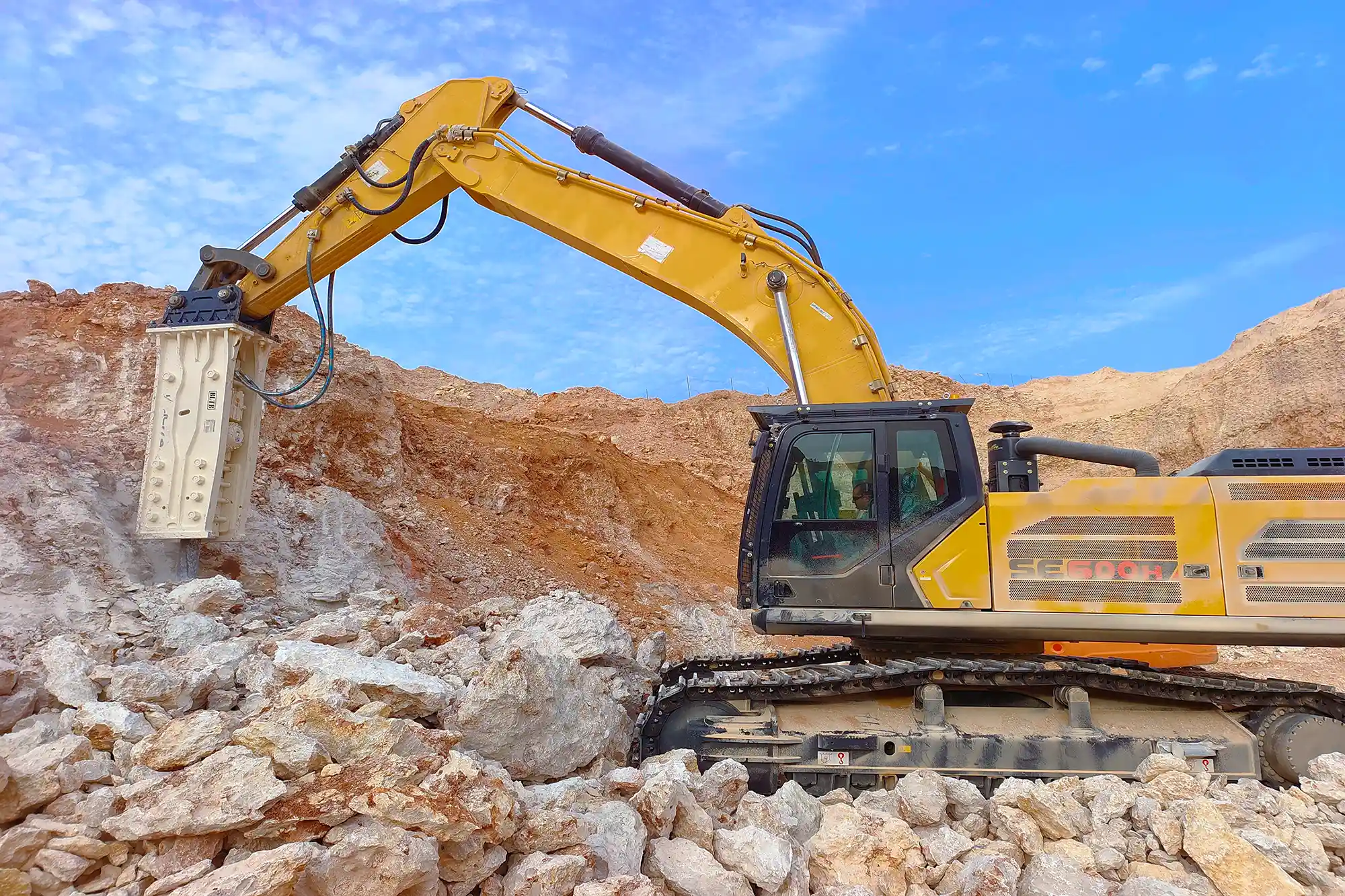
Controlled blasting delivers high fragmentation rates and remains a powerful option for primary breaking in large-scale operations. Proximity to structures and environmental regulations often limit where blasting can be applied. Non-explosive rock breaking methods fill that gap. Rock splitting and hydraulic splitting provide precision without the shockwave concerns. Mechanical breaking through excavator attachments handles secondary breaking and smaller rock demolition tasks effectively. Pre-splitting techniques help control fracture patterns when specific fragment sizes matter.
What are the most effective methods for breaking oversized boulders?
The most effective methods for efficient rock fragmentation depend on rock type, boulder size, site location, and environmental constraints. Hydraulic breaking using powerful hydraulic hammers delivers precise and controlled large rock demolition. Controlled blasting suits open-pit mining and quarrying where large volumes require rapid fragmentation. Mechanical rock splitters offer a quieter, vibration-free solution for sensitive areas near structures or communities. Most successful operations combine these breaking techniques based on what each phase of the project demands.
What alternatives exist to blasting for oversized rock removal?
Several effective non-explosive demolition alternatives address oversized rock removal without the regulatory and safety complications of blasting. Hydraulic breakers deliver high impact force for controlled breaking while keeping noise and vibration within acceptable limits. Hydraulic rock splitters use expansive force to crack rocks silently, making them ideal for urban environments or locations near sensitive infrastructure. Chemical rock breaking agents expand within drilled holes, creating controlled fractures without shockwaves. These methods contribute directly to environmental impact reduction and strengthen overall site safety.
How High-Performance Hydraulic Breakers Transform Rock Fragmentation
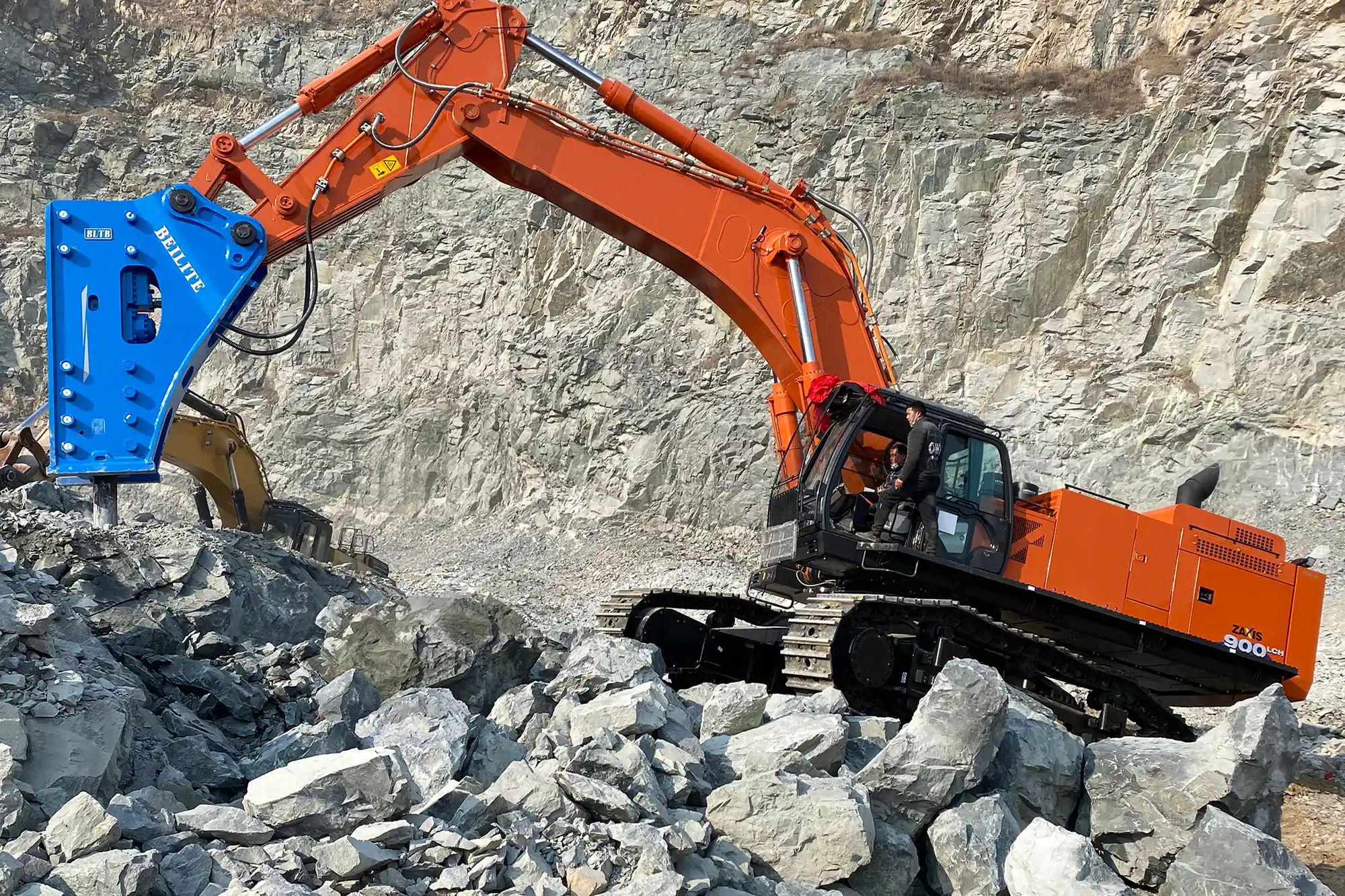
High-performance hydraulic breakers handle the most demanding rock fragmentation tasks across construction and mining operations. These excavator attachments deliver concentrated impact energy where it matters. Beilite Machinery Co., LTD’s BLT hydraulic breakers and BLTB series represent the current state of hydraulic breaking technology. The hydraulic hammers are engineered for operational efficiency and equipment durability, meeting national standards while performing in conditions that push equipment to its limits.
The BLT and BLTB series feature optimized hydraulic power systems paired with advanced chisel types. This combination ensures maximum energy transfer to rock surfaces, enabling rapid and precise breaking. The range of heavy duty breakers covers excavator sizings from mini-excavators through large carriers, so equipment matching stays straightforward regardless of project scale.
How do hydraulic breakers enhance boulder fragmentation efficiency?
Hydraulic breakers enhance boulder fragmentation efficiency through their hydraulic breaker mechanism, which delivers rapid, high-frequency impacts that transfer substantial energy directly into rock. The precise breaking action exploits natural fracture planes, reducing the total force required to achieve fragmentation. Controlled impact frequency and energy transfer minimize over-breaking and material waste. The result shows up in faster operational speed, reduced vibration transmission to surrounding structures, and measurably improved productivity across the worksite.
The following BLT hydraulic breaker models cover a range of applications:
| Modèle | Weight (kg) | Diamètre du ciseau (mm) | Pression de fonctionnement (bar) | Fréquence du souffle (bpm) | Excavateur applicable (t) |
|---|---|---|---|---|---|
| BLT-40 | 86 | 40 | 90-120 | 800-1400 | 0.5-1.2 |
| BLT-75 | 466 | 75 | 120-150 | 400-800 | 6-8.5 |
| BLT-100 | 986 | 100 | 150-170 | 350-700 | 10-14 |
| BLT-140 | 1910 | 140 | 160-180 | 350-500 | 20-24 |
| BLT-165 | 3149 | 165 | 210-230 | 150-300 | 33-38 |
Equipment Selection and Operational Practices That Protect Performance
Strategic heavy equipment selection determines whether boulder fragmentation proceeds smoothly or becomes a source of ongoing problems. Project planning starts with thorough site assessment, examining rock characteristics and project scale before any equipment arrives. Matching the hydraulic breaker to excavator sizing and confirming attachment compatibility prevents the performance losses that come from mismatched systems. Operator training matters just as much as equipment quality—skilled operators extract maximum efficiency while extending equipment lifespan through proper technique.
Preventive maintenance schedules keep equipment running and minimize unplanned downtime. Regular checks of hydraulic fluid levels and system integrity catch problems before they escalate. Attention to fuel efficiency and optimization of operational techniques contributes to favorable project cost analysis and protects margins over the life of a project.
Safety and Environmental Responsibility in Rock Breaking Operations
Rock breaking safety and environmental responsibility cannot be treated as secondary concerns. Regulatory compliance and comprehensive site management form the baseline for every fragmentation project. Robust risk assessment procedures identify potential hazards before work begins, allowing mitigation measures to be built into operational plans.
Dust control measures like water suppression protect air quality and worker health. Noise reduction strategies—including quieter equipment selection and operational scheduling—minimize impact on surrounding communities. Vibration monitoring protects the structural integrity of nearby infrastructure. PPE (Personal Protective Equipment) requirements apply to all personnel within exclusion zones without exception. Environmental impact assessment guides sustainable practices and keeps projects aligned with permit conditions.
What are the safety considerations when breaking large rocks?
Breaking large rocks involves significant rock fragmentation hazards that require systematic management. Key safety measures include establishing clear exclusion zones for falling rock protection and flying debris. All operators and ground staff must wear appropriate PPE (Personal Protective Equipment), including hard hats, safety glasses, and hearing protection. Adherence to safe operating procedures for heavy machinery prevents the accidents that occur when shortcuts become routine. Regular equipment inspections and proper maintenance address mechanical risks before they create dangerous situations.
Where Boulder Fragmentation Technology Is Heading
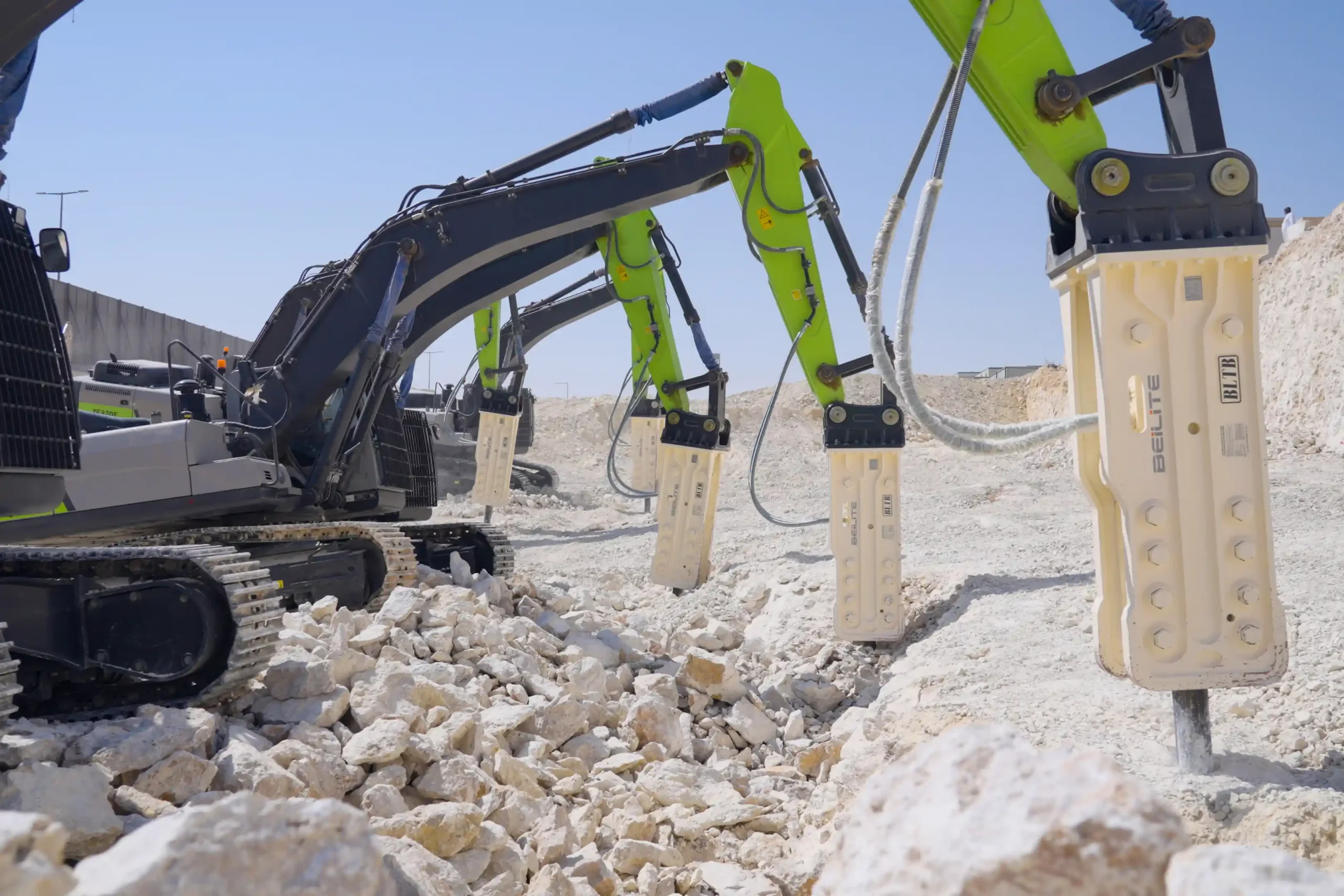
Boulder fragmentation technology continues evolving toward greater efficiency, improved safety margins, and reduced environmental impact. Smart hydraulic breakers that integrate sensors and data analytics for real-time performance optimization are moving from development into field deployment. Automation in mining and remote control demolition systems enhance operator safety while enabling precision that manual operation cannot match.
Advanced materials are extending the durability and impact resistance of breaking tools, reducing replacement frequency and associated costs. Energy efficiency improvements lower operational costs while shrinking environmental footprints. Predictive maintenance powered by AI in construction minimizes unexpected downtime by identifying component wear before failure occurs. These developments support sustainable quarrying and construction practices as regulatory and market pressures continue to increase.
Partner with Beilite for Your Rock Fragmentation Needs
For over two decades, Beilite Machinery Co., LTD has been at the forefront of hydraulic breaker innovation. We set national standards and earn trust globally. Our BLT and BLTB series are engineered for unparalleled performance, durability, and efficiency in the most demanding rock fragmentation challenges. Discover how Beilite’s high-end hydraulic breakers can optimize your operations and elevate your project success. Contact our experts today for a tailored consultation or to explore our advanced product range.
Courriel : [email protected]
Téléphone : 40008-40008
Frequently Asked Questions About Boulder Fragmentation
How does rock hardness affect the choice of breaking equipment?
Rock hardness, measured on the Mohs scale, directly determines the equipment power and method required for effective fragmentation. Harder rocks need higher impact energy and more robust chisel materials to achieve acceptable breaking rates. Very hard granite requires heavy-duty hydraulic breakers with substantial impact force, while softer limestone responds well to smaller units or mechanical splitting approaches. Matching equipment to hardness prevents premature wear and keeps production on schedule.
What maintenance is required for hydraulic breakers used in heavy-duty rock breaking?
Regular hydraulic breaker maintenance protects both performance and equipment longevity. Daily routine checks should identify leaks and damage before they worsen. Proper lubrication of the chisel and bushings prevents accelerated wear. Timely wear parts replacement keeps impact energy transfer at designed levels. Operators must monitor hydraulic fluid quality and levels, replacing seal kits as needed to prevent internal damage and maintain optimal operating pressure throughout the equipment’s service life.
Can hydraulic breakers be used for underwater rock fragmentation?
Specialized hydraulic breakers designed for underwater demolition and subsea rock breaking are available for marine applications. These units feature sealed housings and corrosion-resistant components that withstand saltwater exposure and the pressures of submerged operation. Marine construction projects including harbor deepening, pipeline trenching, and bridge foundation work rely on these specialized units. Underwater applications require specific operational protocols and personnel trained in the additional safety considerations that come with working beneath the surface.