 Anglais
 Français
Break Concrete Effectively: Advanced Techniques and Hydraulic Breakers
Breaking concrete isn’t just about raw force. It’s about understanding where the material wants to fail and giving it a reason to do so. After years of working with demolition crews and equipment operators, I’ve learned that the difference between a smooth job and a frustrating one often comes down to method selection and machine matching. This piece walks through the core techniques, equipment considerations, and operational realities of concrete demolition, with particular attention to hydraulic breakers and how they perform across different project types.
How Concrete Fails and Why That Matters for Demolition
Concrete resists compression remarkably well but handles tension poorly. That weakness is the entry point for most demolition strategies. Impact tools like hydraulic breakers exploit this by delivering concentrated force that initiates cracks along the material’s natural fault lines. Once a crack starts, it propagates quickly through the tensile-weak matrix.
Three primary approaches dominate the field. Percussive breaking uses high-energy impacts from brise-roche hydraulique Hammer attachments to shatter concrete directly. This method handles large volumes and thick sections efficiently. Bursting relies on hydraulic or chemical expansion to create controlled fractures, which works well in noise-sensitive environments where vibration limits apply. Diamond sawing provides precision cuts but moves slowly and generates slurry, making it better suited for surgical removals than bulk demolition.
Reinforced concrete complicates everything. The embedded rebar resists fracture patterns and can bind tools, so these jobs often require a combined approach. Initial cuts might define section boundaries, followed by percussive breaking for mass removal. The rebar then needs separate handling, either cut in place or extracted with the concrete chunks.
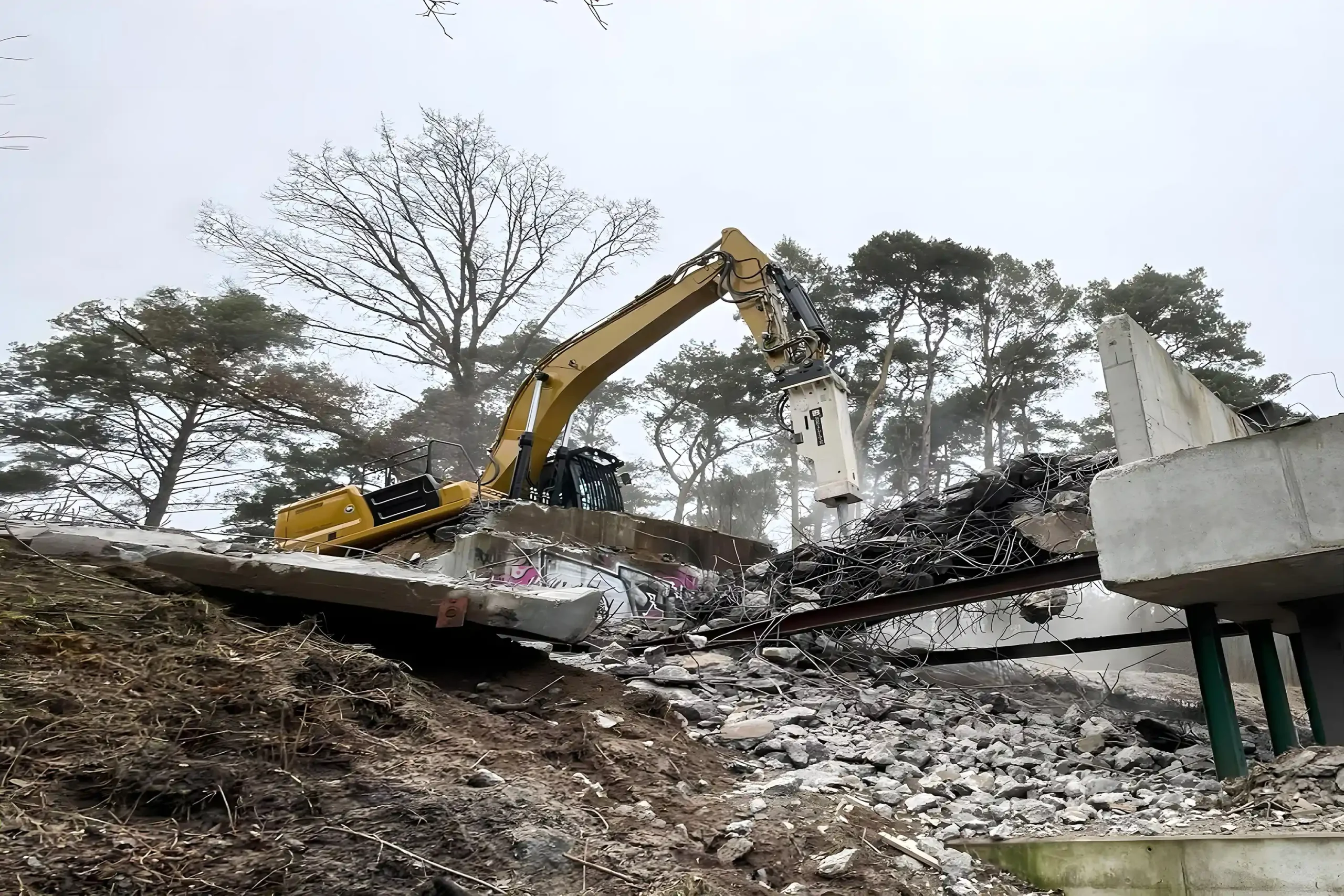
Choosing the right method depends on several intersecting factors. Concrete thickness and reinforcement density determine how much energy you need. Site access affects equipment size. Environmental constraints like noise ordinances or proximity to sensitive structures may rule out certain approaches entirely. High-strength concrete mixes require more robust equipment and longer operational windows.
| Method | Primary Mechanism | Avantages | Inconvénients | Application optimale |
|---|---|---|---|---|
| Hydraulic Breaking | Percussive Impact | High efficiency, versatile | Noise, vibration, dust | Large-scale demolition, hard materials |
| Hydraulic Bursting | Expansion Force | Low noise, low vibration, controlled | Slower, limited to pre-drilled holes | Sensitive sites, precise removal |
| Diamond Sawing | Abrasive Cutting | Precision, smooth edges, low vibration | Slow, generates slurry, high cost per cut | Controlled cuts, structural modifications |
| Chemical Demolition | Expansion Reaction | Very low noise/vibration, non-explosive | Slow reaction time, temperature-dependent | Confined spaces, noise-sensitive areas |
Getting the method right from the start saves time, reduces equipment wear, and keeps the project on schedule. The wrong choice often becomes obvious only after delays have already accumulated.
To learn more about how hydraulic breakers are used in urban environments, consider reading 《Hydraulic Breaker for Municipal Engineering, Urban Road & Utility Works》.
Matching Equipment to the Job
Equipment selection can make or break a concrete demolition project. Hydraulic breakers convert the hydraulic power from excavators into high-frequency percussive blows, and the range of available models means there’s usually a good match for any given task. The key is understanding what each configuration does well.
Tool geometry matters more than many operators realize. Chisel tools concentrate force for initial penetration and work well for general demolition. Blunt tools handle secondary breaking and size reduction. Conical tools split the difference, offering reasonable penetration with broader fracture patterns. The breaker’s impact energy, operating pressure, and blow frequency all interact to determine actual performance. A BLT-100 model running on a 10–14 t excavator delivers 350–700 blows per minute at 150–170 bar, which provides substantial breaking power for mid-range applications.
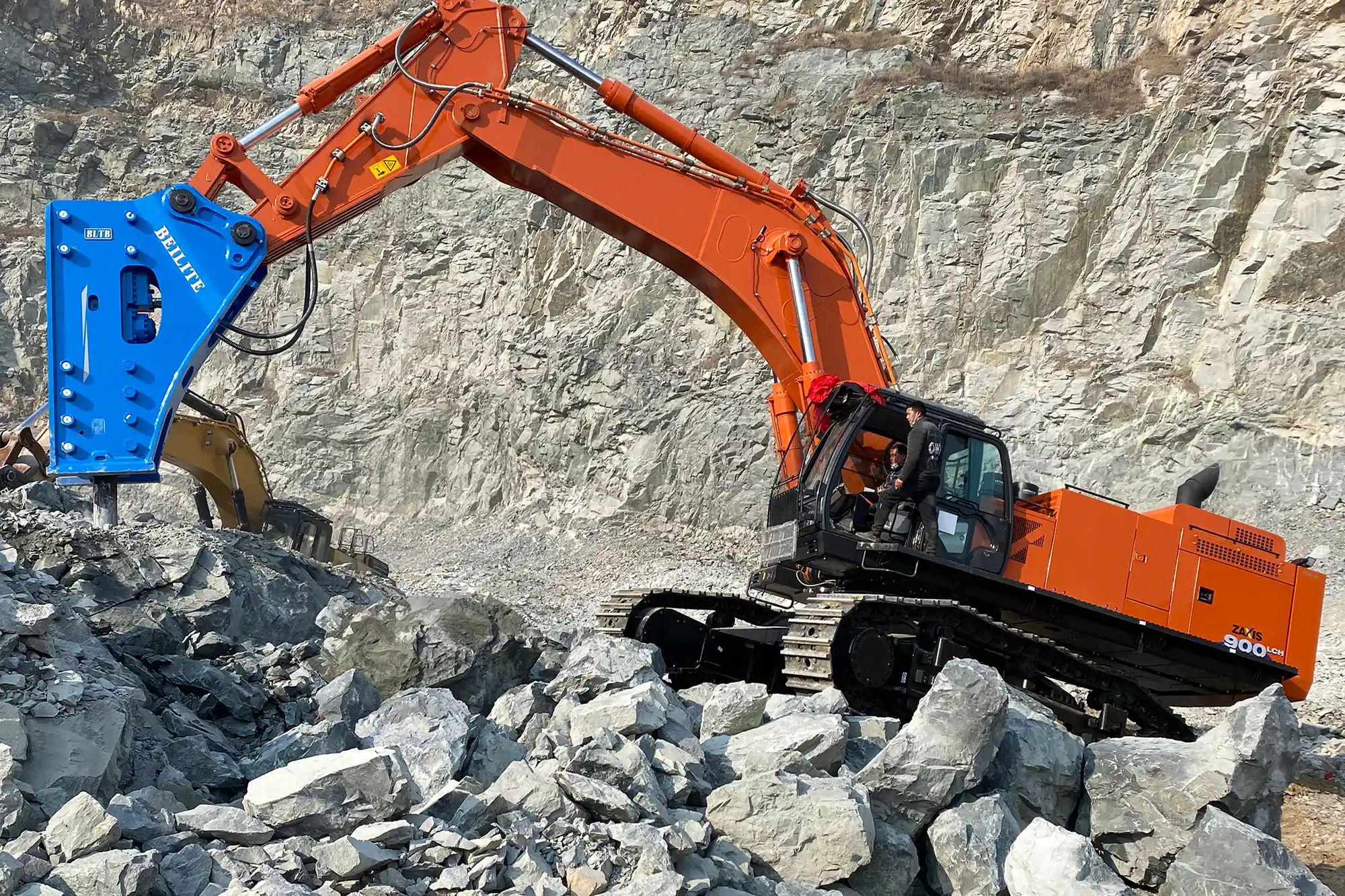
Beilite Machinery’s BLT and BLTB series cover the full spectrum of carrier sizes. For mini excavator concrete breaking in tight spaces, the BLT-40 (0.5–1.2 t excavators) and BLT-45 (0.8–1.5 t excavators) deliver respectable performance without overwhelming the machine. Larger operations benefit from models like the BLT-155, designed for 27–33 t excavators, which brings serious impact energy to heavy-duty work.
| Modèle | Applic. Excavator | Poids du disjoncteur | Diamètre du ciseau | Pression de service | Fréquence d'impact | Optimal Use |
|---|---|---|---|---|---|---|
| BLT-40 | 0.5-1.2 t | 86 kg | 40 mm | 90-120 bar | 800-1400 bpm | Small-scale demolition, confined spaces |
| BLT-75 | 6-8.5 t | 466 kg | 75 mm | 120-150 bar | 400-800 bpm | Medium-scale demolition, general construction |
| BLT-125 | 14-18 t | 1357 kg | 125 mm | 150-170 bar | 350-650 bpm | Large concrete structures, heavy demolition |
| BLT-155 | 27-33 t | 2610 kg | 155 mm | 200-220 bar | 200-300 bpm | Very heavy-duty demolition, primary rock breaking |
| BLT-165 | 33-38 t | 3149 kg | 165 mm | 210-230 bars | 150-300 bpm | Extreme demolition, quarrying, large rock breaking |
Mismatching the breaker to the carrier creates problems in both directions. An undersized breaker struggles to make progress and wears out faster. An oversized unit stresses the excavator’s hydraulics and frame, leading to premature failures. Getting the pairing right maximizes productivity while protecting both pieces of equipment.
How do I choose the right hydraulic breaker for my concrete demolition project?
Start with the concrete structure’s size and composition, since these determine the impact energy you need. Match the breaker’s weight and hydraulic flow requirements to your excavator’s specifications. A BLT-40 works well on 0.5–1.2 t machines for lighter tasks, while a BLT-155 suits 27–33 t excavators handling heavy demolition. Select chisel geometry based on the material and desired outcome. Conical tips work for general breaking, blunt tools for secondary reduction. If you’re uncertain, consulting equipment specifications and application guides usually clarifies the decision.
For more information on selecting the right equipment for smaller machines, check out 《Hydraulic Hammer Breaker For Mini Excavator,Mini Excavator Breaker》.
Safety and Environmental Management
Demolition sites present real hazards, and concrete breaking operations concentrate several of them in one location. Dust, noise, flying debris, and structural instability all require active management. OSHA guidelines mandate comprehensive site safety plans that include hazard assessments, exclusion zones, and appropriate personal protective equipment. The statistics on preventable demolition accidents make the case for rigorous planning.
Dust control during concrete breaking protects respiratory health and maintains visibility. Water suppression systems, either integrated into the brise-roche hydraulique Hammer or applied externally, reduce airborne particulate matter effectively. Silica dust from concrete poses long-term health risks, so this isn’t an area where shortcuts make sense. Noise reduction matters both for worker protection and community relations. Silenced breakers, noise barriers, and scheduling considerations all contribute to keeping sound levels manageable.
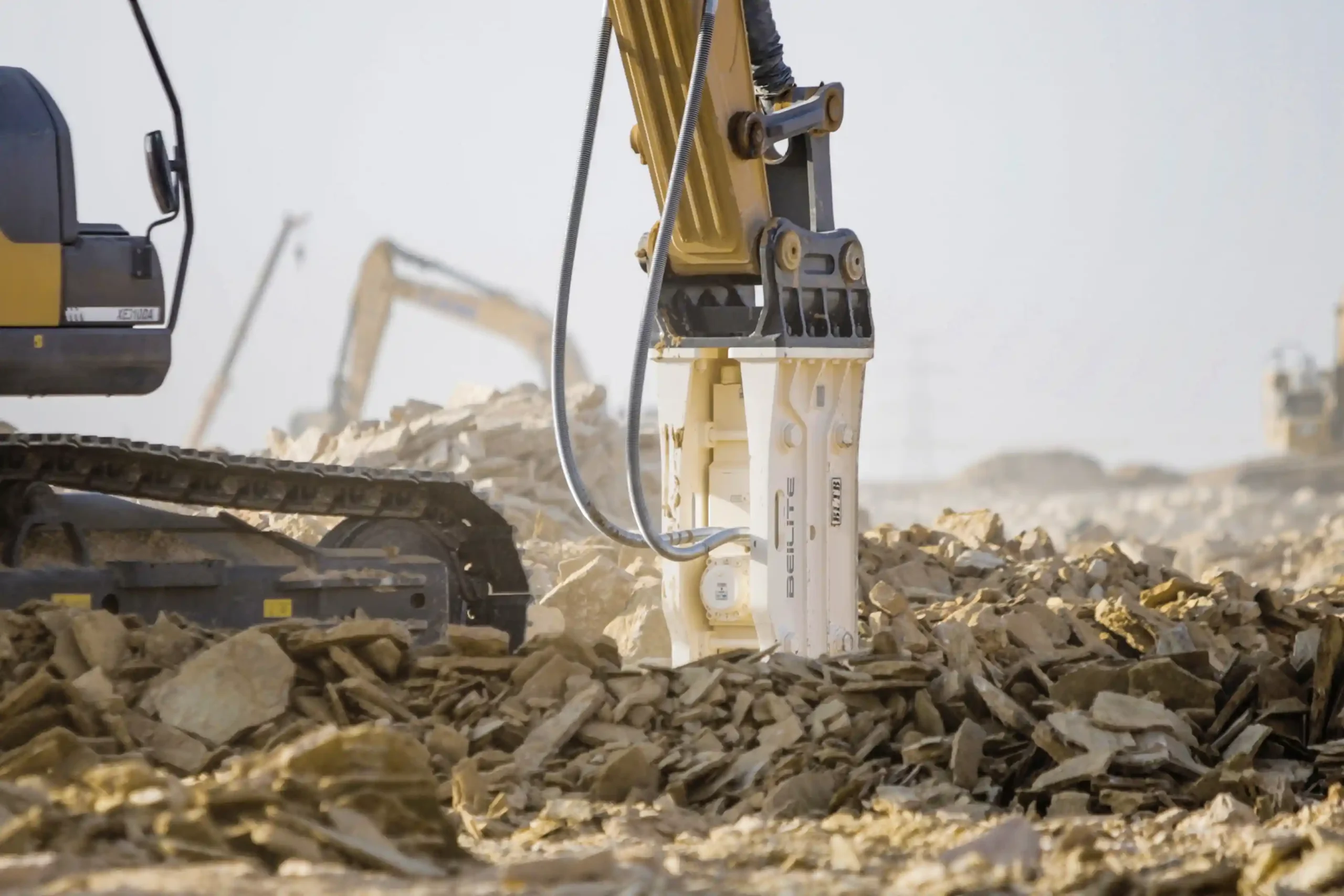
Environmental responsibility extends to debris handling. Concrete recycling diverts material from landfills and produces aggregate suitable for new construction. Crushed concrete finds use in road base, fill material, and even new concrete mixes. A clear waste management plan that prioritizes recycling reduces disposal costs and supports sustainability goals.
| Safety Aspect | Best Practice | Rationale |
|---|---|---|
| Équipements de protection individuelle | Hard hats, safety glasses, hearing protection, respirators | Protects against impact, dust, noise, and flying debris |
| Exclusion Zones | Clearly marked areas around active demolition | Prevents unauthorized entry and protects bystanders from hazards |
| Dust Suppression | Water spray, vacuum systems, specialized breaker shrouds | Reduces airborne silica dust, improving air quality and worker health |
| Lutte contre le bruit | Silenced breakers, noise barriers, scheduling | Minimizes noise pollution for workers and surrounding communities |
| Structural Integrity | Regular assessment by structural engineers | Prevents unexpected collapse and ensures stability during demolition |
These measures represent baseline requirements rather than optional extras. Projects that treat safety as an afterthought tend to experience delays, injuries, and regulatory problems that cost far more than proper planning would have.
Handling Reinforced and Large-Scale Concrete Structures
Reinforced concrete and massive structural elements demand more than standard breaking techniques. The steel rebar embedded in reinforced sections increases tensile strength significantly, which means the material resists the fracture patterns that work well on plain concrete. A multi-phase approach usually produces better results.
Pre-weakening the structure helps. Creating initial stress points or partial cuts with diamond saws before applying the hydraulic breaker isolates sections and reduces overall resistance. The breaker then works more efficiently because it’s not fighting the entire structure’s integrity at once. Sequential breaking patterns also matter. Systematic approaches that start from edges or follow pre-defined cut lines optimize crack propagation and reduce wasted energy compared to random impact placement.
Heavy-duty hydraulic breakers like the BLT-155 and BLT-165 are engineered for these demanding conditions. Their robust construction and high impact energy handle massive concrete sections that would stall lighter equipment. Performance under extreme working conditions, from mining and quarrying to large-scale infrastructure demolition, demonstrates what these machines can deliver when properly applied.
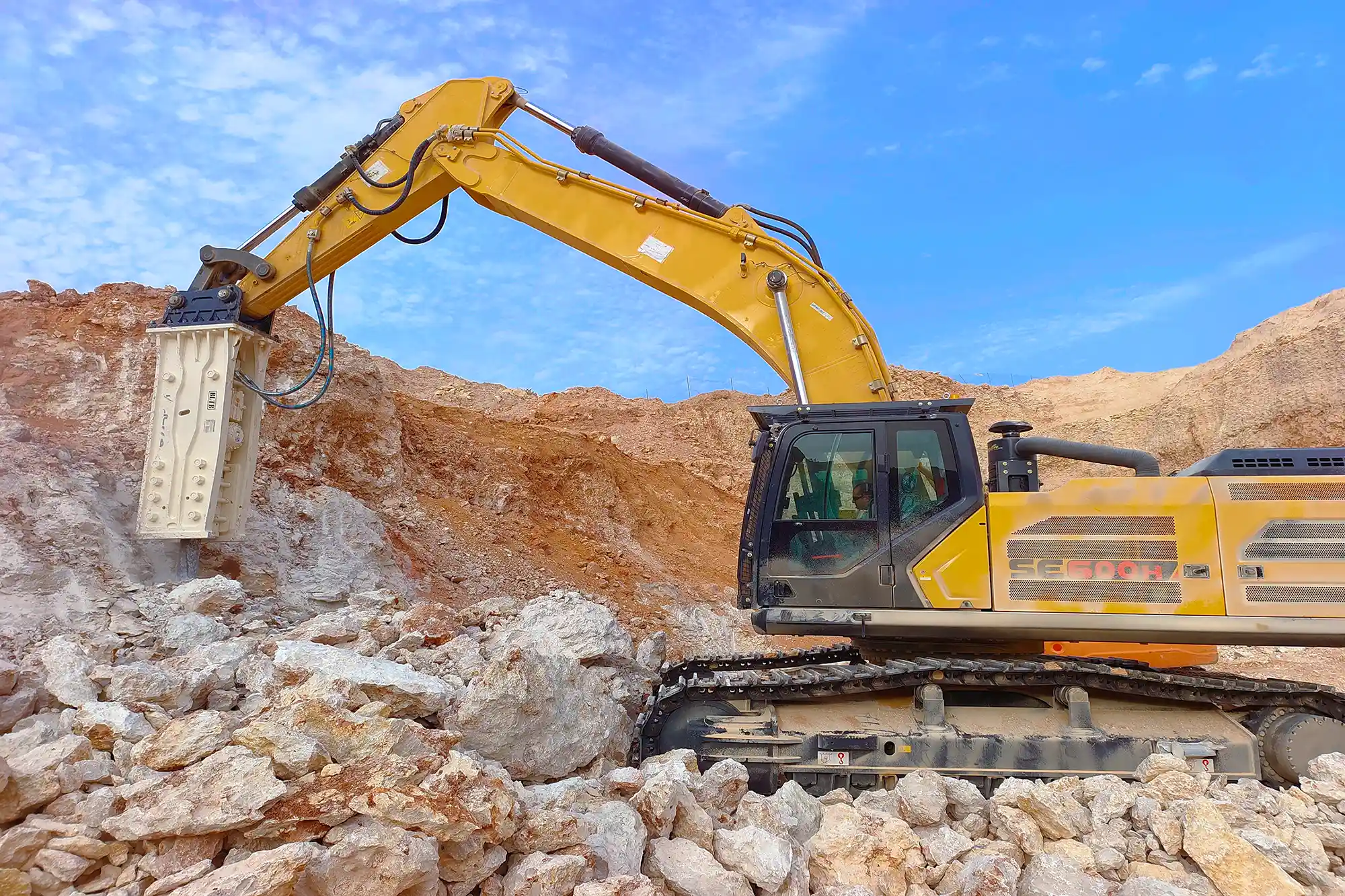
A recent bridge demolition project illustrated these principles clearly. The BLT-140 breaker systematically broke down heavily reinforced concrete piers through controlled force application and strategic breaking patterns. Large sections came away rapidly and safely, keeping the project timeline intact despite the structural complexity.
What are the common challenges when breaking reinforced concrete?
Rebar entanglement tops the list. Steel bars resist fracture and can bind the breaker tool, which reduces efficiency and accelerates wear. The composite nature of concrete and steel demands higher impact energy and specialized chisel attachments designed for cutting rebar. Vibration management becomes more critical with reinforced structures because the energy transfer patterns differ from plain concrete. Solutions include breakers with optimized energy transfer characteristics, specific breaking patterns that isolate vibrations, and chisel designs with rebar-cutting capabilities.
Controlling Costs and Maximizing Productivity
Project efficiency in concrete removal depends on planning as much as execution. Site preparation sets the foundation. Clear access routes, designated debris staging areas, and proper utility disconnections prevent delays that compound throughout the project. Poor site layout creates bottlenecks that slow material handling and extend timelines.
Debris management represents a significant cost variable. Sorting, transporting, and disposing of concrete debris can consume a substantial portion of the budget if handled carelessly. Concrete recycling reduces landfill fees and sometimes generates revenue from the recycled material. Post-demolition cleanup should be part of the project plan from the start, not an afterthought that delays subsequent construction phases.
Equipment maintenance directly affects uptime and asset lifespan. Regular inspections, adherence to service schedules, and prompt replacement of wear parts prevent breakdowns that halt progress. For hydraulic breakers, consistent lubrication and proper nitrogen pressure checks are basic requirements that pay dividends in reliability.
| Aspect | Efficiency Practice | Cost-Effectiveness Benefit |
|---|---|---|
| Site Preparation | Clear access, utility mapping, debris staging | Reduces delays, optimizes material flow, prevents utility damage |
| Equipment Selection | Matching breaker to task and carrier | Maximizes productivity, minimizes fuel consumption |
| Operator Training | Certified and experienced operators | Reduces errors, enhances safety, extends equipment life |
| Debris Management | On-site crushing, recycling, efficient transport | Lowers disposal costs, generates revenue from recycled materials |
| Preventative Maintenance | Regular inspections, scheduled servicing, fluid checks | Minimizes downtime, avoids costly repairs, prolongs asset life |
Professional concrete breaking operations leverage these practices consistently. The cumulative effect of good planning, proper equipment matching, trained operators, and proactive maintenance shows up in project outcomes that meet both timeline and budget targets.
BEILITE Machinery Brings Proven Performance to Concrete Demolition
BEILITE Machinery Co., Ltd., established in 2002, is a national high-tech enterprise in China, focusing on the R&D and manufacturing of high-end brise-roche hydraulique Hammer. We have pioneered numerous core technologies and participated in national standard formulation for hydraulic breakers in China, holding hundreds of patents. Our BLT and BLTB brand products are trusted globally across over 100 countries and regions, covering diverse working conditions including mining, demolition, tunneling, and underwater applications. Contact us at [email protected] or 40008-40008 for expert consultation and discover how our robust, reliable solutions can enhance your operational efficiency and safety.
Frequently Asked Questions About Concrete Breaking
What are the safest methods for breaking concrete on a construction site?
Safe concrete breaking combines proper personal protective equipment, site-specific safety plans, and appropriate tools. Hydraulic breakers with dust suppression systems address multiple hazards simultaneously. Operator training and certification matter because equipment misuse causes many preventable incidents. Clear exclusion zones keep unauthorized personnel away from active work areas. A thorough risk assessment before any concrete slab removal identifies site-specific hazards that generic protocols might miss.
How can I minimize dust and noise during concrete breaking operations?
Water suppression at the point of impact reduces dust most effectively. Hydraulic breakers designed for lower noise emissions help with sound levels, and noise barriers or enclosures provide additional reduction when needed. Regular equipment maintenance prevents the excessive noise and vibrations that develop as components wear. Scheduling noisy operations during off-peak hours addresses community impact, which can be as important as on-site considerations for projects in populated areas.
What is the lifespan of a typical hydraulic breaker, and how can I extend it?
A well-maintained brise-roche hydraulique Hammer can operate for many years and thousands of hours. Lifespan depends heavily on operational practices and maintenance consistency. Following manufacturer service schedules, using correct hydraulic oil, avoiding blank firing, and ensuring proper storage all contribute to longevity. Regular inspections catch wear before it causes failures. Nitrogen pressure checks and consistent lubrication are basic requirements that make a measurable difference in equipment life.