 English
 French
Environmental Impact of Hydraulic Breakers Demolition
Demolition work reshapes cities, but the equipment doing the heavy lifting leaves its own mark on the environment. Hydraulic breakers sit at the center of this tension. They get the job done, yet they generate noise, kick up dust, and burn fuel in the process. The question isn’t whether these impacts exist—they clearly do—but what can actually be done about them without sacrificing the productivity that makes projects viable.
The Full Picture of Equipment Impact
Looking at the ecological footprint of demolition equipment means tracking more than just what happens on site. The story starts in manufacturing, runs through years of operation, and ends with disposal or recycling. Resource consumption, energy efficiency, and waste generation all factor into the equation at each stage.
When you break it down this way, patterns emerge. Hydraulic systems that run cleaner tend to last longer. Equipment built with recyclable materials creates less end-of-life waste. Manufacturing processes that minimize resource use often produce more reliable machines. These connections point toward practical improvements rather than abstract goals. The real challenge lies in designing equipment that performs well while consuming less across its entire lifespan.
Sound and Shake
Hydraulic breakers are loud. There’s no getting around it. Operating levels regularly push past 100 dB, well above what regulators consider safe for extended exposure. Workers face hearing damage risks. Neighbors file complaints. Project timelines get squeezed by noise ordinances that limit working hours.
Ground vibrations add another layer of concern. Nearby buildings can suffer structural stress. Residents feel the rumble through their floors. These aren’t minor inconveniences—they’re legitimate problems that affect project feasibility and community relations.
Equipment design can address both issues, though perfect silence remains out of reach. The BLT-150, built for 24-27 ton excavators and running at 180-200 bar working pressure, incorporates an enclosed power cell specifically to manage noise and vibration output.
| Breaker Model | Applicable Excavator (t) | Working Pressure (bar) | Typical Noise Level (dB) | Vibration Reduction Features |
|---|---|---|---|---|
| BLT-40 | 0.5–1.2 | 90–120 | 95-100 | Integrated dampening |
| BLT-75 | 6–8.5 | 120–150 | 100-105 | Advanced housing design |
| BLT-125 | 14–18 | 150–170 | 105-110 | Multi-stage absorption |
| BLT-150 | 24–27 | 180–200 | 108-112 | Enclosed power cell |
| BLT-165 | 33–38 | 210–230 | 110-115 | Optimized piston stroke |
What Goes Into the Air
Pulverizing concrete and rock creates airborne particles. PM2.5 and PM10 levels spike during active breaking. Silica dust presents particular respiratory hazards that have been well documented in occupational health research.
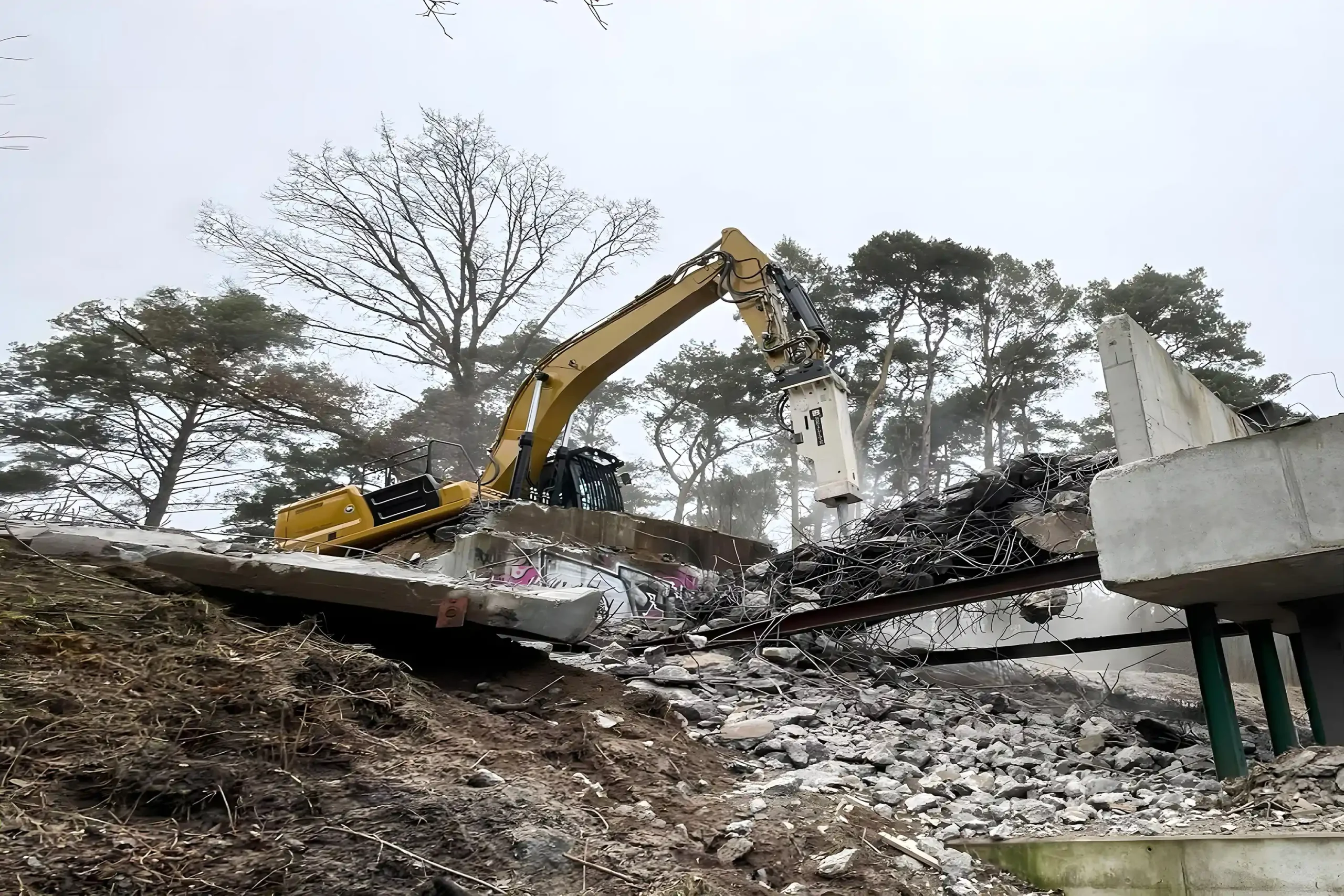
These emissions affect everyone in the vicinity. Workers breathe it in despite protective equipment. Surrounding areas see air quality decline during active demolition phases. The particles travel farther than most people expect, especially on windy days.
Water suppression systems help. Proper site ventilation makes a difference. But the fundamental reality is that breaking hard materials into smaller pieces releases what was bound up inside them. Managing this requires planning, not just equipment selection.
Building Better Breakers
Reducing environmental impact through equipment design involves trade-offs and incremental gains rather than revolutionary breakthroughs. Enhanced soundproofing adds weight. Vibration dampening systems require maintenance. More efficient hydraulics cost more upfront but save fuel over time.
Current development efforts focus on several fronts simultaneously. Hydraulic system efficiency improvements reduce fuel consumption and exhaust output. Better sealing prevents fluid leaks that contaminate soil. Modular designs allow worn components to be replaced rather than scrapping entire units.
The goal isn’t perfection. It’s measurable improvement that holds up under real working conditions. Equipment that performs beautifully in lab tests but fails in the field helps nobody.
Playing by the Rules
Environmental regulations vary by jurisdiction, but the general direction is clear: stricter limits on noise, dust, and waste disposal. ISO 14001 provides a framework that many operations use to structure their environmental management systems.
Compliance requires more than purchasing the right equipment. Site management plans, operator training, regular maintenance schedules, and material recycling programs all contribute. The companies that treat these requirements as opportunities rather than burdens tend to find competitive advantages in bidding for projects with environmental stipulations.
Where Things Are Headed
Electric hydraulic breakers exist today, though battery technology and charging infrastructure limit their practical application on many sites. Hybrid systems offer a middle path, reducing emissions without eliminating fuel dependence entirely.
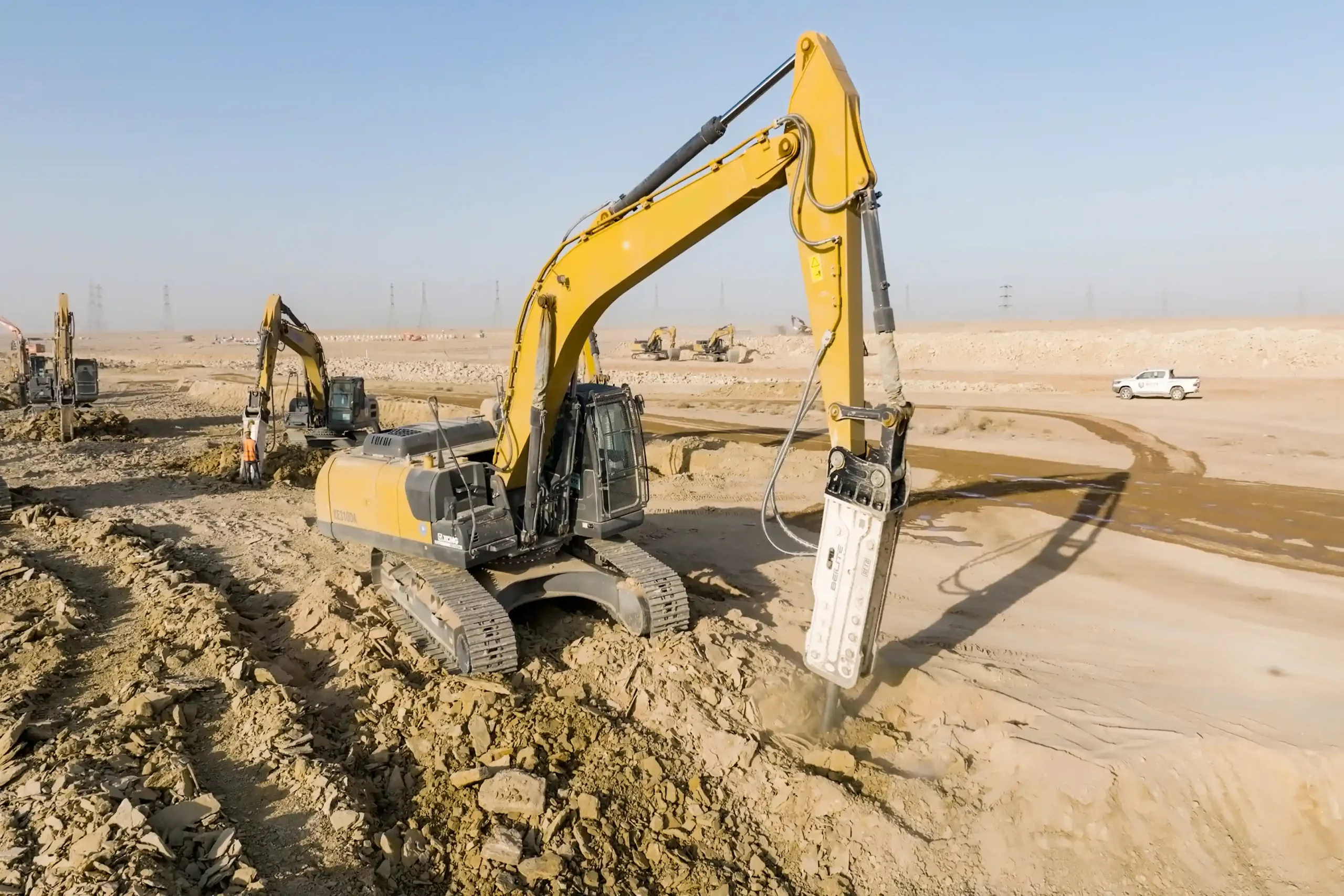
Material science advances promise more durable components that last longer and recycle more easily. Circular economy principles are gaining traction, with more emphasis on reusing demolition materials rather than hauling everything to landfills.
The pace of change depends partly on regulation, partly on technology development, and partly on what project owners are willing to pay for. Zero-emission construction equipment will become standard eventually. The timeline remains uncertain.
Partner with Beilite for Sustainable Demolition Solutions
Elevate your project’s environmental performance with Beilite Machinery Co., LTD.’s advanced hydraulic breakers. Our commitment to innovation and sustainability ensures powerful, efficient, and responsible demolition solutions. Contact us today at [email protected] or 40008-40008 to discuss your specific needs and discover how our high-tech equipment can meet stringent ecological standards while delivering unparalleled productivity.
How do hydraulic breakers contribute to noise pollution on construction sites?
Hydraulic breakers generate significant noise pollution through impact forces and engine operation. Beilite’s advanced designs incorporate sound-dampening technologies and optimized hydraulic systems to minimize noise levels, adhering to strict environmental regulations and enhancing site conditions. We continuously refine our products to reduce acoustic output.
What measures can mitigate the environmental impact of hydraulic demolition?
Mitigation strategies include using eco-friendly hydraulic fluids, implementing advanced dust suppression systems, employing low-noise and low-vibration hydraulic breakers, and optimizing operational practices. Beilite’s commitment to R&D focuses on integrating these measures into our product lines, promoting cleaner and safer demolition.
Are there eco friendly alternatives to traditional hydraulic breakers?
While fully “eco-friendly” alternatives are still evolving, advancements in electric-powered hydraulic breakers and hybrid models are reducing emissions and noise. Beilite invests in continuous innovation to develop more sustainable and efficient hydraulic breaker technologies, moving towards a greener future for demolition.