 English
 French
Backhoe Hydraulic Breaker Technology A Comprehensive Guide
Selecting the right breaker comes down to matching capacity and impact rating to actual job demands. Get this wrong, and you’re looking at premature wear, structural stress on your carrier, or a machine that simply can’t keep up with production targets. I’ve seen operators push undersized breakers on tough material, burning through tools and downtime in equal measure. The smarter approach starts with honest assessment: what’s your machine capable of, what are you actually breaking, and how hard will you push it day after day? From there, the selection process becomes straightforward.
How Hydraulic Breakers Actually Work
A hydraulic breaker converts hydraulic power from your backhoe into kinetic energy, delivered as repeated high-force impacts to the working tool. The cycle involves hydraulic fluid intake, piston acceleration, impact generation, and return stroke. Each stage matters for performance and equipment longevity.
Hydraulic fluid from the carrier’s pump enters the breaker’s control valve first. This valve directs fluid to the upper chamber, pushing the piston upward. As the piston rises, it compresses nitrogen gas in an accumulator, storing potential energy for the strike. When the piston reaches top position, the control valve shifts and redirects fluid to the lower chamber, forcing the piston downward at high speed.
The descending piston accelerates toward the chisel or moil point. Stored nitrogen energy adds to this acceleration, boosting impact force. When the piston strikes the tool, kinetic energy transfers into the material, fracturing it. The hydraulic system then shifts the control valve again, returning the piston upward for the next cycle. This continuous sequence enables effective material demolition.
Energy transfer efficiency determines how well the breaker performs. Beilite hydraulic breakers maximize this transfer through advanced sealing technologies and precision-machined components, reducing internal wear and maintaining consistent output. Proper hydraulic integration with your backhoe remains equally important. The breaker needs correct oil flow and pressure to operate at full capability.
Performance Metrics That Actually Matter
Evaluating a backhoe hydraulic breaker means looking at specific performance indicators. These metrics reveal whether a breaker fits your application or falls short.
Impact energy measures force per blow, expressed in joules. This determines the breaker’s ability to fracture dense rock or thick concrete. Higher impact energy handles harder materials. Frequency, measured in blows per minute, indicates strike rate. Higher frequency improves productivity on softer materials or thinner sections.
Operating pressure, specified in bar, represents the hydraulic pressure required to power the breaker. Your backhoe’s hydraulic system must meet this requirement. Flow rate, measured in liters per minute, represents fluid volume needed. Mismatched flow causes overheating or reduced performance.
Beilite provides detailed specifications across our BLT and BLTB series. The BLT-40 operates with 15–30 L/min flow and 90–120 bar pressure, delivering 800–1400 bpm. The BLT-165 requires 200–260 L/min and 210–230 bar, achieving 150–300 bpm. These differences highlight why matching breaker to application matters.
Design and Material Advances Worth Knowing
Modern hydraulic breaker technology depends on design refinement and material innovation. These advances improve durability, efficiency, and operating costs. Beilite prioritizes continuous development in both areas.
Our patented technologies optimize internal hydraulic circuits, minimizing pressure losses and maximizing impact efficiency. Unique valve designs ensure rapid piston cycling for consistent, powerful blows. Advanced heat treatment processes extend component service life under extreme conditions. Noise reduction technology, including fully enclosed housings and dampening systems, reduces operational noise levels for better operator comfort and regulatory compliance.
Material science drives product development. We use specialized alloy steels for main bodies and pistons, providing superior strength and wear resistance. Working tools like chisels and moil points use high-grade, abrasion-resistant materials with specific hardening treatments. These materials withstand repetitive high-impact forces without premature failure. Quality materials combined with innovative design produce breakers that perform reliably across diverse applications.
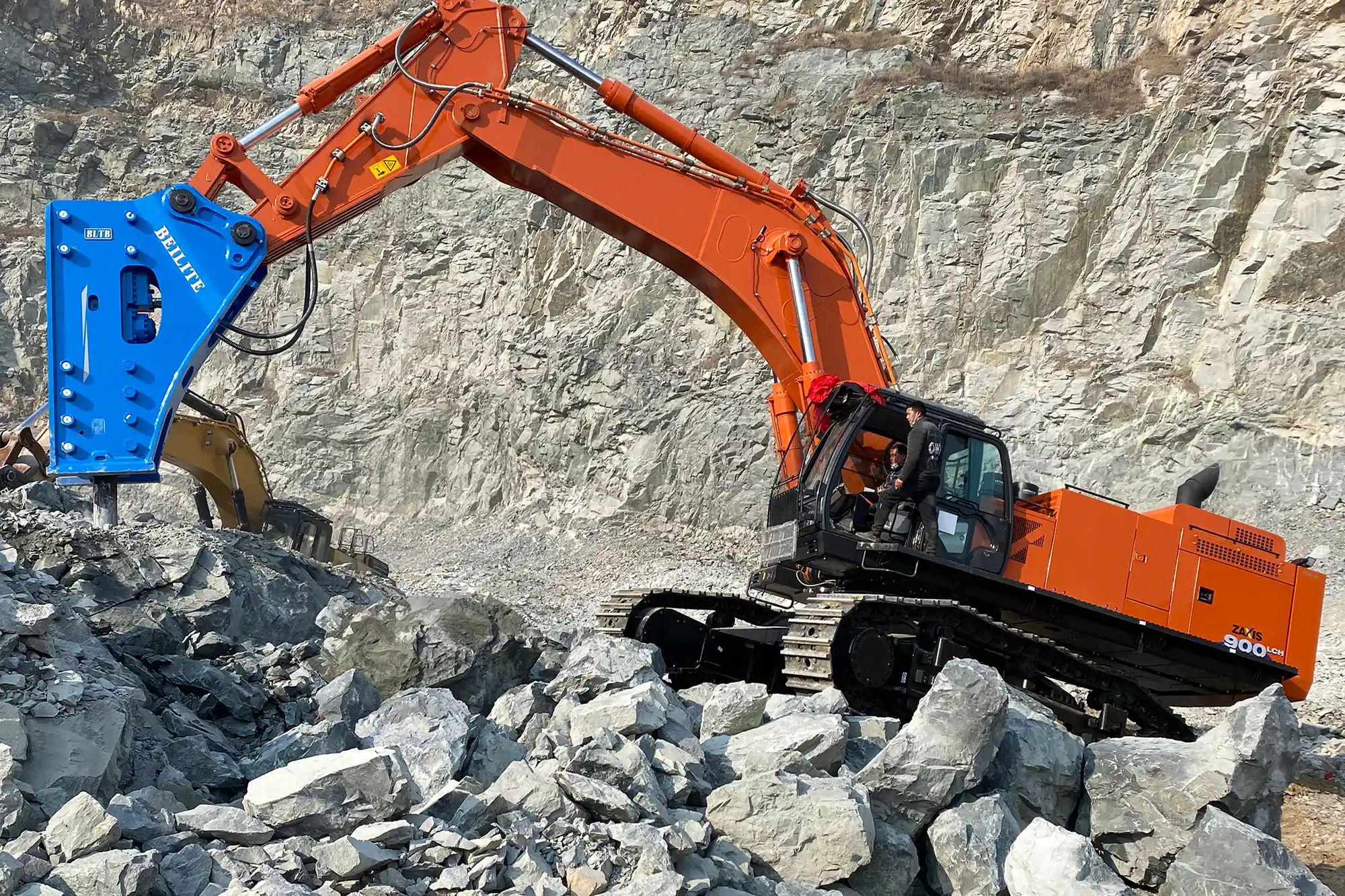
Getting Compatibility Right
Proper compatibility between breaker and carrier machine determines efficiency and equipment lifespan. A mismatch leads to poor performance, accelerated wear, and potential damage to both components.
Weight and power class matching comes first. An oversized breaker destabilizes the backhoe and strains its hydraulic system. An undersized breaker limits productivity and wears itself out through continuous overexertion. Check your backhoe manufacturer’s specifications for permissible attachment weights and hydraulic output.
Hydraulic flow requirements need verification. The backhoe’s auxiliary hydraulic circuit must deliver specified oil flow and operating pressure. Insufficient flow reduces impact power. Excessive flow causes overheating and premature component failure. Our technical team helps clients verify these parameters for seamless integration.
A Practical Selection Process
Selecting the right hydraulic breaker follows a systematic approach that prevents equipment mismatch and unnecessary wear.
Start by assessing backhoe weight class. Breaker manufacturers specify compatible weight ranges. Our BLT-45 suits 0.8–1.5 t excavators, while the BLT-155 fits 27–33 t machines.
Verify hydraulic output next. Check your backhoe’s pump capacity, including maximum oil flow and pressure available for attachments. These values must fall within the breaker’s recommended operating parameters.
Consider application requirements. General demolition might need a versatile chisel tool. Hard rock breaking often requires a moil point with higher impact energy. Factor in material hardness, desired breaking speed, and environmental conditions.
Compare breaker specifications against your needs: impact energy, frequency, operating pressure, and tool diameter. Our product range offers varied specifications for diverse demands.
When uncertainty remains, consult with technical specialists. We provide recommendations based on specific backhoe models and project requirements.
Maintenance That Extends Equipment Life
Effective maintenance maximizes lifespan and operational efficiency for hydraulic breaker attachments. Neglecting routine care accelerates wear, drives up repair costs, and increases downtime.
Regular lubrication of tool bushings and retaining pins reduces friction and prevents wear on critical components. Use high-quality breaker grease at specified intervals, typically every 2-4 hours depending on application severity. Inspect working tools daily for wear, cracks, or bluntness. Worn tools reduce impact efficiency and transmit damaging vibrations back through the breaker.
Monitor hydraulic fluid quality and levels. Contaminated or low fluid causes overheating and damages internal seals and components. Follow your backhoe manufacturer’s recommendations for fluid changes and filter replacements. Check nitrogen gas pressure in the accumulator regularly. Incorrect pressure significantly reduces impact energy and risks internal damage.
Beilite provides detailed maintenance schedules and troubleshooting guides for all BLT and BLTB models. Our service team assists with complex issues and ensures genuine spare parts are used for repairs.
Where Hydraulic Breaker Technology Is Heading
Backhoe hydraulic breaker technology continues evolving, driven by demands for efficiency, sustainability, and intelligent operation. We’re actively involved in shaping these developments.
Smart breaker technology represents one significant direction. Integrated sensors monitor operational parameters like impact energy, frequency, and internal temperature, providing real-time data to operators and maintenance teams. This enables predictive maintenance and performance optimization. Telematics systems will allow remote diagnostics and performance tracking, reducing unexpected downtime.
Environmental considerations drive parallel innovation. Manufacturers are developing breakers with lower noise and vibration levels, minimizing impact on surrounding communities and operators. Advances in hydraulic fluid technology, including biodegradable options, support sustainable construction practices. Beilite invests in these areas, developing next-generation breakers that deliver power while meeting environmental responsibilities.
Features That Improve Efficiency and Longevity
Modern hydraulic breakers incorporate advanced features that enhance efficiency and extend service life, directly reducing operational costs.
Auto-lube systems provide continuous, precise lubrication to tool bushings and critical wear points. This eliminates manual greasing and ensures optimal lubrication during operation, extending wear part life and reducing maintenance downtime.
Anti-blank firing mechanisms prevent the breaker from firing when the tool isn’t contacting material. This protects internal components from damaging idle impacts, preserving the piston and tool.
Energy recovery systems capture and reuse a portion of recoil energy generated during each impact. This energy assists the next piston stroke, increasing overall efficiency and reducing hydraulic power demand from the carrier machine. These features represent continuous technological improvements in backhoe hydraulic breaker design, delivering superior performance and reliability.
Work With Beilite Hydraulic Breaker Technology
BEILITE Machinery Co., LTD. brings over two decades of innovation and hundreds of patents to hydraulic breaker development. Our BLT and BLTB brand products, exported to over 100 countries, deliver the quality and performance that demanding applications require. Contact us for expert consultation and solutions matched to your specific needs. Email: [email protected]
Frequently Asked Questions About Backhoe Hydraulic Breakers
What are the common types of backhoe hydraulic breakers available?
Common types include chisel, moil point, and blunt tools. Chisel tools handle general breaking and trenching. Moil points concentrate force for penetrating hard rock. Blunt tools crush concrete and break softer materials. Selection depends on specific application and material characteristics.
How does the weight of a backhoe impact the choice of hydraulic breaker?
Backhoe weight is critical for breaker selection. A breaker that’s too heavy destabilizes the backhoe, affecting balance and control. A breaker that’s too light won’t provide sufficient power, leading to inefficiency and potential damage to both units. Always match breaker weight to the backhoe’s recommended operating range.
What are the essential safety precautions when operating a backhoe hydraulic breaker?
Wear appropriate personal protective equipment including hard hats, safety glasses, and hearing protection. Ensure the work area is clear of personnel and obstructions. Perform regular pre-operation checks, select proper tools, and avoid blank firing to prevent accidents and equipment damage.
Can Beilite hydraulic breakers be customized for specific backhoe models?
Yes. We offer mounting brackets and hydraulic configurations for compatibility with various backhoe models. Our technical team works with clients to understand specific machine requirements, ensuring proper fit and optimal performance for particular equipment.
What is the typical lifespan of a high-quality backhoe hydraulic breaker?
A high-quality breaker like those from Beilite can last several years to over a decade. Lifespan depends on maintenance adherence, operating conditions, and proper usage. Regular lubrication, correct tool selection, and timely repairs significantly extend operational life.