 Anglais
 Français
Hydraulic Breaker Technology: Advancing Demolition Performance
Selecting the right breaker comes down to matching capacity and impact rating to your actual working conditions. Get this wrong and you end up with structural stress on your carrier, premature wear, or a machine that simply cannot keep pace with production demands. The calculation involves your excavator’s specifications, the material you are breaking, site conditions, and throughput requirements. A well-matched breaker delivers consistent performance, reduces maintenance intervals, and extends the working life of both the attachment and the carrier. What follows covers the key factors that determine whether a breaker will perform or struggle on your jobsite.
How Hydraulic Breaker Systems Have Changed Over Time
Early hydraulic breakers were a step forward from pneumatic tools, but they came with limitations. Impact energy was modest, maintenance cycles were frequent, and reliability in demanding applications was inconsistent. Decades of hydraulic engineering refinement and materials development changed that picture substantially.
Beilite Machinery Co., LTD. has been part of this progression since 2002. The company participated in formulating national standards for hydraulic breakers in China, which speaks to a certain level of technical credibility within the industry. Continuous development since then has pushed toward more robust designs and improved efficiency. Modern breakers from established manufacturers now handle applications that would have been impractical for earlier generations of equipment.
Core Technological Breakthroughs in Breaker Design
Current hydraulic breaker design pulls together several engineering disciplines. Hydraulic circuit optimization ensures that power transfers efficiently from the excavator to the breaker without excessive losses. Material advances in critical wear components extend service intervals. Dampening systems address vibration and noise, which matters both for operator fatigue and for working in noise-sensitive environments.
Beilite’s approach centers on precise piston and valve geometry combined with housing structures built to handle repeated high-energy impacts. The company holds patents in these areas, reflecting genuine investment in design rather than simple manufacturing.
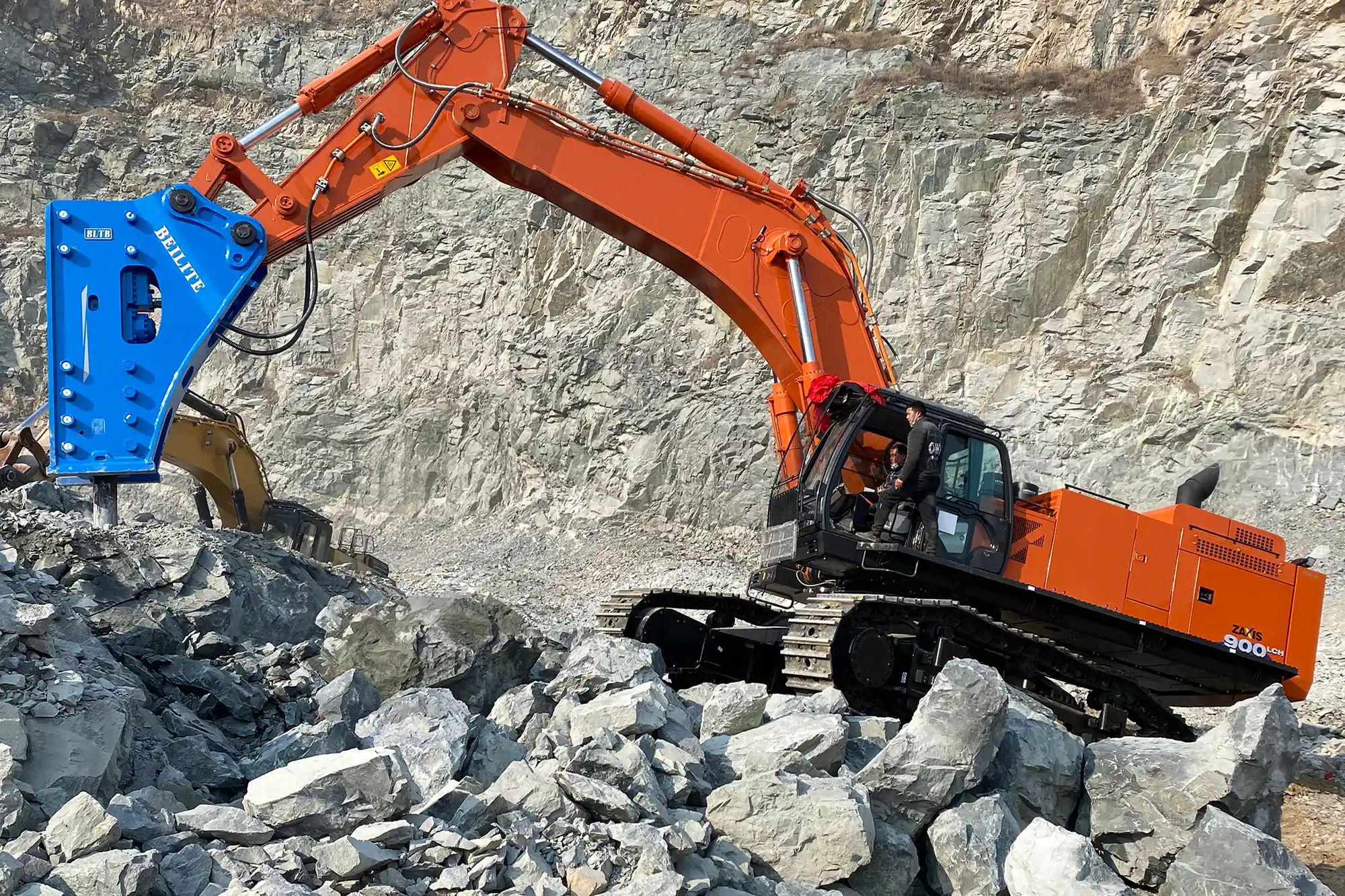
What are the latest advancements in hydraulic breaker design?
Recent development work focuses on energy recovery and materials. Some designs now recapture energy during the piston’s rebound stroke, which improves overall efficiency without requiring additional hydraulic flow. Advanced alloys and heat treatment processes for pistons, bushings, and tool retainers extend component life, particularly in abrasive conditions or high-temperature environments.
These changes produce breakers that hit harder relative to their size while lasting longer between rebuilds. The practical result is lower cost per ton of material broken.
| Feature | Traditional Breakers | Modern Beilite Breakers |
|---|---|---|
| Impact Energy | Moderate | Optimized, High |
| Vibration Reduction | Limited | Amortissement avancé |
| Noise Control | Minimal | Significant Reduction |
| Material Durability | Standard Alloys | Advanced, Heat-Treated Alloys |
| Efficacité énergétique | Conventional | Incorporates Energy Recovery |
Optimizing Operational Efficiency with Advanced Breakers
Better breaker technology shows up directly in production numbers. Higher impact force with faster cycle times means operators complete tasks in less time. That translates to lower fuel consumption, reduced wear on the carrier, and more material moved per shift. Beilite’s BLT and BLTB product lines target these efficiency gains across a range of applications from urban demolition to quarry work.
How does hydraulic breaker technology improve operational efficiency?
Consistent high-impact force combined with optimized hydraulic power delivery produces faster material penetration and breaking rates. When a breaker matches the carrier properly, you see reduced fuel burn because the excavator runs in its efficient operating range rather than straining at the limits. Maintenance costs drop because both the breaker and the carrier accumulate fewer hours for the same volume of work.
The BLT-100, sized for 10-14 ton excavators, operates at 150-170 bar working pressure with striking frequency between 350-700 bpm. That performance envelope handles most medium-duty applications efficiently. The BLT-155, built for 27-33 ton machines, runs at 200-220 bar with 200-300 bpm, suited for heavy rock and reinforced concrete. These specifications matter because they determine whether a breaker will perform steadily or struggle with the material at hand.
Versatile Applications of Modern Hydraulic Breakers
Modern breakers adapt to a wide range of tasks. Rock breaking in mining and quarrying demands sustained high-energy output. Concrete demolition in urban settings requires precision and often noise management. Infrastructure excavation may involve both, plus work in confined spaces or near sensitive structures.
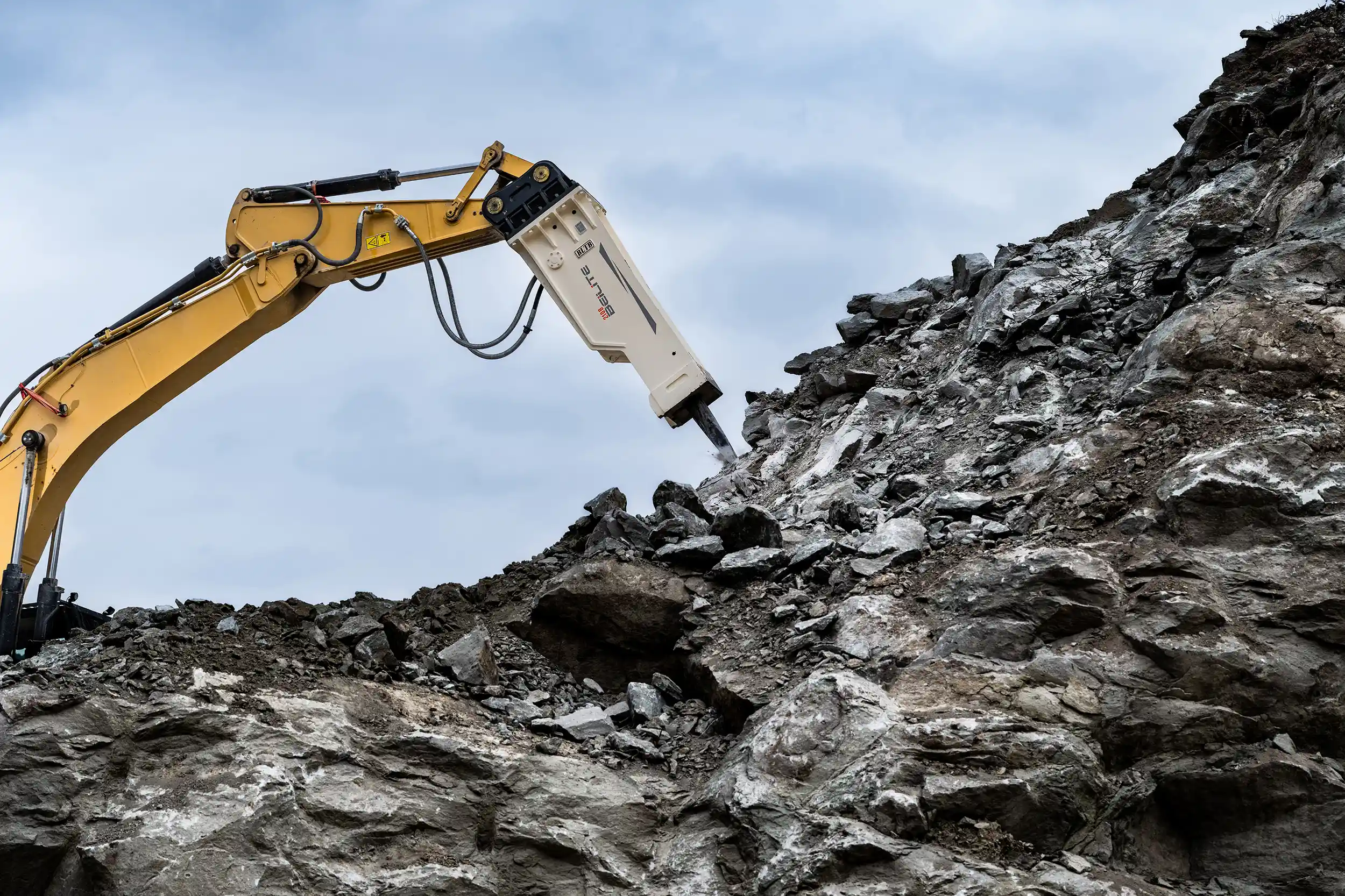
Beilite’s product range spans from the BLT-40 for compact excavators working in tight spaces to the BLT-165 for breaking massive rock formations. The company ships to over 100 countries, which suggests the designs hold up across varied conditions and operator practices. That geographic spread also means parts and support networks exist in most major markets.
The Future Landscape of Hydraulic Breaker Innovation
Development trends point toward automation and integration with machine control systems. Future breakers may adjust impact force and frequency automatically based on material density feedback, optimizing performance without operator intervention. Sensor integration and predictive maintenance capabilities would flag component wear before failures occur.
Sustainability considerations are also shaping development priorities. Noise control systems continue to improve, and dust suppression technologies are becoming more sophisticated. These features matter increasingly as regulations tighten and projects move into populated areas.
Strategic Selection for Optimal Breaker Performance
Choosing the right breaker requires matching several variables. The carrier’s tonnage and hydraulic capacity set the upper limits. The material to be broken determines the impact energy needed. Working environment factors like temperature extremes or underwater operation narrow the options further.
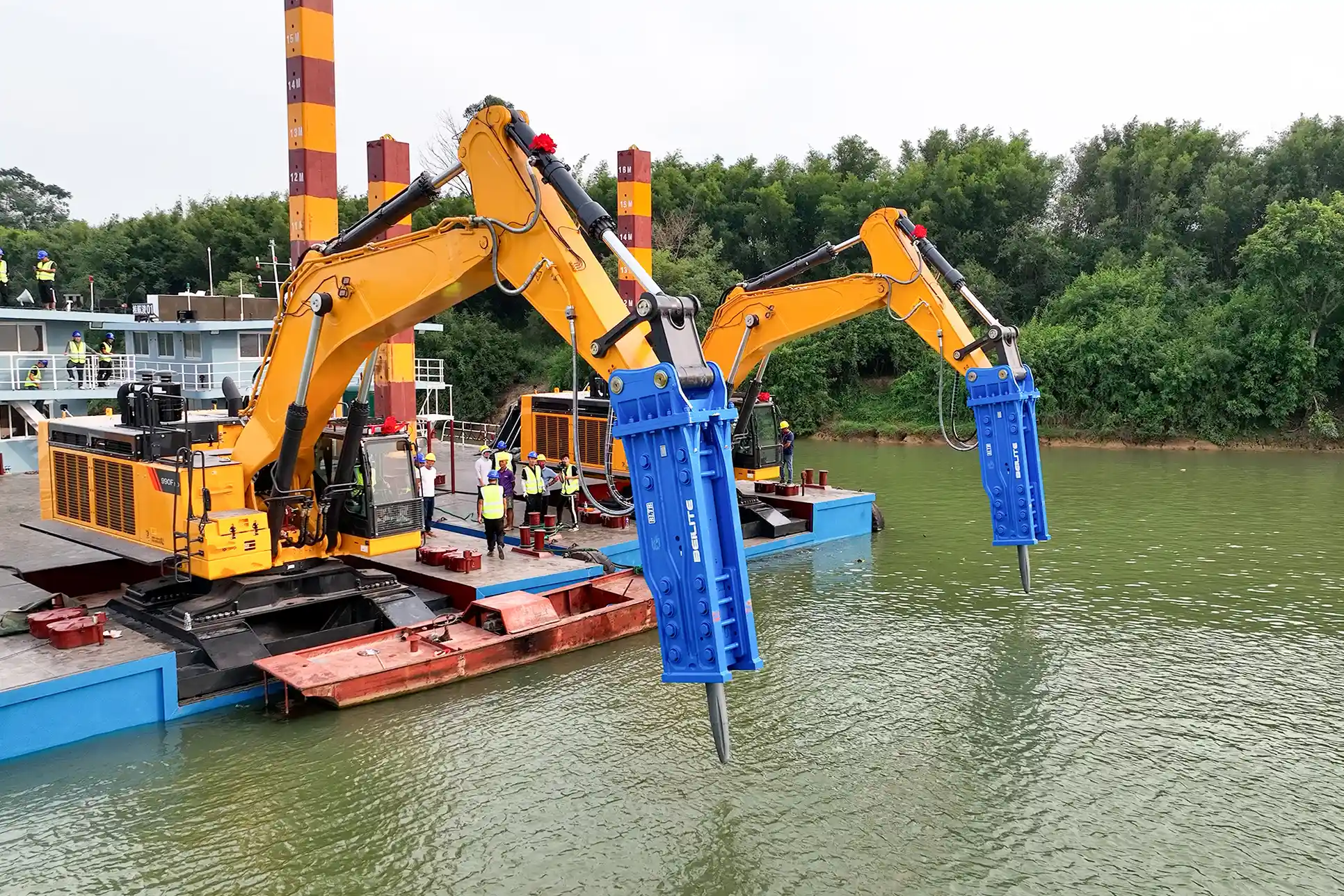
What are the key factors for selecting the right hydraulic breaker?
Start with the excavator’s tonnage and hydraulic flow specifications. A BLT-45 fits 0.8-1.5 ton excavators. A BLT-140 matches 20-24 ton machines. Oversizing strains the carrier. Undersizing produces inadequate breaking performance and excessive cycle times.
Material characteristics matter as much as carrier size. Hard granite requires different impact characteristics than reinforced concrete or frozen ground. Ambient temperature affects hydraulic fluid viscosity and seal performance. Expert guidance from manufacturers or experienced dealers helps navigate these variables.
| Modèle | Excavateur applicable (t) | Diamètre du ciseau (mm) | Pression de service (bar) | Fréquence d'impact (bpm) |
|---|---|---|---|---|
| BLT-40 | 0.5-1.2 | 40 | 90-120 | 800-1400 |
| BLT-45 | 0.8-1.5 | 45 | 90-120 | 700–1200 |
| BLT-53 | 1.5-3.5 | 53 | 90-120 | 600–1100 |
| BLT-60 | 3-5.5 | 60 | 100-130 | 500–1000 |
| BLT-70 | 4.5-6 | 70 | 110-140 | 500–900 |
Partner with Beilite for Superior Demolition Solutions
Beilite Machinery Co., LTD. brings decades of hydraulic breaker development and global distribution experience to demolition and rock breaking applications. The BLT and BLTB product lines cover most carrier sizes and application types. Contact [email protected] or call 40008-40008 to discuss specific project requirements and breaker selection.
How does Beilite’s hydraulic breaker technology ensure reliability in harsh conditions?
Beilite’s designs incorporate materials and testing protocols developed for extreme operating conditions. Components are engineered to handle temperature swings, abrasive materials, and continuous heavy-duty cycling. The result is consistent performance and extended service life even in demanding environments.
What are the environmental benefits of using modern hydraulic breaker technology?
Current designs optimize fuel efficiency for the carrier excavator, reduce noise through advanced dampening, and minimize dust during breaking operations. These improvements contribute to cleaner and quieter jobsites, which matters both for regulatory compliance and for working near occupied areas.
Can Beilite’s hydraulic breakers be customized for specific project requirements?
Beilite’s range covers diverse working conditions, and the company provides guidance on matching breaker size, impact energy, and chisel type to specific excavators and applications. This consultation process helps ensure the selected breaker performs efficiently for the intended work.