 Anglais
 Français
Hydraulic Breaker for Mining: Optimizing Rock Breaking Efficiency
Mining operations live and die by how well you break rock. Hydraulic breakers have changed the game here, replacing the old drill-and-blast approach with something that actually makes sense for modern sites. The productivity gains are real, and so are the safety improvements. What follows covers how these tools perform across different mining scenarios and what makes certain models work better than others.
Why Hydraulic Breakers Now Dominate Rock Excavation
The shift away from explosives didn’t happen overnight. It came from operators getting tired of the unpredictability, the permit headaches, and the genuine danger that comes with blasting in active mining zones. Hydraulic breakers deliver controlled impact energy exactly where you need it. No fly rock. No ground vibrations shaking nearby structures. No waiting for blast clearances.
The precision matters more than people realize. When you’re working near existing mine infrastructure, one bad blast can compromise tunnel integrity or damage equipment worth more than the rock you’re trying to extract. Breakers let you target specific formations without touching what’s around them.
These tools handle secondary breaking, scaling loose material from walls, and trenching work. Each application needs targeted force rather than brute destruction. The workflow improvements add up fast when you’re not constantly stopping operations for safety protocols around explosives.
Beilite Technology Across Mining Conditions
Beilite Machinery Co., LTD has spent years refining hydraulic hammer performance for the specific challenges miners face. Hard rock, soft rock, underground operations, surface quarries. Each environment demands different characteristics from the equipment. Our BLT and BLTB product lines reflect that understanding.
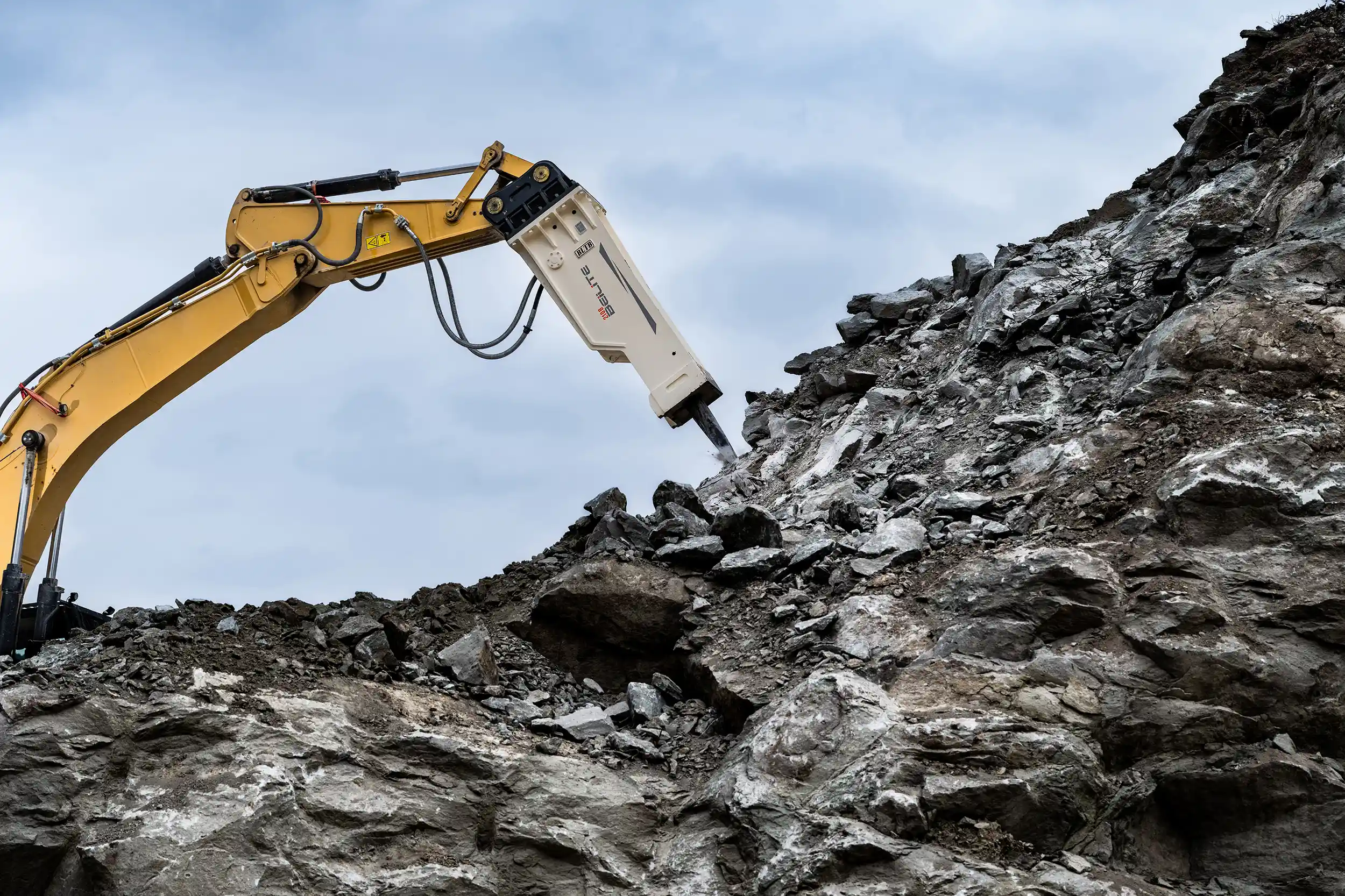
The specifications below show which breakers match different operational scales:
| Breaker Model | Excavateur applicable (t) | Diamètre du ciseau (mm) | Fréquence d'impact (bpm) | Key Application |
|---|---|---|---|---|
| BLT-100 | 10–14 | 100 | 350–700 | Medium Mining |
| BLT-125 | 14-18 | 125 | 350-650 | Heavy Mining |
| BLT-135 | 18–22 | 135 | 350–500 | Quarrying |
| BLT-140 | 20–24 | 140 | 350–500 | Large-Scale Mining |
| BLT-150 | 24–27 | 150 | 200-300 | Extreme Hard Rock |
Matching Breakers to Your Geology
Getting this wrong costs money. A breaker undersized for your rock formation wears out fast and slows production. Oversized equipment wastes fuel and creates unnecessary maintenance burden.
Rock hardness is the starting point, but abrasiveness matters just as much for long-term performance. Compressive strength numbers tell part of the story. Fracture patterns tell the rest. Some formations look tough but break cleanly along natural planes. Others seem softer but resist fragmentation because they absorb impact energy instead of cracking.
Higher impact energy handles harder formations, but chisel design plays an equally important role. The wrong chisel geometry on the right breaker still produces poor results.
Safety Gains and Productivity Improvements
The safety case for hydraulic breakers writes itself. Controlled rock breaking means workers aren’t exposed to blast zones. No fly rock means fewer injuries and less equipment damage. Reduced ground vibration protects underground infrastructure and nearby structures.
But the productivity side deserves equal attention. Blasting requires clearance time, safety perimeters, and coordination that stops other work. Hydraulic breaking happens continuously. Material flows steadily to processing instead of arriving in unpredictable bursts after each blast cycle.
Underground Operations Benefit Most
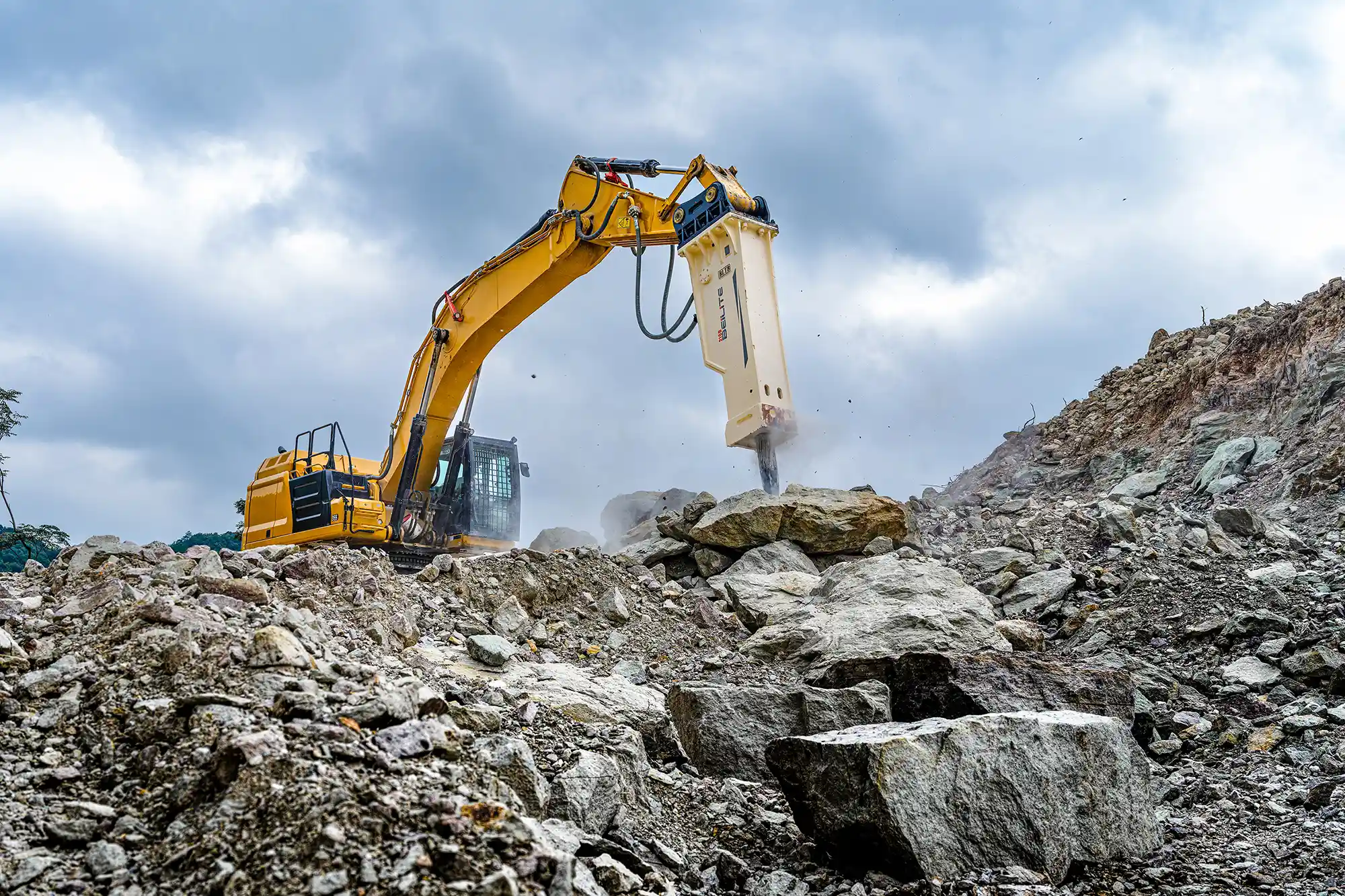
Confined spaces amplify every advantage hydraulic breakers offer. Tunnels and shafts can’t accommodate the safety distances blasting requires. The noise and vibration from explosives underground create working conditions that burn out crews faster.
Breakers sized for underground work fit through access points that would never accommodate larger equipment. The reduced noise levels let communication happen normally. Vibration stays low enough that nearby tunnel sections remain stable during operations.
Continuous fragmentation keeps material moving. No waiting for fumes to clear. No inspection delays after each blast. The extraction rate stays consistent rather than spiking and stopping.
Article Recommendation: If you are working on specialized underground projects, exploring Modèles de machines de mise à l'échelle can provide further insights into optimizing your operations.
Keeping Breakers Running in Tough Conditions
Equipment that sits broken costs more than equipment that costs more upfront. Beilite builds for longevity, but even the best hydraulic hammer needs proper care to deliver its full service life. We stock spare parts and provide technical support because we understand that downtime kills profitability.
Preventative maintenance catches problems before they stop production. Regular service intervals cost far less than emergency repairs.
Daily Practices That Extend Equipment Life
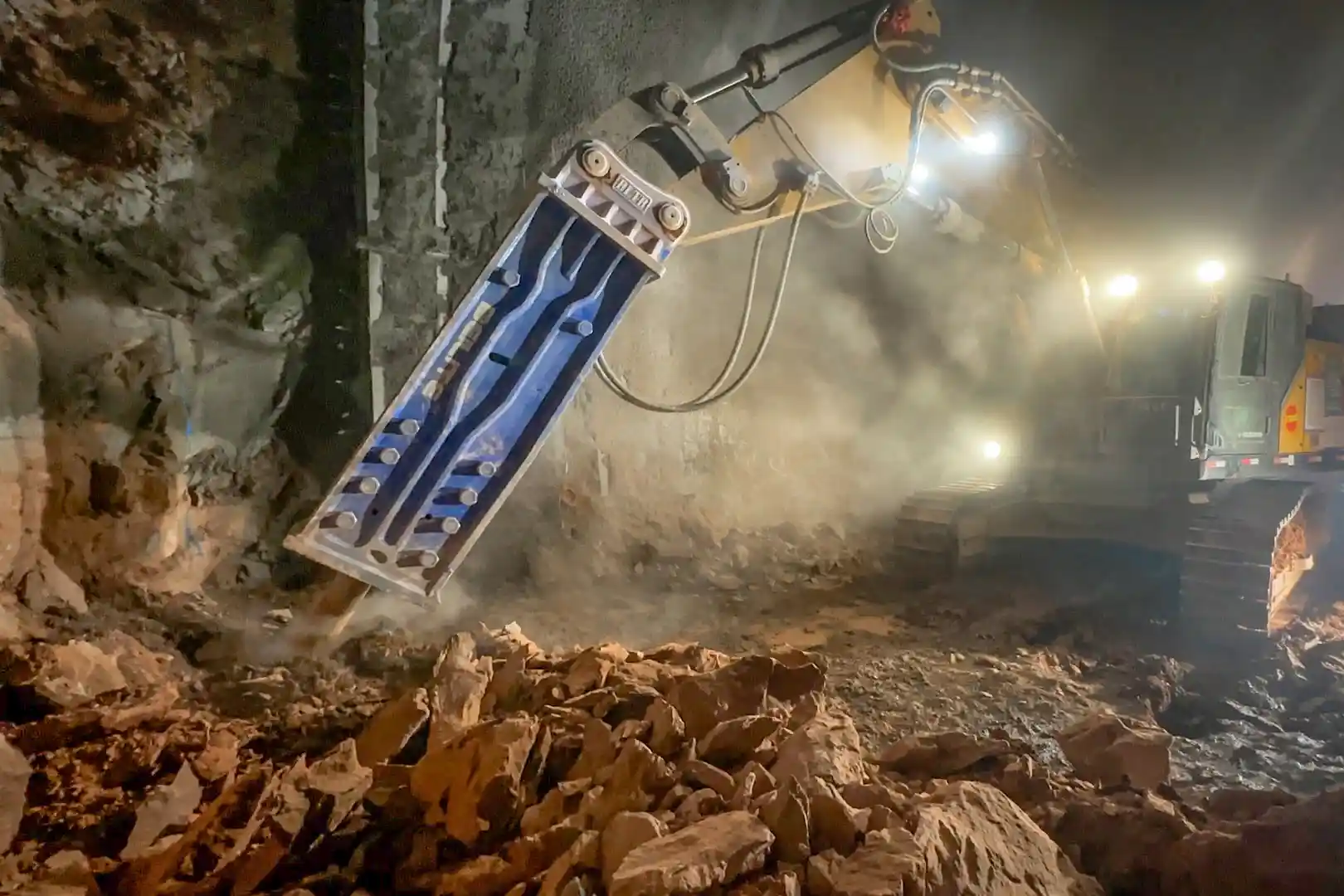
Mining environments punish equipment. Dust, debris, temperature swings, and constant impact stress test every component. Simple daily habits make the difference between breakers that last and breakers that fail early.
Check hoses and connections before each shift. Look for wear, leaks, or damage that could worsen under operation. Inspect the chisel for chips, cracks, or excessive wear patterns that indicate misuse or wrong application.
Lubrication prevents most premature failures. The chisel and bushings need consistent greasing to reduce friction and heat buildup. Skipping this step accelerates wear on components that cost far more to replace than the grease costs to apply.
Match your chisel to your rock type. Using a moil point on flat surfaces or a blunt tool on hard formations creates stress the breaker wasn’t designed to handle. Proper storage between uses protects hydraulic seals and prevents corrosion.
Working with Beilite
Beilite Machinery Co., LTD brings decades of hydraulic breaker development and hundreds of patents to every product we ship. Our equipment operates in over 100 countries because it performs where it matters. Reach us at [email protected] or call 40008-40008 to discuss what your operation needs.
Questions fréquemment posées
What makes Beilite’s hydraulic breakers hold up in harsh mining conditions?
Our engineering starts with the assumption that conditions will be brutal. Proprietary impact mechanisms deliver consistent energy transfer without the internal stress that causes premature failure in lesser designs. We’ve participated in setting national standards for this equipment category because our testing protocols exceed what most manufacturers consider adequate. The result is breakers that maintain performance levels long after competitors would need replacement.
How do hydraulic breakers support environmental compliance?
Blasting creates dust clouds, ground vibration that registers on seismographs, and noise complaints from considerable distances. Hydraulic breaking produces localized impact with minimal airborne particulates and vibration that dissipates within meters rather than kilometers. Sites operating near communities or environmentally sensitive areas often find that breakers are the only practical option for maintaining permits and community relations.
Can Beilite customize solutions for unusual mining applications?
The BLT and BLTB product ranges cover most standard applications, but mining throws surprises at operators regularly. Our technical team evaluates specific site conditions, rock characteristics, and operational constraints to recommend appropriate configurations. When standard models don’t fit, we have the engineering capability to modify or develop solutions that address unique challenges. The goal is equipment that integrates with your existing fleet and workflow rather than forcing you to adapt to our limitations.